AIINSIGHT NOTE
AI · Web3 · Tech trends and insights at a glance
AI · Web3 · Tech trends and insights at a glance

The Bank of Japan's push above 1% for the first time in three decades is not just a domestic policy story — it marks the beginning of an unwind in the yen carry trade structure that quietly funded a significant portion of the global AI infrastructure buildout. As borrowing costs rise and the spread compresses, the leveraged positions underpinning Nvidia, data center REITs, and semiconductor capex face growing structural pressure.
The Bank of Japan's decision to push its policy rate above 1% for the first time in more than three decades is not merely a domestic monetary policy story. It is the beginning of an unwinding that touches something far larger: the structural leverage that has quietly funded a significant portion of the global AI infrastructure buildout. For years, yen carry trades operated as invisible plumbing beneath the global risk asset edifice, and nowhere was that plumbing more consequential than in the capital flows that powered the AI investment supercycle.
Yen carry trades work through a deceptively simple mechanism. Borrow in a currency with near-zero rates, convert, and invest in assets that generate meaningfully higher returns. The spread is the profit; leverage is the amplifier. For most of the post-bubble era, Japan served as the world's lowest-cost funding currency, and banks, hedge funds, and institutional asset managers all drew from this well — often without explicitly labeling their strategies as carry trades. The yen was simply the cheapest money available, and cheap money tends to find its way into whatever narrative is capturing the highest expected returns.
What shifted in the 2020s is where that borrowed money went. As the AI revolution became the dominant investment narrative, yen-funded capital increasingly flowed not into emerging market bonds or commodity plays but into Nvidia shares, AI data center REITs, semiconductor equipment stocks, and venture funds targeting cloud infrastructure. The August 2024 carry trade unwind provided a live demonstration of this dependency. When the yen strengthened more than 10% against the dollar in a matter of days, leveraged positions across Asia-based hedge funds collapsed in unison. Global equity markets dropped sharply — not because AI fundamentals had changed, but because the funding structure underneath the trade had broken down. That episode was a preview. The current rate environment suggests the structural pressure has become chronic rather than episodic.
AI infrastructure investment carries a particular vulnerability that distinguishes it from ordinary equity speculation. Data center construction, GPU cluster procurement, and long-term semiconductor fab expansion require capital commitments that lock in for years. This maturity mismatch — long-duration assets funded with short-duration borrowing — is manageable when the short-term funding rate approaches zero. It becomes structurally precarious when that rate moves in a sustained direction.
At 1%, Japan's policy rate remains low in absolute terms. But the relevant comparison is not the global average; it is the baseline from which the entire yen carry trade ecosystem was calibrated. Each 25-basis-point hike by the BOJ reconfigures the risk-reward equation that determined how much leverage was rational in the first place. Institutional investors running yen-funded AI infrastructure plays now face a compressing spread. Some will de-lever voluntarily as the economics thin. Others will be forced to by risk management systems that treat rising funding costs as a mandatory signal to reduce gross exposure. Both paths lead to the same marginal outcome: less yen-funded capital available for AI infrastructure at the exact moment that capital formation is most critical to sustaining the buildout.
The ripple extends beyond hedge funds. Japanese life insurers and pension funds have spent years rotating heavily into foreign assets to escape domestic deflationary returns. As domestic rates rise, the calculus for keeping capital deployed abroad weakens. Repatriation flows are notoriously difficult to predict with precision, but the directional logic is clear: some portion of the patient, long-duration institutional capital that helped finance AI infrastructure bonds and leveraged loans will gradually flow back toward Japanese domestic instruments. This is not a sudden cliff — it is a slow structural erosion of one of the key funding pools that made the AI capital cycle possible at its current scale.
South Korea's equity market sits at a particular confluence of these forces. Dominated by semiconductor and technology companies — Samsung Electronics, SK Hynix, and their extended supply chains — the Korean market carries a high proportion of foreign institutional ownership and maintains strong correlation with the global tech cycle. When yen carry trades unwind, foreign investors seeking to raise dollar liquidity tend to sell emerging and semi-developed market equities first. Korea sits squarely in that target zone.
SK Hynix occupies a peculiarly exposed position within this dynamic. As the primary supplier of high-bandwidth memory to Nvidia, it sits at the intersection of two compounding pressures: foreign selling driven by carry unwind mechanics, and fundamental demand uncertainty about the AI hardware cycle itself. A slowdown in Nvidia's capital expenditure plans, triggered even partly by the tightening of yen-funded leverage among its largest institutional shareholders, flows directly through to HBM order volumes. The feedback loop is tighter than most market participants model.
The deeper uncertainty animating all of this is whether the AI infrastructure investment supercycle was genuinely demand-driven, or whether it was partly an artifact of historically cheap capital seeking returns and finding the AI narrative a convenient vehicle. The answer is almost certainly both, in proportions that will only reveal themselves as the funding environment tightens. Hyperscalers like Microsoft, Google, and Amazon have sufficient internal cash generation to remain largely insulated from funding cost shifts. But the broader ecosystem of AI startups, colocation data center operators, and smaller cloud infrastructure providers that depend on external capital is more exposed. If that external capital was connected — even indirectly — to yen-funded leverage, Japan's 1% rate is not a technical threshold. It is the point where a structure that was treated as permanent begins to show its contingency.

The Land-Permit Paradox of Korea's Chip Belt, When the Cluster's Boom Prices Out Its Own Engineers
Dongtan, Giheung, and Guri have been folded into Korea's land-transaction permit regime just as the AI chip capex boom reshapes the property market around the country's largest fabs. The very prosperity the cluster generates is raising the cost for the engineers it depends on to settle nearby. The real test of agglomeration may lie not in siting megafabs but in housing and labor mobility.
The Collapse of the Closed AI Moat and the Supply-Chain Paradox of Unverifiable Weights
DeepSeek-R1's open reasoning weights and Llamafile's single-file distribution are eroding the performance and distribution moats that closed labs once charged a premium for. Yet the same openness collides head-on with the gap exposed by the "250 samples to break an LLM" research: weight distribution that no recipient can verify. Democratized competition and accumulated security debt now sit on the same scale.
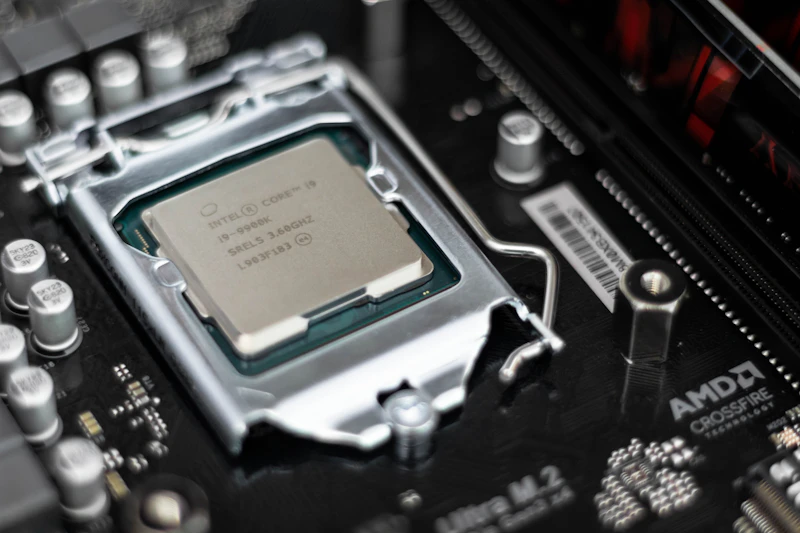
Forty-Year Yen Lows as the Hidden Subsidy Behind Japan's Chip Revival
As the yen slides into its weakest territory in four decades, Takaichinomics has entered uncharted monetary terrain. A cheap yen functions as a silent subsidy for Rapidus, Kioxia, and TSMC's Kumamoto fabs—yet the same currency inflates the cost of imported tools and materials and intensifies the talent war with Korea. The question is whether monetary policy can stand in for industrial policy, and what that means for Korea's memory champions.