AIINSIGHT NOTE
AI · Web3 · Tech trends and insights at a glance
AI · Web3 · Tech trends and insights at a glance

The UAE's decision to fly its own military transport to South Korea to collect Cheongung-II air defense batteries under emergency orders marks a qualitative shift in Korean defense exports — from peacetime contract to live operational deployment. As Iran-US hostilities reshape Gulf security demands, Cheongung-II's AI-driven engagement logic and agile export pathway are carving a durable competitive position in the global mid-tier air defense market.
Few images in recent arms trade history carry as much strategic weight as a UAE military transport landing in South Korea to haul home an air defense system under urgent orders. That is precisely what occurred in mid-2026, as escalating Iran-US hostilities in the Strait of Hormuz created a demand shock across the Gulf Cooperation Council that no amount of pre-signed procurement frameworks had anticipated. The cargo hold of that UAE aircraft, loaded with Cheongung-II launchers and fire control equipment, represents something more than a successful sales transaction. It represents the moment Korean defense exports crossed from catalog to combat relevance.
The nature of the threat environment in the Gulf has shifted in ways that render older procurement logics obsolete. Iranian composite attacks — combining Shahab-3 family ballistic missiles with saturation waves of Shahed loitering munitions — have exposed the structural limits of single-layer interception doctrine. Patriot batteries excel at tracking and engaging ballistic inbounds on high-arcing trajectories; they are not optimized for low-altitude swarming drones arriving in large numbers from multiple vectors simultaneously. What the Gulf states now require is a layered architecture capable of triaging multiple simultaneous threats in milliseconds, assigning interception assets dynamically, and doing so without bottlenecking through human decision cycles. That is a software and AI integration problem as much as a hardware one.
This is why the UAE's emergency airlift carries analytical weight beyond the bilateral defense relationship. The decision to fly its own transport rather than wait for a scheduled cargo arrangement signals that the timeline of conventional procurement — contract negotiation, Foreign Military Sales pipeline clearance, scheduled delivery — was simply incompatible with the operational urgency at hand. In that compressed decision window, Cheongung-II cleared a bar that its competitors did not: it was available, it was proven in active territorial defense, and it could move.
Cheongung-II is frequently described in Western defense commentary as a Patriot analogue, which systematically understates the system's defining architectural feature. The engagement control station at the heart of each battery network runs AI-assisted threat prioritization capable of evaluating multiple inbound tracks simultaneously, weighting them by velocity, trajectory classification, and radar cross-section, and outputting interception assignments within reaction windows that unaided human operators cannot match. In a saturation scenario — precisely the threat profile that defines the current Gulf threat environment — that processing speed is not an ergonomic convenience. It is the operational margin between a functioning air defense and a system that is overwhelmed before its operators can respond.
The competitive positioning Cheongung-II now occupies in the global mid-tier defense market is shaped by three converging factors. South Korea's government-to-government export approval process, while rigorous, operates with considerably more agility than the US Foreign Military Sales pipeline, which requires congressional notification and can extend for years on complex systems. The total cost of ownership — including offset trade arrangements that Korea has historically offered to anchor long-term partnerships — lands meaningfully below Western alternatives. And critically, for buyers evaluating under live fire conditions, Cheongung-II carries a provenance that paper specifications cannot replicate: it has been continuously deployed for actual South Korean territorial defense, not as a demonstration asset. That operational history translates directly into buyer confidence when the threat is real and the timeline is now.
What the UAE airlift sets in motion beyond the immediate transaction is an operational reference cycle that Korean defense exports have not previously accessed at this scale. In the global arms trade, nothing sells a weapons system like documented intercept performance against real threats in contested airspace. Israel's Iron Dome built its export brand — and its leverage in US congressional appropriations debates — precisely through the accumulation of public intercept records across successive operational deployments. Cheongung-II, now positioned in the Gulf's live threat environment, has the conditions to begin building an analogous record.
The downstream implications extend well beyond missile rounds and launch vehicles. An air defense system is an ecosystem: software update contracts, simulation and training packages, maintenance crew rotations, and increasingly, AI threat-database subscriptions that keep engagement logic current against evolving adversary signatures. Korea's defense industry has long sought a path from hardware exporter to system integrator — a position that generates recurring revenue, deepens strategic relationships, and compounds technological advantage over time. The UAE's decision to fly its own transport to Seoul is the opening chapter of that kind of long-cycle integration relationship. Whether the June 2026 airlift marks the true inflection point will only be clear in retrospect, but the conditions for that reading are already in place.

The Land-Permit Paradox of Korea's Chip Belt, When the Cluster's Boom Prices Out Its Own Engineers
Dongtan, Giheung, and Guri have been folded into Korea's land-transaction permit regime just as the AI chip capex boom reshapes the property market around the country's largest fabs. The very prosperity the cluster generates is raising the cost for the engineers it depends on to settle nearby. The real test of agglomeration may lie not in siting megafabs but in housing and labor mobility.

The Collapse of the Closed AI Moat and the Supply-Chain Paradox of Unverifiable Weights
DeepSeek-R1's open reasoning weights and Llamafile's single-file distribution are eroding the performance and distribution moats that closed labs once charged a premium for. Yet the same openness collides head-on with the gap exposed by the "250 samples to break an LLM" research: weight distribution that no recipient can verify. Democratized competition and accumulated security debt now sit on the same scale.
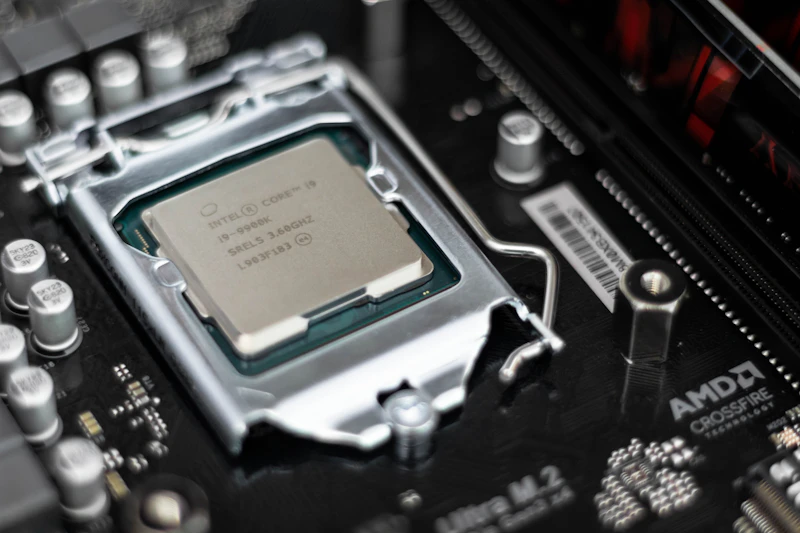
Forty-Year Yen Lows as the Hidden Subsidy Behind Japan's Chip Revival
As the yen slides into its weakest territory in four decades, Takaichinomics has entered uncharted monetary terrain. A cheap yen functions as a silent subsidy for Rapidus, Kioxia, and TSMC's Kumamoto fabs—yet the same currency inflates the cost of imported tools and materials and intensifies the talent war with Korea. The question is whether monetary policy can stand in for industrial policy, and what that means for Korea's memory champions.