AIINSIGHT NOTE
AI · Web3 · Tech trends and insights at a glance
AI · Web3 · Tech trends and insights at a glance

The UK's NCSC has confirmed that 75% of attacks on critical infrastructure now originate from state-sponsored actors — and that figure is a floor, not a ceiling. As AI automates vulnerability discovery, payload generation, and lateral movement, offensive capability is scaling faster than institutional defense can adapt. The resulting asymmetry between AI-accelerated attackers and procurement-constrained defenders represents one of the defining structural risks of the decade.
When Richard Horne, the director of the UK's National Cyber Security Centre, disclosed that 75% of attacks against critical national infrastructure now originate from state-sponsored actors, the figure landed less as a revelation than as a formal acknowledgment of what security analysts had long suspected. Power grids, water treatment systems, hospital networks, and financial clearing infrastructure — the scaffolding on which modern society functions — have quietly become the primary battleground of geopolitical competition. The NCSC's disclosure is not a warning about the future. It is a description of the present.
Offensive hacking has historically been constrained by human labor. Finding exploitable vulnerabilities in complex systems, constructing reliable payloads, maintaining persistence without triggering detection — each stage demanded skilled practitioners and significant time. AI is dismantling these constraints at a pace that most defensive institutions have not internalized.
Large language models trained on code repositories and vulnerability databases can identify unpatched attack surfaces faster than human researchers and with coverage that scales horizontally across multiple targets simultaneously. Spear-phishing campaigns — once requiring careful manual crafting of plausible impostor personas — are now generated with behavioral data harvested from social platforms, producing individualized lures that evade trained detection instincts. Lateral movement inside compromised networks can be guided by reinforcement learning agents optimizing for stealth over speed.
Nation-state groups are moving in this direction with documented intent. Sandworm, the GRU-linked operation responsible for Ukraine's grid blackouts, APT40 operating under China's Ministry of State Security, and North Korea's Lazarus Group have each incorporated automated tooling into campaigns targeting energy, telecom, and financial infrastructure. The asymmetry is structural: offensive automation scales with compute; defensive adaptation is bounded by procurement cycles, institutional inertia, and a global shortage of practitioners capable of operating AI-native security stacks inside legacy industrial environments.
The technical tools for AI-assisted defense exist. Anomaly detection trained on network baselines, autonomous patch prioritization, threat intelligence synthesis — these capabilities are commercially available and operationally validated in private-sector contexts. The gap is not technological. It is institutional.
Critical infrastructure operators face three structural constraints that AI investment alone does not resolve. The first is the legacy estate. Industrial control systems and SCADA environments running on hardware designed decades ago cannot be retrofitted with modern security stacks without risking operational failure. Many operators are legally prohibited from taking systems offline for patching cycles, even when vulnerabilities are actively exploited in the wild. Layering AI-native defense on top of this environment is not a configuration problem — it is an architectural one.
The second constraint is the talent problem. The intersection of AI literacy, industrial systems knowledge, and operational security expertise represents one of the narrowest talent pools in any technical domain. Public-sector operators and utility companies cannot compete with private-sector compensation to attract the practitioners capable of building and sustaining AI-native defense architectures. This gap is structural and shows no sign of closing on its own.
The third constraint is procurement velocity. Threat actors iterate in hours or days. Government procurement cycles for defensive systems routinely operate on multi-year timescales. By the time an approved defensive system is deployed and operational, the threat landscape it was designed to address has already evolved past it.
These three constraints compound each other, and that compounding is what makes the NCSC's 75% figure structurally alarming rather than merely disturbing. The number describes today's attack attribution. The trajectory — AI-accelerated offensive automation against institutionally constrained defensive systems — describes a gap that will widen unless defense reform is treated with the same urgency as the infrastructure investment it is meant to protect. Increasing security budgets will not suffice. What is required is a redesign of how democratic institutions procure, deploy, and continuously adapt security capability at the speed of the threat environment they actually inhabit.

Fabs on the Fault Line, How a Single Earthquake Could Halt the AI Chip Supply Chain
Two major earthquakes striking the same week — one in Venezuela, a magnitude 7.2 off Japan's Sanriku coast — underscored an uncomfortable truth: almost all advanced AI compute is manufactured along the narrowest, most seismically active corridor on Earth. With EUV monopoly, advanced packaging, and HBM concentrated across Taiwan and Kyushu, a single strong quake represents a genuine single point of failure for global AI infrastructure. Geographic dispersion and machine-learning earthquake early warning are emerging as the new variables of supply-chain resilience.

Where Should the Megafab Go, Korea's Chip Siting Dilemma Between Clustering and Regional Balance
When word leaked that off-capital semiconductor investment was being finalized in a private meeting between Samsung's chairman and the president, markets misread it as a corporate siting decision. It is something larger: the moment when the agglomeration logic that has concentrated Korean chipmaking into a single point south of Seoul began to be politically renegotiated. Fab location has become a national equation tangling power infrastructure, asset inequality, and industrial sovereignty.
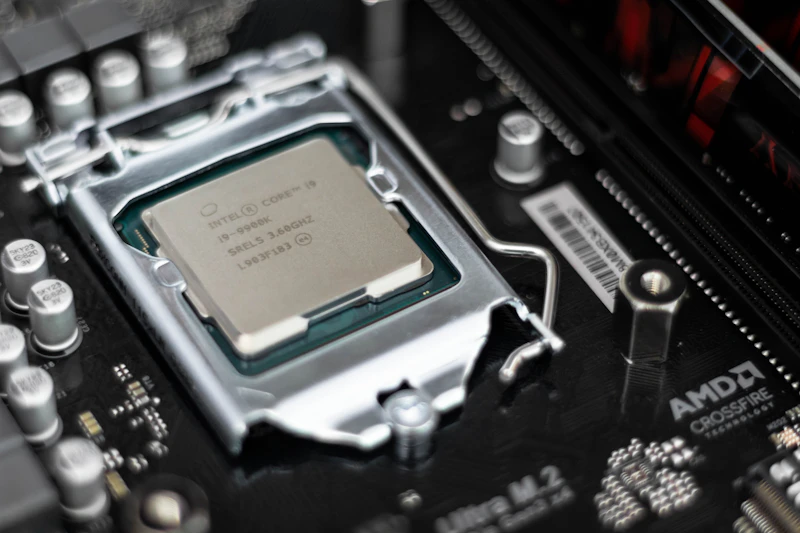
Keller and Zeloof's Garage Fab Bet Against the Capital-Intensity Myth of Chipmaking
Atomic Semi, founded by Jim Keller and Sam Zeloof, challenges the orthodoxy that chips demand tens of billions in capital and an ASML EUV monopoly. The real question is whether small, cheap fabs can carve out a genuine niche in specialty and prototype silicon, or whether they remain a charismatic gesture against an unmovable industry.