AIINSIGHT NOTE
AI · Web3 · Tech trends and insights at a glance
AI · Web3 · Tech trends and insights at a glance

On the 7th of next month, SpaceX joins the Nasdaq-100 on an accelerated timeline, triggering an estimated $4.3 billion in automatic passive inflows. None of that capital asks whether Starling's orbital infrastructure is actually worth its private-market price. This is how index investing launders unverified valuations into the retirement accounts of millions.
SpaceX's accelerated inclusion in the Nasdaq-100, scheduled for the 7th of next month, looks at first glance like a milestone of corporate achievement: a private colossus finally entering the heart of public markets. But the more revealing story is not about the company at all. It is about the nature of the capital that will buy it. An estimated $4.3 billion in passive money will purchase SpaceX shares the moment the inclusion takes effect, and not a single dollar of it will pause to ask whether the business is actually worth what the index now demands it pay. Passive funds are not price discoverers. They are price followers. When a benchmark rules that a stock must be held, the money flows in regardless of fundamentals. For an asset like orbital infrastructure, where cash flows are opaque and future value rests almost entirely on narrative, that indifference becomes genuinely dangerous.
SpaceX has recently been valued north of $400 billion in private transactions. The problem is not the size of that number but how it was manufactured. Private valuations are built on a thin layer of secondary trades, employee tender offers, and tightly controlled funding rounds. Prices set in markets where liquidity is scarce and selling pressure is structurally suppressed are qualitatively different from prices validated by the depth of public exchanges. Yet the instant a company enters the index, that thin private mark is transmitted wholesale into the pension accounts and retirement funds of tens of millions of ordinary investors. No one assumes responsibility for verifying the valuation; the formal procedure of inclusion quietly substitutes for the verification that should have happened.
Starlink sits at the center of this distortion. The future its satellite network promises is undeniably vast, but whether that future justifies today's price is an entirely separate question. The relentless capital intensity of launching and replacing tens of thousands of satellites, the regulatory and orbital-congestion uncertainties, the still-unproven long-run economics of the service — passive capital weighs none of it. Index funds claim they do not buy stories. But when they buy a price that a story has inflated, they have bought the story all the same, simply without admitting it.
The original virtue of passive investing was diversification: own the whole market cheaply and dilute the risk of any single bad pick. Yet now that a dominant share of equity capital is passive, the mechanism has begun to invert. When money tracks weights rather than prices, an already-expensive stock receives more inflows and grows more expensive, and that very inflation enlarges its index weight, which in turn compels further buying. It is a self-reinforcing loop in which price discovery has stopped functioning. When a mega-asset like SpaceX enters that loop, the valuation risk it carries is not diffused away — it is injected evenly into the entire market.
The deeper hazard is concentration. Space and AI infrastructure currently share the hottest narrative in capital markets, often driven by the same pools of money and the same expectations. When a passive index pulls all of these assets into its top weightings simultaneously, a portfolio that appears diversified actually converges into a single bet on technological optimism. The moment the narrative falters, selling executes with the same mechanical logic, all at once, and the assets most dependent on thin private valuations have the narrowest exits. What SpaceX's fast-track entry ultimately reveals, then, is not a company's triumph but a structure in which capital that refuses to ask about value plants the bubble of unverified infrastructure directly into the public's retirement savings. Beneath the comforting veneer of passive neutrality, an enormous and unaccountable transfer of valuation is quietly taking place.

The Land-Permit Paradox of Korea's Chip Belt, When the Cluster's Boom Prices Out Its Own Engineers
Dongtan, Giheung, and Guri have been folded into Korea's land-transaction permit regime just as the AI chip capex boom reshapes the property market around the country's largest fabs. The very prosperity the cluster generates is raising the cost for the engineers it depends on to settle nearby. The real test of agglomeration may lie not in siting megafabs but in housing and labor mobility.

The Collapse of the Closed AI Moat and the Supply-Chain Paradox of Unverifiable Weights
DeepSeek-R1's open reasoning weights and Llamafile's single-file distribution are eroding the performance and distribution moats that closed labs once charged a premium for. Yet the same openness collides head-on with the gap exposed by the "250 samples to break an LLM" research: weight distribution that no recipient can verify. Democratized competition and accumulated security debt now sit on the same scale.
Forty-Year Yen Lows as the Hidden Subsidy Behind Japan's Chip Revival
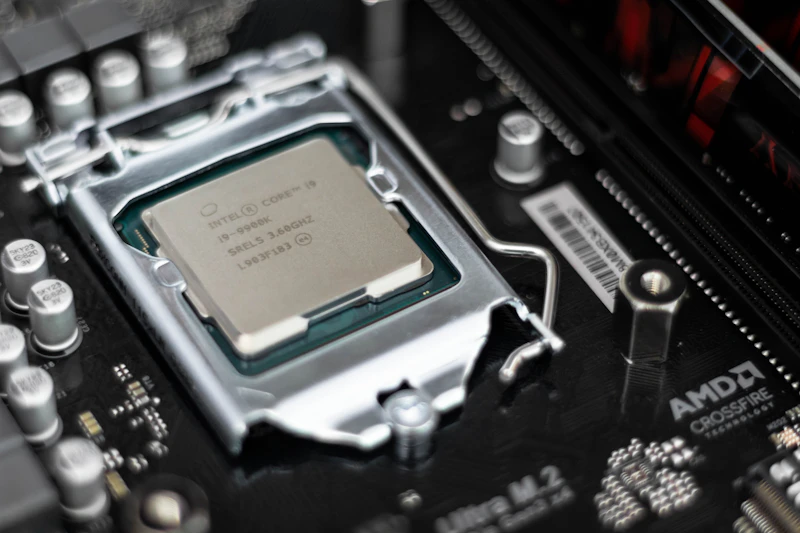
As the yen slides into its weakest territory in four decades, Takaichinomics has entered uncharted monetary terrain. A cheap yen functions as a silent subsidy for Rapidus, Kioxia, and TSMC's Kumamoto fabs—yet the same currency inflates the cost of imported tools and materials and intensifies the talent war with Korea. The question is whether monetary policy can stand in for industrial policy, and what that means for Korea's memory champions.