AIINSIGHT NOTE
AI · Web3 · Tech trends and insights at a glance
AI · Web3 · Tech trends and insights at a glance

SK Hynix's crossing of the one-trillion-dollar market cap threshold marks a genuine historical milestone for the AI memory supply chain. Yet the valuation rests on a narrow structural foundation: near-monopoly position in HBM, overwhelming revenue concentration in a single customer, and the relentless capital demands of generational process transitions. The question worth asking is not whether the achievement is real, but how resilient the architecture beneath it actually is.
When SK Hynix crossed the one-trillion-dollar market capitalization threshold in 2026, the milestone arrived with genuine historical weight. Only a handful of companies outside the United States and China have ever reached this level, and SK Hynix's ascent was driven by a product most consumers have never encountered: high-bandwidth memory, or HBM. Invisible to end users but indispensable to AI infrastructure, HBM has become the arterial system of the current data center buildout. The valuation reflects that centrality directly. What it may not reflect as clearly are the structural concentrations that make the current architecture fragile in ways the headline number does not advertise.
SK Hynix holds an estimated seventy percent of the global HBM market. For a product in relentless demand, this is a striking position. Yet market dominance of this kind is not synonymous with structural resilience, particularly when the dominance is simultaneously product-concentrated and customer-concentrated.
By most industry estimates, the overwhelming share of SK Hynix's HBM revenue flows from a single buyer: Nvidia. The relationship has been mutually beneficial during the AI buildout — Nvidia's GPU platforms require massive HBM bandwidth to deliver advertised performance, and SK Hynix has been the only supplier consistently able to meet volume requirements at the leading edge. But the asymmetry embedded in that relationship deserves scrutiny. Nvidia, as the dominant buyer, retains the ability to distribute purchase volume across competing suppliers. Samsung and Micron are both investing aggressively in HBM production capability. SK Hynix has no comparable substitute demand on the customer side — there is no second Nvidia waiting to absorb an equivalent volume of the most advanced HBM.
Micron entered the HBM market in earnest through 2024 and 2025, while Samsung resolved the early quality issues that had delayed its HBM3E shipments and resumed meaningful volume deliveries. As these two competitors increase their allocated share, the pricing power that has sustained SK Hynix's exceptional margins will face systematic downward pressure. The technical barriers to entry in HBM remain genuinely high — through-silicon via stacking is a difficult process and yield management at advanced nodes is nontrivial — but barriers that do not permanently exclude competition are better understood as moats with known drainage paths. The oligopoly will narrow; the relevant variable is timing.
The customer concentration risk, moreover, does not depend solely on whether Nvidia continues to grow. Even in a scenario where Nvidia's demand remains strong, the risk materializes if Nvidia chooses to diversify its supplier base more aggressively. In the semiconductor supply chain, buyers with dominant purchasing power rarely allow themselves to remain structurally dependent on a single source once alternatives become viable. That logic applies to Nvidia's relationship with SK Hynix as clearly as it applies to any other buyer-supplier pairing in the industry.
HBM is not a commodity memory product in the ordinary sense. Each generational transition — from HBM3E to HBM4 and toward HBM4E — requires rebuilding not just die specifications but the entire advanced packaging workflow, adding stacked die layers, tightening TSV tolerances, and renegotiating yields across a process that is inherently low-volume and high-precision relative to standard DRAM production. The capital requirements are substantial and continuous.
SK Hynix's annual capital expenditure has been running at tens of trillions of Korean won, with additional commitments to a new U.S. manufacturing facility in Indiana layered on top of its existing Korean fabs. The investment rationale is sound while demand remains elevated and premium pricing holds. The historical problem with semiconductor investment cycles is that these conditions do not hold indefinitely, and the lag between capital commitment and return realization creates structural exposure.
The memory industry has operated in recognizable cycles throughout its history: periods of aggressive investment followed by supply gluts and price collapses that compressed or eliminated the returns on the preceding wave of spending. The AI-driven HBM boom is genuinely different from prior commodity memory cycles in important respects. The product requires advanced packaging expertise that cannot be replicated cheaply or quickly, and demand from hyperscaler customers is structurally elevated rather than consumer-cyclical. But the distinction between "different" and "immune to cyclicality" is one that the semiconductor industry has a long history of conflating at the peak of each boom.
The trillion-dollar valuation embeds a set of simultaneous assumptions: that AI infrastructure spending remains elevated, that SK Hynix maintains its HBM share against strengthening competition, and that Nvidia's dominance in AI compute persists without meaningful erosion. Each assumption is defensible over a short horizon. Over three to five years, each carries material uncertainty. The structural concern is not that any single assumption is obviously wrong — it is that a valuation of this magnitude does not appear to price in meaningful probability for any of them proving incorrect. When a market capitalization is built on the simultaneous continuation of multiple favorable conditions, the fragility tends to be quiet precisely until it isn't.

The Land-Permit Paradox of Korea's Chip Belt, When the Cluster's Boom Prices Out Its Own Engineers
Dongtan, Giheung, and Guri have been folded into Korea's land-transaction permit regime just as the AI chip capex boom reshapes the property market around the country's largest fabs. The very prosperity the cluster generates is raising the cost for the engineers it depends on to settle nearby. The real test of agglomeration may lie not in siting megafabs but in housing and labor mobility.

The Collapse of the Closed AI Moat and the Supply-Chain Paradox of Unverifiable Weights
DeepSeek-R1's open reasoning weights and Llamafile's single-file distribution are eroding the performance and distribution moats that closed labs once charged a premium for. Yet the same openness collides head-on with the gap exposed by the "250 samples to break an LLM" research: weight distribution that no recipient can verify. Democratized competition and accumulated security debt now sit on the same scale.
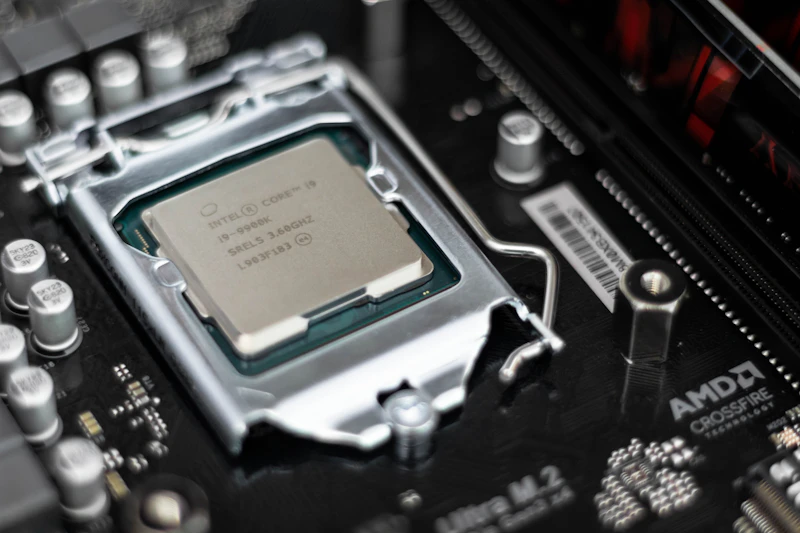
Forty-Year Yen Lows as the Hidden Subsidy Behind Japan's Chip Revival
As the yen slides into its weakest territory in four decades, Takaichinomics has entered uncharted monetary terrain. A cheap yen functions as a silent subsidy for Rapidus, Kioxia, and TSMC's Kumamoto fabs—yet the same currency inflates the cost of imported tools and materials and intensifies the talent war with Korea. The question is whether monetary policy can stand in for industrial policy, and what that means for Korea's memory champions.