AIINSIGHT NOTE
AI · Web3 · Tech trends and insights at a glance
AI · Web3 · Tech trends and insights at a glance

South Korea's president invoked a football star to deflect concerns about semiconductor dependency — but as the AI supercycle accelerates, the illusion only deepens. This column examines how a booming chip industry masks the structural erosion underway in the rest of the economy.
When South Korean President Lee Jae-myung invoked Son Heung-min in a parliamentary address — arguing that stripping the world-class footballer of his sport makes him ordinary, just as stripping Korea of semiconductors would diminish the nation — the metaphor landed with intuitive force. It was also, in a quietly consequential way, a misdiagnosis.
The argument the analogy is meant to support is not unreasonable on its face: Korea's semiconductor industry is a genuine global strength, and reflexive anxiety about concentration risk can tip into strategic self-undermining. But metaphors carry assumptions, and the assumptions embedded in this one deserve scrutiny. Son's mastery of football is the product of singular, decades-long specialization — a deliberate choice. A national economy is not an athlete. It is the platform on which every citizen's livelihood, every supply chain, and every policy trade-off plays out simultaneously. Confusing the two is more than poetic imprecision. It shapes how risk is perceived, and by extension, how it is managed.
The timing of this debate matters. Global AI infrastructure investment has created a structural surge in demand for high-bandwidth memory and advanced logic chips — the precise segments where Samsung Electronics and SK Hynix hold commanding positions. Korea's export figures and GDP growth metrics look, on the surface, robust. But robustness concentrated in two companies accounting for over a quarter of national exports is fragility wearing the clothes of strength.
The AI supercycle's benefits are not flowing evenly across Korea's industrial base. Traditional manufacturing — automotive components, precision machinery, specialty chemicals — faces a compounding crisis: Chinese competition on cost, AI-driven process innovation from Western and Japanese players on quality, and a domestic labor market where mid-skill jobs are eroding faster than reskilling programs can respond. None of this shows up prominently in the headline numbers when semiconductor revenues are at record highs. That is precisely the problem.
There is a well-documented pattern in structurally concentrated economies where sector windfalls suppress the urgency of reform. When the numbers look good, political incentives to address underlying fragilities diminish. Korea is not experiencing a resource curse in the classical sense, but the logic rhymes: the AI semiconductor windfall is generating a narrative of national economic health that makes it harder to sustain political attention on the sectors and workers not sharing in the gains.
The Son Heung-min analogy, pushed to its conclusion, actually illuminates the risk it was meant to dismiss. A football team built entirely around one transcendent player is not a stable long-term structure. When that player ages, is injured, or retires, the team's competitive position collapses — unless the supporting cast has been developed in parallel. The question for Korea is not whether its semiconductor excellence should be celebrated. It plainly should. The question is whether the current supercycle is being used to accelerate the development of the broader industrial ecosystem, or whether the windfall is functioning as an anaesthetic, dulling the urgency of adaptation.
The AI transition is not a distant horizon. Automation is reshaping labor markets now. The window during which Korea can leverage semiconductor revenues to finance a deliberate, economy-wide structural shift is finite. Waiting for the supercycle to end before addressing the structural questions it has obscured would be precisely the mistake the Son Heung-min framing, however unintentionally, encourages.
Extraordinary talent in one domain is not an economic strategy. It is an asset — one that demands careful stewardship, an honest accounting of what surrounds it, and a clear-eyed plan for what comes after. That is the analysis the metaphor forecloses, and the one Korea's policymakers cannot afford to skip.

The Land-Permit Paradox of Korea's Chip Belt, When the Cluster's Boom Prices Out Its Own Engineers
Dongtan, Giheung, and Guri have been folded into Korea's land-transaction permit regime just as the AI chip capex boom reshapes the property market around the country's largest fabs. The very prosperity the cluster generates is raising the cost for the engineers it depends on to settle nearby. The real test of agglomeration may lie not in siting megafabs but in housing and labor mobility.

The Collapse of the Closed AI Moat and the Supply-Chain Paradox of Unverifiable Weights
DeepSeek-R1's open reasoning weights and Llamafile's single-file distribution are eroding the performance and distribution moats that closed labs once charged a premium for. Yet the same openness collides head-on with the gap exposed by the "250 samples to break an LLM" research: weight distribution that no recipient can verify. Democratized competition and accumulated security debt now sit on the same scale.
Forty-Year Yen Lows as the Hidden Subsidy Behind Japan's Chip Revival
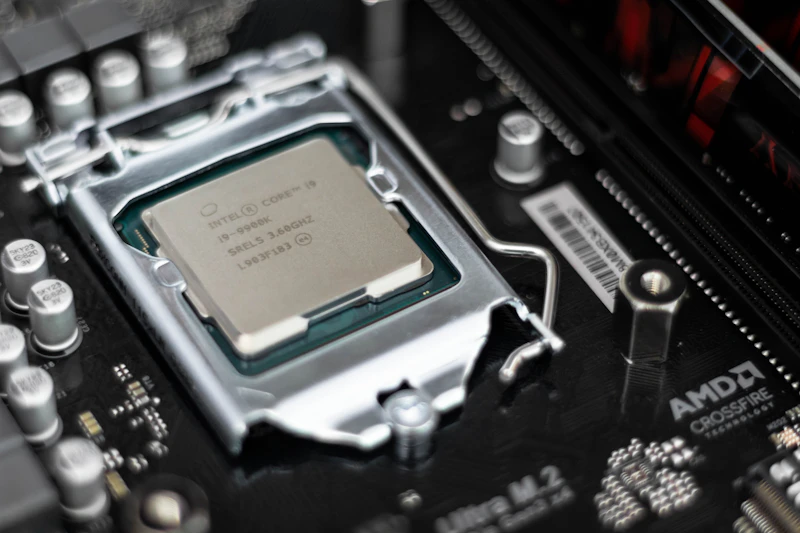
As the yen slides into its weakest territory in four decades, Takaichinomics has entered uncharted monetary terrain. A cheap yen functions as a silent subsidy for Rapidus, Kioxia, and TSMC's Kumamoto fabs—yet the same currency inflates the cost of imported tools and materials and intensifies the talent war with Korea. The question is whether monetary policy can stand in for industrial policy, and what that means for Korea's memory champions.