AIINSIGHT NOTE
AI · Web3 · Tech trends and insights at a glance
AI · Web3 · Tech trends and insights at a glance

OpenAI's o1 and DeepSeek-R1 arrived at the same methodological destination — reinforcement learning as the engine of reasoning improvement — from opposite ends of a geopolitical divide. This convergence signals a fundamental reorientation in how LLM performance is differentiated: parameter scale is giving way to inference-time compute and the precision of RL training design. The next competitive frontier will be defined not by who commands the most resources, but by who can architect the most effective reward structures.
There is something worth pausing over when OpenAI publishes "Learning to Reason with LLMs" and DeepSeek releases R1 as open source within the same window, with Hacker News placing both near the top of its rankings simultaneously. The convergence is not merely a coincidence of timing — it is a structural signal about where the frontier of large language model development has arrived. Two research cultures, separated by geopolitical tension, export controls, and fundamentally different institutional incentives, reached the same methodological destination: reinforcement learning as the primary mechanism for improving reasoning, not alignment.
RL is not new to language model training. RLHF has been central to alignment work for years, shaping model behavior to match human preferences. But what OpenAI's o1 lineage and DeepSeek-R1 represent is categorically different: RL being used not to steer a model's values but to train the act of thinking itself. The key shift is that the reasoning chain — the long sequence of tokens a model produces before arriving at an answer — is now a trainable artifact. Process reward models evaluate not just whether the final answer is correct but whether the intermediate steps are logically coherent, and RL optimizes the model to produce better reasoning traces across iterations. The difference between outcome reward and process reward may seem like a technical detail, but it changes what a model fundamentally learns to do.
The dominant competitive metric in LLM development has, for years, been parameter count. GPT-3's 175 billion parameters set a benchmark that subsequent models raced past, and the discourse around frontier AI was largely a discourse about scale. But two forces have been quietly undermining the logic of pure scale. The first is diminishing returns on the scaling curve — the empirical accumulation of evidence that doubling parameters no longer produces proportional capability gains across most meaningful benchmarks. The second is the rise of inference-time compute as a first-class design variable.
Inference-time compute refers to how much deliberate work a model performs between receiving a prompt and committing to a response. Traditional transformer inference is effectively instantaneous: one forward pass, one answer. Chain-of-thought and extended reasoning architectures stretch this deliberately, allowing a model to work through a problem over hundreds or thousands of tokens before reaching a conclusion. What o1 and R1 demonstrated convincingly is that a model trained to think deeply can outperform a much larger model trained to respond quickly on hard reasoning tasks — mathematics, multi-step code analysis, logical deduction. This reframes the competitive question entirely. The relevant axis is no longer how many parameters were trained over, but how well the training regime instilled structured, stepwise deliberation. Hardware advantage no longer guarantees reasoning advantage, which is precisely what made DeepSeek's achievement so disruptive to the existing competitive narrative.
DeepSeek-R1's significance extends well beyond its benchmark scores. The team achieved near-frontier reasoning capabilities under significant hardware constraints — Nvidia's export controls have materially limited China's access to cutting-edge accelerators, and the gap was expected to widen over time. That DeepSeek closed the reasoning gap not by matching compute but by optimizing training efficiency is strategically important. It demonstrates that the RL-based reasoning paradigm is not exclusively the domain of organizations with access to massive GPU clusters. The methodology itself, once understood, becomes portable.
When the frontier method becomes public knowledge — when the core insight that process-reward RL improves reasoning is openly documented and reproducible — the competition shifts from who discovered the technique to who can execute it most precisely. Reward structure design, training data curation, and the specific algorithmic choices within the RL loop become the new sources of differentiation. This dynamic is simultaneously democratizing and compressing: more teams can compete at the methodological frontier, but the margin between them narrows as shared techniques proliferate. The question now facing the leading labs is not how to defend a methodology that has already converged, but where to find the next axis of divergence once the current RL paradigm has been fully exploited across the industry. That answer remains open — and whoever finds it first will likely define the next phase of the competition.

The Land-Permit Paradox of Korea's Chip Belt, When the Cluster's Boom Prices Out Its Own Engineers
Dongtan, Giheung, and Guri have been folded into Korea's land-transaction permit regime just as the AI chip capex boom reshapes the property market around the country's largest fabs. The very prosperity the cluster generates is raising the cost for the engineers it depends on to settle nearby. The real test of agglomeration may lie not in siting megafabs but in housing and labor mobility.

The Collapse of the Closed AI Moat and the Supply-Chain Paradox of Unverifiable Weights
DeepSeek-R1's open reasoning weights and Llamafile's single-file distribution are eroding the performance and distribution moats that closed labs once charged a premium for. Yet the same openness collides head-on with the gap exposed by the "250 samples to break an LLM" research: weight distribution that no recipient can verify. Democratized competition and accumulated security debt now sit on the same scale.
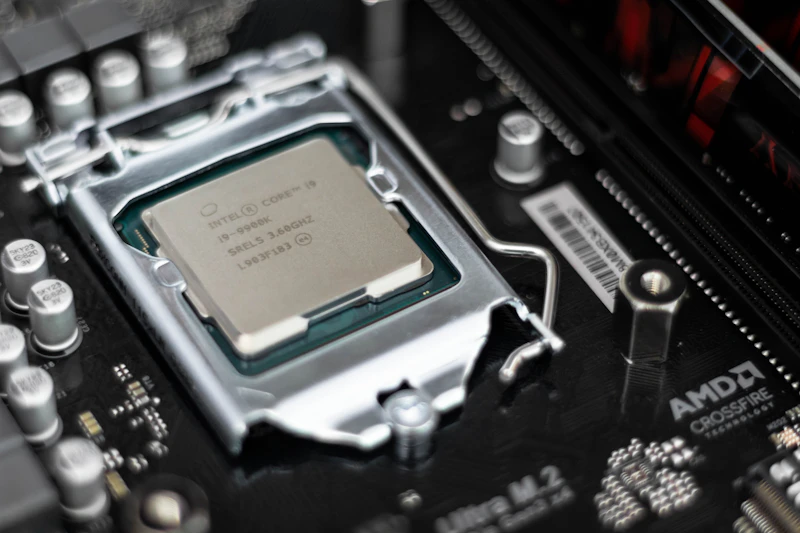
Forty-Year Yen Lows as the Hidden Subsidy Behind Japan's Chip Revival
As the yen slides into its weakest territory in four decades, Takaichinomics has entered uncharted monetary terrain. A cheap yen functions as a silent subsidy for Rapidus, Kioxia, and TSMC's Kumamoto fabs—yet the same currency inflates the cost of imported tools and materials and intensifies the talent war with Korea. The question is whether monetary policy can stand in for industrial policy, and what that means for Korea's memory champions.