AIINSIGHT NOTE
AI · Web3 · Tech trends and insights at a glance
AI · Web3 · Tech trends and insights at a glance

Naughty Dog's slow-motion dissolution is not a story about one studio's misfortunes. It is an early signal of what happens when generative AI rewrites the economics of AAA game production — and why the highest-tier creative studios may be structurally more vulnerable than anyone predicted.
Naughty Dog is dissolving in slow motion. The PlayStation studio behind Uncharted and The Last of Us — arguably the two defining narrative franchises of the previous console generation — has watched its core creative architects depart, its flagship projects stall, and its once-inviolable status as Sony's prestige IP engine quietly erode. Industry observers have catalogued these events as unfortunate but typical creative turnover. That reading misses the larger story.
What is happening to Naughty Dog is not primarily about internal creative tensions or the inevitable churn of talent in a high-pressure industry. It is about the collision between the economics of AAA game development and the rapidly maturing capabilities of generative AI — a collision that is restructuring how premium creative labor is valued, compensated, and ultimately whether it needs to exist at the scale it once did.
The AAA studio model has always been economically precarious, even at its apex. A single title absorbs five to eight years of development, hundreds of millions of dollars in production costs, and the concentrated creative energy of hundreds of specialists — writers, animators, motion capture directors, narrative designers, environmental artists — whose expertise cannot be easily replicated or substituted. The competitive moat of a studio like Naughty Dog lay precisely in this concentration: a specific culture of craft, a shared vocabulary for visual storytelling, and the institutional memory of how to ship ambitious narrative games at the highest possible standard.
This model survived as long as the economics of gaming rewarded it. A prestige title could justify a premium price point, generate enormous critical and cultural coverage, and serve as a loss-leader for console hardware sales. Sony's willingness to fund Naughty Dog's extended development cycles made sense when the calculus was straightforward — exclusive blockbuster drives console adoption. But the emergence of generative AI tools has begun to shift that calculus in ways not yet fully visible in earnings reports, but already visible in headcount decisions, project cancellations, and the quiet non-renewal of creative talent.
The conventional wisdom about AI and creative displacement goes like this: automation starts at the bottom of the skill pyramid and works its way up. Repetitive tasks, asset generation, QA testing fall first. The sophisticated creative labor at the top — the narrative architects, the world-builders, the writers' rooms — remains protected by the irreducible complexity of human expression. This framework is not wrong so much as it is dangerously incomplete.
What generative AI is actually doing to the game development value chain is not displacing the bottom while leaving the top intact. It is collapsing the middle layer entirely and, in doing so, rendering the expensive top structurally redundant. When AI can generate environment assets, texture packs, dialogue drafts, and animation variants at a fraction of the previous cost, the argument for maintaining a studio of three hundred people for six years becomes structurally much harder to sustain. The pipeline shrinks. And when the pipeline shrinks, the organizational architecture that housed premium creative talent — the carefully cultivated studio culture, the senior writer's room, decades of institutional knowledge — becomes overhead that publishers struggle to justify.
There is a deeper irony here that deserves careful attention. Smaller independent studios are actually well-positioned to absorb AI tools as force multipliers. A team of twenty can now produce work that once required a team of a hundred. But a AAA studio of three hundred cannot simply absorb AI tools to become a studio of thirty. The organizational complexity, the management overhead, the IP and legal infrastructure, the platform relationships — none of these compress as cleanly as the underlying production cost structure collapses. The economies of scale that built these studios in the first place become liabilities when the cost curve shifts underneath them.
This is the structural trap that premium creative studios now find themselves in. They are too large to pivot nimbly, too culturally specific to be dissolved and reassembled elsewhere, and too expensive to maintain at their full organizational density once AI tools begin delivering meaningful productivity gains at the production layer. The brand can survive — Sony can retain the Naughty Dog label as an IP vehicle — but the labor model that gave the brand its meaning cannot.
The question Naughty Dog's unraveling forces onto the table is one that the broader creative economy has been carefully avoiding: when AI can competently assist with or partially substitute for the highest-tier creative work — long-arc narrative design, character psychology, world-building at scale — does the business case for employing hundreds of such specialists for years at a time remain coherent?
The optimistic answer is that human creative direction will always retain its premium, that AI will remain a powerful tool rather than a structural replacement. That may be true at the level of individual vision-holders — the directors and narrative leads whose names attach to IP and whose creative signatures give franchises their identity. But the studios that once surrounded those vision-holders with deep creative benches of supporting talent are a different matter entirely. And it is precisely those benches — the mid-level writers, the senior environmental artists, the experienced narrative designers — that are disappearing first.
The AI transition in creative industries is not primarily a story about machines replacing humans at the point of creative origination. It is a story about how the economic valuation of human creative work is being reset across the entire production stack — and the reset is happening fastest, and most brutally, at the top of the pyramid, not the bottom. Naughty Dog's dissolution is an early warning that the premium creative studio model, which survived decades of technological change by making itself irreplaceable, may have finally encountered the force that makes irreplaceability economically inconvenient. That is a different kind of disruption, and it will not stop at games.

The Land-Permit Paradox of Korea's Chip Belt, When the Cluster's Boom Prices Out Its Own Engineers
Dongtan, Giheung, and Guri have been folded into Korea's land-transaction permit regime just as the AI chip capex boom reshapes the property market around the country's largest fabs. The very prosperity the cluster generates is raising the cost for the engineers it depends on to settle nearby. The real test of agglomeration may lie not in siting megafabs but in housing and labor mobility.

The Collapse of the Closed AI Moat and the Supply-Chain Paradox of Unverifiable Weights
DeepSeek-R1's open reasoning weights and Llamafile's single-file distribution are eroding the performance and distribution moats that closed labs once charged a premium for. Yet the same openness collides head-on with the gap exposed by the "250 samples to break an LLM" research: weight distribution that no recipient can verify. Democratized competition and accumulated security debt now sit on the same scale.
Forty-Year Yen Lows as the Hidden Subsidy Behind Japan's Chip Revival
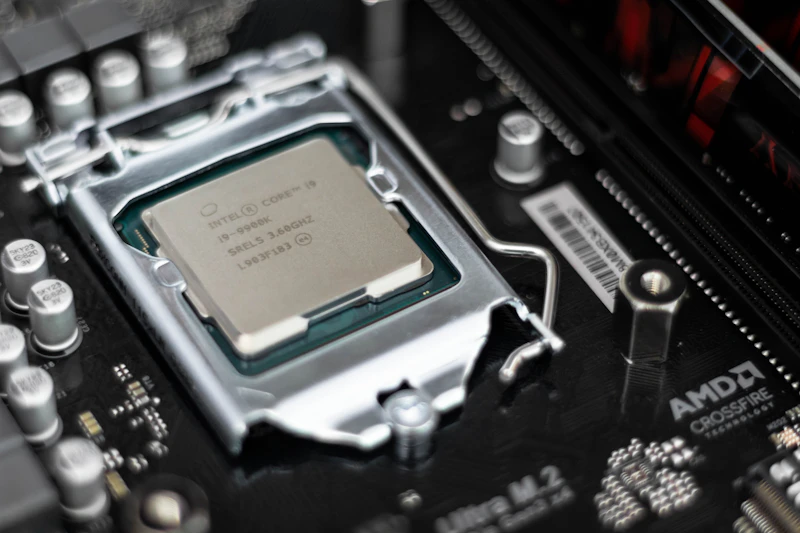
As the yen slides into its weakest territory in four decades, Takaichinomics has entered uncharted monetary terrain. A cheap yen functions as a silent subsidy for Rapidus, Kioxia, and TSMC's Kumamoto fabs—yet the same currency inflates the cost of imported tools and materials and intensifies the talent war with Korea. The question is whether monetary policy can stand in for industrial policy, and what that means for Korea's memory champions.