AIINSIGHT NOTE
AI · Web3 · Tech trends and insights at a glance
AI · Web3 · Tech trends and insights at a glance

From the UAE's Falcon to France's Mistral, nations are building their own AI models—not merely for linguistic performance, but to assert control over data pipelines, intelligence infrastructure, and strategic autonomy. The move signals a slow erosion of the assumption that American platforms are the natural substrate for global artificial intelligence.
For most of the past decade, artificial intelligence felt like an American export. The models, the infrastructure, the benchmarks—nearly all of it originated in a handful of zip codes in California and Washington state, then radiated outward to the rest of the world. That geography is beginning to matter in ways it didn't before.
The signal is clearest not in the models themselves, but in the language surrounding them. When the UAE's Technology Innovation Institute released Falcon and distributed it freely to the global developer community, it wasn't simply announcing a new language model. It was staking a claim in the knowledge economy of the post-oil Gulf—articulating a vision of technological identity that no amount of API access to OpenAI could provide. When France backed Mistral with state support and embedded it within a national industrial policy framework, it was saying something the EU had long struggled to express: that technological sovereignty and political sovereignty are increasingly the same thing.
The practical motivations for national AI development are easier to understand than they might first appear. Any government that routes sensitive operations through an American cloud provider is, to some degree, operating under American legal jurisdiction. The U.S. CLOUD Act grants American authorities potential access to data held by U.S.-based companies regardless of where that data physically resides. For European ministries, Gulf intelligence services, or Korean defense agencies, this is not a theoretical concern—it is a structural vulnerability embedded in their digital infrastructure.
Language performance is the stated rationale for building sovereign models, and it carries genuine weight. Large models trained predominantly on English-language corpora perform measurably worse on Arabic dialects, Korean honorific registers, and lower-resource languages. But if linguistic adequacy were the only goal, fine-tuning existing open-weight models would be far cheaper than building foundation models from scratch. The fact that countries are making the latter investment reveals the deeper logic: the point is not merely a better chatbot for citizens—it is control over the data pipeline that feeds the model and the inference infrastructure that runs it.
France's approach illustrates the dual track most clearly. Mistral AI operates as a private company, but it benefits from a policy environment deliberately shaped to support it: favorable treatment within EU AI Act provisions, access to public compute subsidies, and a government that has explicitly framed domestic AI capability as a strategic priority equivalent to aerospace or nuclear energy. The EU's regulatory framework, often portrayed externally as a drag on innovation, also functions as a form of market sovereignty—imposing European rules on American companies operating in European markets, rather than accepting American defaults as global standards.
Beneath the economic and governance arguments lies a harder layer: military and intelligence applications. The capabilities that make large language models useful for content generation and enterprise software also make them powerful tools for signals intelligence, battlefield situational awareness, adversarial information operations, and autonomous decision-support systems. As the boundary between civilian and military AI blurs, so too does the strategic calculus around model ownership.
Saudi Arabia's SDAIA is perhaps the most direct about linking AI development to national security objectives. The kingdom's AI strategy frames indigenous model development simultaneously as an economic diversification play—building competitiveness for the post-oil era—and as a defense-relevant capability requiring sovereign control. With backing from the sovereign wealth fund PIF and Aramco's substantial computational resources, Saudi Arabia is attempting to compress decades of technological catch-up into a few years of concentrated investment.
South Korea's situation is instructive in a different way. Models like EXAONE from LG AI Research and KT's HyperCLOVA X carry the organizational markings of private enterprise, but the Korean government's public data provision programs and defense AI budget lines suggest a closer entanglement between commercial and state interests than corporate structures imply. This pattern—nominally private models with deep public entanglements—is likely to become the norm rather than the exception as AI hardens into infrastructure-grade technology. The pretense of a clean public-private boundary serves political convenience more than technical reality.
The honest question is how deep this sovereignty can actually go. Mistral trains its models on Nvidia GPUs. UAE and Saudi projects rely on American cloud providers for parts of their inference stack. Korean foundries manufacture advanced logic chips at competitive yields, but the most cutting-edge GPU architectures remain American designs. The full value chain of AI—from chip design through model training to deployment infrastructure—remains substantially American-controlled, and building true end-to-end independence would require a level of industrial investment that only a handful of states could seriously contemplate.
This structural dependency means that today's sovereignty declarations are partly political gestures as well as technological achievements. But political gestures accumulate. When enough countries possess domestic foundation models, they gain standing in international standards bodies. When enough data governance frameworks are built around non-American assumptions, the United States loses its default rule-setter status in global AI governance. The fracture in America's AI order is unlikely to come from a single rival displacing OpenAI or Anthropic—it will come from the slow erosion of the assumption that American platforms are the natural substrate for global intelligence infrastructure. That erosion is already well underway, and the countries accelerating it are no longer outliers.

The Land-Permit Paradox of Korea's Chip Belt, When the Cluster's Boom Prices Out Its Own Engineers
Dongtan, Giheung, and Guri have been folded into Korea's land-transaction permit regime just as the AI chip capex boom reshapes the property market around the country's largest fabs. The very prosperity the cluster generates is raising the cost for the engineers it depends on to settle nearby. The real test of agglomeration may lie not in siting megafabs but in housing and labor mobility.
The Collapse of the Closed AI Moat and the Supply-Chain Paradox of Unverifiable Weights
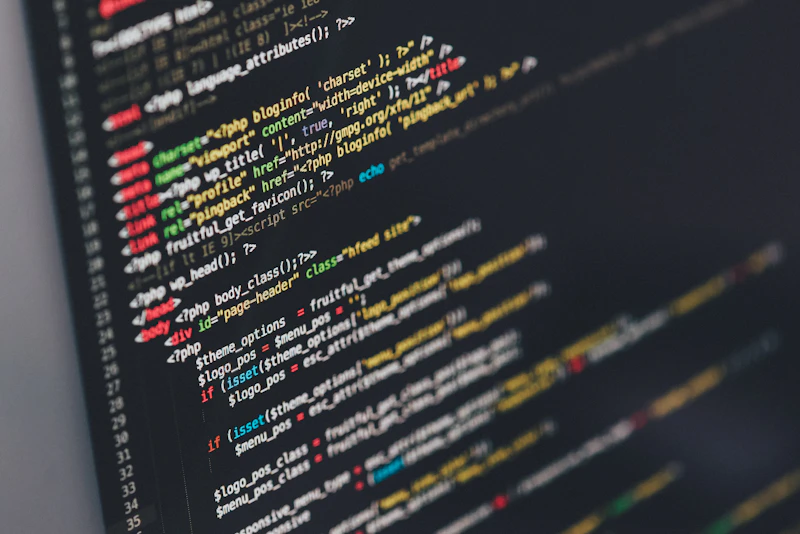
DeepSeek-R1's open reasoning weights and Llamafile's single-file distribution are eroding the performance and distribution moats that closed labs once charged a premium for. Yet the same openness collides head-on with the gap exposed by the "250 samples to break an LLM" research: weight distribution that no recipient can verify. Democratized competition and accumulated security debt now sit on the same scale.
Forty-Year Yen Lows as the Hidden Subsidy Behind Japan's Chip Revival
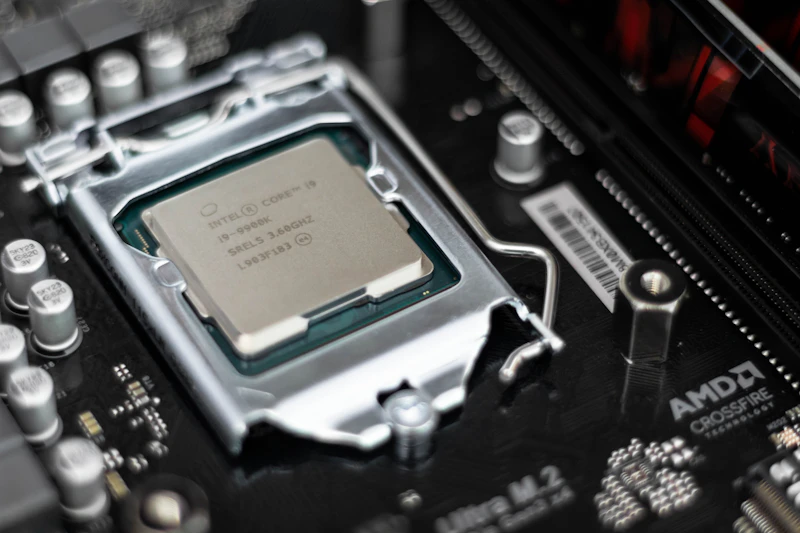
As the yen slides into its weakest territory in four decades, Takaichinomics has entered uncharted monetary terrain. A cheap yen functions as a silent subsidy for Rapidus, Kioxia, and TSMC's Kumamoto fabs—yet the same currency inflates the cost of imported tools and materials and intensifies the talent war with Korea. The question is whether monetary policy can stand in for industrial policy, and what that means for Korea's memory champions.