AIINSIGHT NOTE
AI · Web3 · Tech trends and insights at a glance
AI · Web3 · Tech trends and insights at a glance

South Korea's minimum wage committee rejected industry-differentiated wage floors at precisely the moment AI automation is hollowing out delivery, retail, and manufacturing jobs at vastly different speeds. A single wage floor assumes a homogeneous labor market, but the AI shock is structurally asymmetric. The result is a paradoxical feedback loop: blanket wage increases accelerate automation investment in the most exposed sectors, hastening the very job destruction the policy was meant to prevent.
When South Korea's Minimum Wage Commission voted down a proposal for industry-differentiated wage floors, the headline framing was straightforward: a victory for worker protection, a rejection of a framework that might permanently consign low-wage sectors to second-tier status. Those concerns deserve respect. But the timing of this decision, arriving in mid-2026 as artificial intelligence quietly reshapes entire occupational categories, introduces a structural irony that the commission's deliberations did not fully reckon with.
The single national minimum wage rests on an implicit premise: that the labor market is, broadly speaking, homogeneous enough that a uniform floor will impose comparable burdens and yield comparable benefits across sectors. That premise held reasonably well through most of the post-war era, when productivity differences across industries were gradual and technology diffused slowly. It is breaking down now. AI automation is not a uniform tide lifting or threatening all sectors equally. It is a series of targeted floods, hitting delivery, convenience retail, light manufacturing, and logistics with a force and speed that software-driven knowledge work does not yet face at the same scale.
Autonomous last-mile delivery robots are accumulating real-world mileage on Korean sidewalks. Unmanned checkout systems have already displaced a meaningful share of cashier hours in major retail chains. Collaborative robots in small and medium manufacturing facilities are reaching price points where the payback period against human labor is measured in months rather than years. Meanwhile, the law firm associate, the marketing analyst, the financial auditor — all face AI encroachment too, but on a slower, more negotiated timetable. The automation shock is asymmetric. The wage policy is not.
Economists have long documented the relationship between labor cost increases and labor-saving technology investment — a dynamic formalized in induced innovation theory. The mechanization of American agriculture in the nineteenth century was partly driven by labor scarcity and rising farmhand wages. The acceleration of factory automation through the twentieth century correlated with periods of sustained wage growth. The underlying logic is durable: when the cost of human labor rises relative to the cost of capital substitutes, firms rationally shift their investment calculus.
What has changed in 2026 is not the logic but the execution speed and capital threshold. Earlier automation waves required substantial upfront investment, long installation lead times, and significant organizational restructuring. Contemporary AI-driven automation frequently arrives as a software subscription, a cloud API integration, or a leased cobotic unit. The friction between the wage signal and the automation response has dropped dramatically. A convenience store operator facing a meaningful minimum wage increase does not need to commission a custom robotics project; the checkout automation infrastructure exists and is improving quarterly.
This creates the paradoxical feedback loop at the heart of this column. A uniform wage increase, applied without differentiation across sectors, lands as disproportionate pressure on the industries where automation is already most technically feasible and economically attractive. Delivery platforms with thin margins and intensifying last-mile robotics investment accelerate their timeline. Retail chains with established self-checkout infrastructure expand its share of transactions. Small manufacturers redraw their break-even analysis on collaborative robots. In each case, the wage increase does not raise the floor for the workers it was designed to protect — it accelerates the elimination of the positions those workers occupy.
The workers who remain, in a smaller and more automated sector, may indeed earn the higher floor wage. But the aggregate employment base contracts. Protection for the incumbent is purchased at the cost of entry for the next cohort.
The critique of industry-differentiated minimum wages is not trivial. A two-tier system risks calcifying certain sectors as permanent low-wage zones, creating political economies where industry associations lobby aggressively for favorable classification and where the gap between sectors becomes self-reinforcing rather than temporary. These are real institutional risks, and any honest policy analysis must weigh them.
But what this vote foreclosed was not merely a single policy mechanism. It foreclosed the institutional acknowledgment that AI automation's asymmetric sectoral impact is a first-order variable in labor market design. The commission declined to build a policy framework that treats the heterogeneity of automation exposure as a design input rather than background noise. That is the deeper significance of the outcome.
The more productive path forward is not necessarily wage differentiation per se, but structural complementarity. A uniform wage floor could coexist with sector-specific employment subsidies or payroll tax relief for the most automation-exposed industries, effectively adjusting total labor costs without creating a visible second tier of wage rates. Alternatively, an automation dividend levy — capturing a portion of the productivity gains firms realize when they replace human workers with AI systems — could fund retraining and transition support at a scale commensurate with the disruption. Neither mechanism requires abandoning the principle of a single national wage floor. Both require acknowledging that the floor's impact is not uniform.
The asymmetry of AI's employment shock is not going away. Delivery economics will continue to improve for robots and deteriorate for human riders. Retail's unit economics will continue to favor unmanned checkout. Manufacturing's cobotic break-even point will keep falling. A labor protection framework built for a homogeneous economy will not hold that line — it will merely ensure that the displacement happens faster, and that when the jobs disappear, there is no institutional infrastructure to manage the transition. That is not worker protection. It is the appearance of it.

The Land-Permit Paradox of Korea's Chip Belt, When the Cluster's Boom Prices Out Its Own Engineers
Dongtan, Giheung, and Guri have been folded into Korea's land-transaction permit regime just as the AI chip capex boom reshapes the property market around the country's largest fabs. The very prosperity the cluster generates is raising the cost for the engineers it depends on to settle nearby. The real test of agglomeration may lie not in siting megafabs but in housing and labor mobility.

The Collapse of the Closed AI Moat and the Supply-Chain Paradox of Unverifiable Weights
DeepSeek-R1's open reasoning weights and Llamafile's single-file distribution are eroding the performance and distribution moats that closed labs once charged a premium for. Yet the same openness collides head-on with the gap exposed by the "250 samples to break an LLM" research: weight distribution that no recipient can verify. Democratized competition and accumulated security debt now sit on the same scale.
Forty-Year Yen Lows as the Hidden Subsidy Behind Japan's Chip Revival
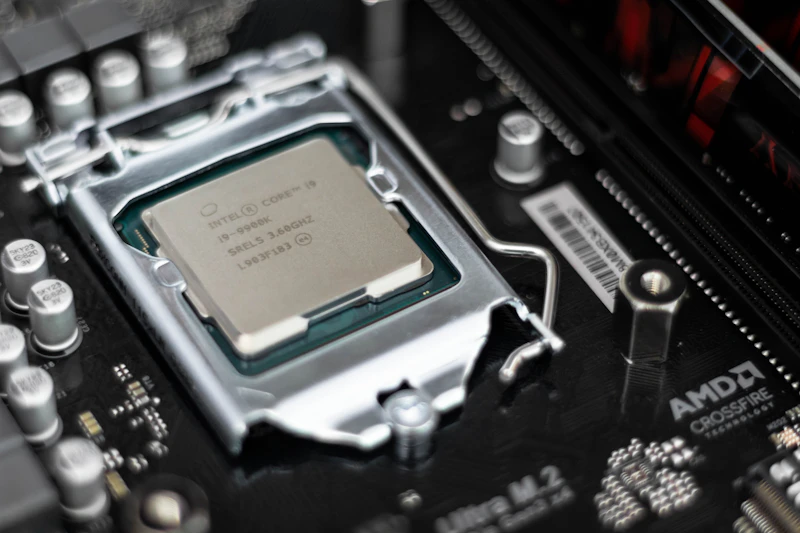
As the yen slides into its weakest territory in four decades, Takaichinomics has entered uncharted monetary terrain. A cheap yen functions as a silent subsidy for Rapidus, Kioxia, and TSMC's Kumamoto fabs—yet the same currency inflates the cost of imported tools and materials and intensifies the talent war with Korea. The question is whether monetary policy can stand in for industrial policy, and what that means for Korea's memory champions.