AIINSIGHT NOTE
AI · Web3 · Tech trends and insights at a glance
AI · Web3 · Tech trends and insights at a glance

Power banks that no one knows how to dispose of are quietly becoming firebombs inside garbage trucks. As AI wearables, edge devices, and robots multiply, the infrastructure meant to handle their afterlife remains almost nonexistent. This is the story of how a missing circular economy for lithium has become the unbilled cost of putting intelligence everywhere.
Sanitation trucks catching fire for no obvious reason have become an oddly common municipal headache. When investigators sift through the wreckage, they keep finding the same culprit: a crushed lithium-ion cell, usually a palm-sized power bank that once revived a phone two or three times on a single charge. At the end of its life, that humble device has nowhere to go. There is no obvious bin for it, the battery box at the corner store is sized for AA cells, and so it ends up in an ordinary trash bag, where a compactor's pressure triggers an internal short and a fire. This mundane scene is one of the most honest portraits of the technological moment we now inhabit.
Industry's gaze is fixed almost entirely on the front end. Longer runtime, faster charging, higher energy density. From AI wearables and smart rings to wireless earbuds, edge-inference gadgets, and the growing fleet of household and service robots, the variety and volume of lithium-bearing devices has grown exponentially over the past five years. As generative AI descends from the cloud onto wrists and desks, that curve only steepens. The trouble is that nearly all of these devices share a short two-to-three-year lifespan. Whatever sells explosively will, after a delay, arrive at the disposal stage in equally explosive numbers.
Yet the infrastructure meant to absorb that enormous back end barely exists. A citizen who wants to dispose of a single power bank responsibly is given no clear guidance, collection systems are not standardized, and the recycling industry that would dismantle spent cells to recover lithium, cobalt, and nickel remains marginal because the economics rarely work. The paradox that mining fresh ore can be cheaper than recovering material from used batteries is precisely why the circular economy stays a slogan rather than a system. The market eagerly scales production, but recovery and regeneration belong to no one in particular.
We habitually translate the cost of AI into data-center electricity, cooling water, and the carbon footprint of GPUs. But as intelligence disperses to the edge, the center of gravity of its cost shifts too. When hundreds of millions of small devices scatter into the world, each cradling its own battery, the fact that every one will eventually become hazardous waste almost never makes it onto the ledger. The phrase ticking time bomb is no exaggeration. Uncollected cells leach into soil and groundwater in landfills, ignite in transit, and bury recoverable scarce metals back into the earth for good. That is an environmental cost and, simultaneously, a supply-chain security loss. A society that mines and refines lithium at great effort only to discard it after a single use is tripping itself in an age when raw materials are being weaponized.
The direction of a remedy is clear enough. Mandate designs built for disassembly and recovery from the outset, make extended producer responsibility actually function rather than exist on paper, and create the subsidies and standards that keep recycling economically viable. If the AI industry insists on calling itself the future of humanity, that future must include an answer to where the device on your wrist goes once it dies. Behind the dazzle of the performance curve, what we have been avoiding turns out to be the most elementary question of all. Gathering things back well matters as much as making them well, and an industry that forgets this builds its future atop the waste it leaves behind.

Fabs on the Fault Line, How a Single Earthquake Could Halt the AI Chip Supply Chain
Two major earthquakes striking the same week — one in Venezuela, a magnitude 7.2 off Japan's Sanriku coast — underscored an uncomfortable truth: almost all advanced AI compute is manufactured along the narrowest, most seismically active corridor on Earth. With EUV monopoly, advanced packaging, and HBM concentrated across Taiwan and Kyushu, a single strong quake represents a genuine single point of failure for global AI infrastructure. Geographic dispersion and machine-learning earthquake early warning are emerging as the new variables of supply-chain resilience.

Where Should the Megafab Go, Korea's Chip Siting Dilemma Between Clustering and Regional Balance
When word leaked that off-capital semiconductor investment was being finalized in a private meeting between Samsung's chairman and the president, markets misread it as a corporate siting decision. It is something larger: the moment when the agglomeration logic that has concentrated Korean chipmaking into a single point south of Seoul began to be politically renegotiated. Fab location has become a national equation tangling power infrastructure, asset inequality, and industrial sovereignty.
Keller and Zeloof's Garage Fab Bet Against the Capital-Intensity Myth of Chipmaking
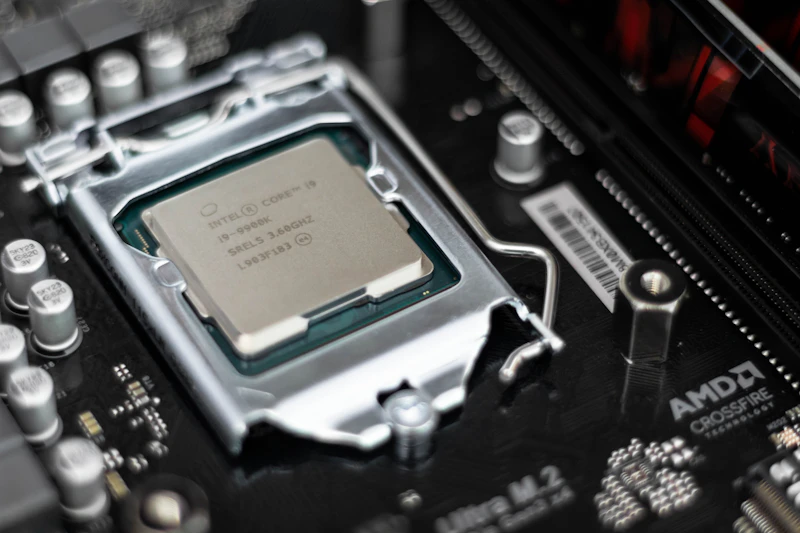
Atomic Semi, founded by Jim Keller and Sam Zeloof, challenges the orthodoxy that chips demand tens of billions in capital and an ASML EUV monopoly. The real question is whether small, cheap fabs can carve out a genuine niche in specialty and prototype silicon, or whether they remain a charismatic gesture against an unmovable industry.