AIINSIGHT NOTE
AI · Web3 · Tech trends and insights at a glance
AI · Web3 · Tech trends and insights at a glance
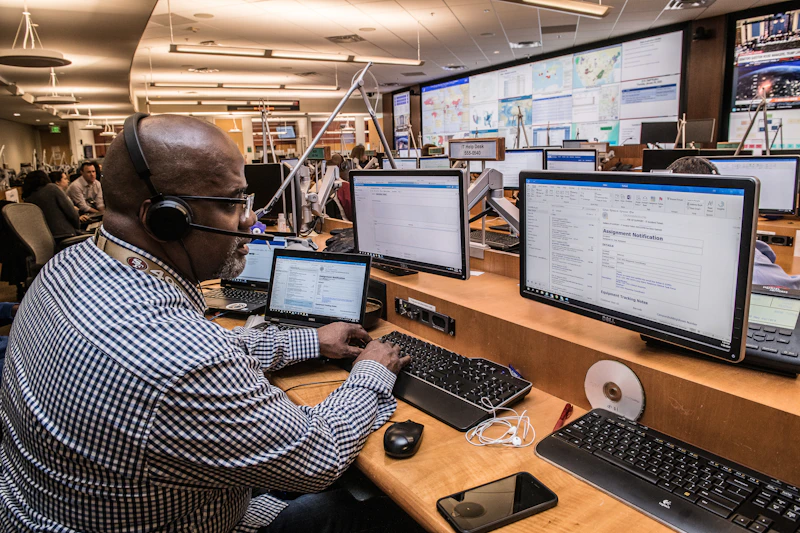
South Korea's benchmark index fell sharply on election results, then bounced more than four percent as a buy-side circuit breaker triggered. The rally raises a question more consequential than its magnitude: does it reflect structural conviction in Korea's AI semiconductor cycle, or merely a technical recoil from oversold levels? Reading the currency and foreign capital signals together offers a clearer — and more sobering — answer.
When South Korea's equity market absorbed the initial shock of a contested election outcome, the speed of the selloff was striking — but the speed of the recovery was more so. The KOSPI fell more than three percent in the session following results, reaching levels not seen since earlier bouts of political turbulence. Then, within the same trading window, a buy-side circuit breaker activated, momentum reversed, and the index closed up more than four percent. The market, in short, answered its own panic.
Circuit breakers of this kind — formally designed to arrest freefall in futures markets, but effective in signaling concentrated buying interest in the underlying — do not activate in a vacuum. Their triggering implies that a meaningful pool of capital was positioned to absorb the dislocation and step in at lower prices. The question is who that capital belongs to, what it believes, and how long it intends to stay.
The immediate instinct in situations like this is to read a four-percent bounce as a technical reversion. Equity markets routinely overcorrect on political news, and just as routinely snap back once the immediate shock fades. Under this interpretation, the rally says nothing durable about fundamentals — it merely reflects the mechanical exhaustion of short-term selling pressure.
That reading is not wrong. But it is incomplete. Korea's semiconductor complex — anchored by Samsung Electronics and SK Hynix — sits at the intersection of two trends that operate on a timeframe entirely different from the electoral cycle. The first is the global hyperscaler capital expenditure cycle, which has shown no meaningful signs of deceleration. Microsoft, Google, and Meta have each reiterated AI infrastructure spending commitments extending through at least 2027. The second is the HBM demand curve, structurally tied to the adoption rate of AI accelerators. Both trends are global, driven by forces that have little to do with who governs in Seoul.
The relevant question, then, is whether global capital has internalized this decoupling — whether institutional investors are now capable of treating Korean political risk as a short-term volatility event rather than a structural threat to the country's export earnings. The answer, based on foreign investor behavior during the rebound, is ambiguous at best. Foreign net selling during the initial shock was substantial, and the magnitude of foreign re-entry on the rebound day fell short of what a clean structural conviction narrative would predict. This gap matters. It suggests that active managers, at least, are not yet treating Korea's political volatility as fully priced in.
The currency dimension complicates the picture further. The Korean won briefly touched the 1380-range against the dollar during the most acute phase of the selloff. For a foreign investor holding Korean equities, even a solid stock-market recovery can be partially or wholly erased in dollar terms if the won does not stabilize alongside equity prices. In periods of high exchange rate volatility, rational foreign capital will favor faster rotation over longer holding periods — precisely the pattern visible in recent flows.
This creates a structural tension in the AI infrastructure investment thesis. Domestic AI infrastructure buildout — data centers, semiconductor fabrication capacity, power grid upgrades — requires patient capital with multi-year horizons. That kind of capital is unusually sensitive to policy continuity and currency predictability. A government transition that leaves regulatory frameworks ambiguous, or a won that oscillates unpredictably, raises the hurdle rate for long-duration commitments in ways that short-term equity trading simply does not face.
It is also worth distinguishing, within foreign flows, between passive index-tracking capital and active discretionary managers. Passive funds move according to index rebalancing schedules and are largely insensitive to political shocks of this kind. Active managers, however, will reprice Korea's risk premium on each new development — and may reduce exposure as a deliberate tactical call rather than a forced liquidation. Whether the rebound's buying force came primarily from passive rebalancing or from genuine active conviction will shape the durability of the recovery over the coming weeks.
Political uncertainty does not resolve cleanly — it fades, or it transforms. Investors who wait for total resolution wait indefinitely. What matters instead is whether the nature of the uncertainty has become manageable and, crucially, whether the conditions for AI infrastructure investment can be met regardless of which party holds power.
Three threshold conditions emerge from this analysis. The first is explicit policy continuity signaling. Korea's semiconductor support framework — subsidy mechanisms, power infrastructure planning, and data center permitting — needs to be reaffirmed by the incoming administration in concrete rather than rhetorical terms. The semiconductor special act's implementing regulations and grid investment roadmaps are the specific policy artifacts that move private capital. Without explicit reaffirmation at a granular level, investment decisions defer.
The second condition is currency band stabilization. This does not mean a return to any particular exchange rate level. It means that the direction and range of the won-dollar rate become predictable enough that a five-year capital expenditure projection can be modeled with tolerable error margins. The Bank of Korea's forward guidance on monetary policy — and the credibility of its independence during a period of political transition — becomes directly relevant to AI infrastructure investment decisions in a way that is easy to underestimate.
The third condition is the global demand signal continuing to confirm. Each quarter that Nvidia's data center revenue exceeds expectations, each hyperscaler earnings call that raises AI capex guidance, partially offsets the Korea-specific political risk premium. The structural case for Korean semiconductor supply is anchored in global AI adoption dynamics, not in Korean domestic policy. As long as that global cycle remains intact, the structural investment thesis survives political noise — and structural theses, even when temporarily obscured, tend to reassert themselves when the noise clears.
The four-percent bounce, in the end, is best understood not as a verdict but as a question. It asks whether the structural thesis is durable enough to outlast the political disruption. The answer will not come from any single session's price action. It will emerge from the interplay of foreign capital behavior, won stabilization, and policy clarity over the weeks ahead. Those who read that interplay correctly will be positioned before the thesis becomes consensus.
The Land-Permit Paradox of Korea's Chip Belt, When the Cluster's Boom Prices Out Its Own Engineers
Dongtan, Giheung, and Guri have been folded into Korea's land-transaction permit regime just as the AI chip capex boom reshapes the property market around the country's largest fabs. The very prosperity the cluster generates is raising the cost for the engineers it depends on to settle nearby. The real test of agglomeration may lie not in siting megafabs but in housing and labor mobility.
The Collapse of the Closed AI Moat and the Supply-Chain Paradox of Unverifiable Weights
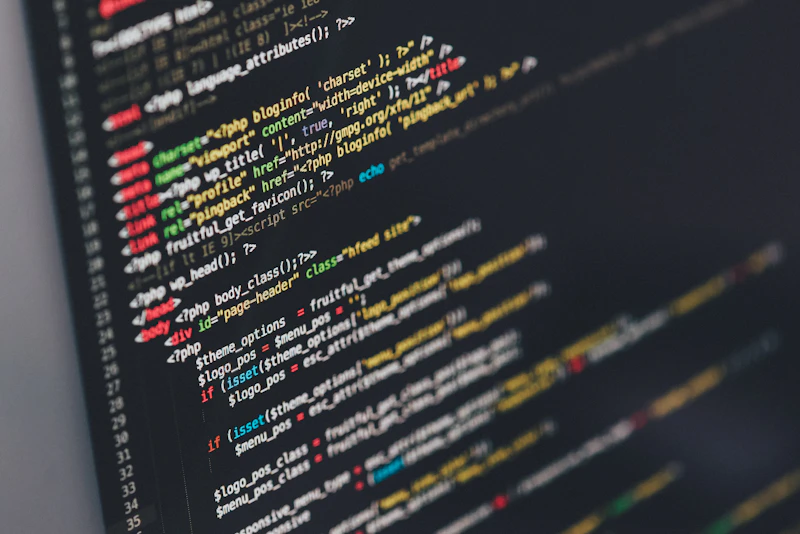
DeepSeek-R1's open reasoning weights and Llamafile's single-file distribution are eroding the performance and distribution moats that closed labs once charged a premium for. Yet the same openness collides head-on with the gap exposed by the "250 samples to break an LLM" research: weight distribution that no recipient can verify. Democratized competition and accumulated security debt now sit on the same scale.
Forty-Year Yen Lows as the Hidden Subsidy Behind Japan's Chip Revival
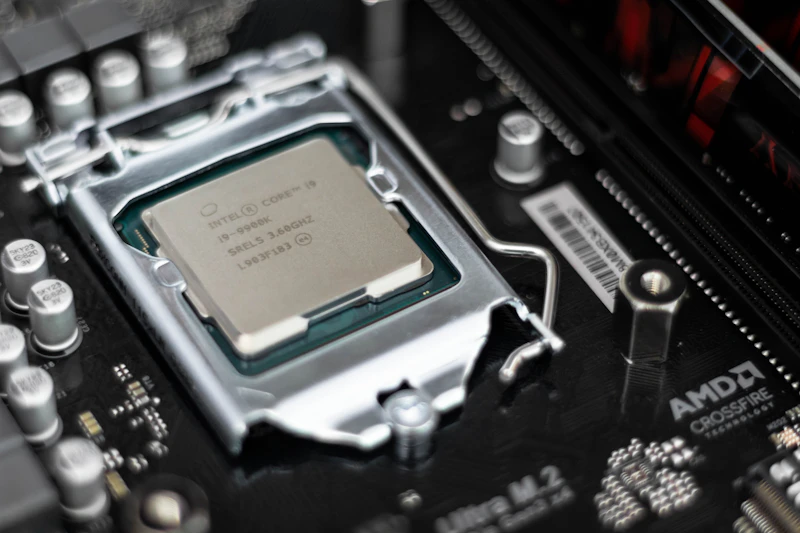
As the yen slides into its weakest territory in four decades, Takaichinomics has entered uncharted monetary terrain. A cheap yen functions as a silent subsidy for Rapidus, Kioxia, and TSMC's Kumamoto fabs—yet the same currency inflates the cost of imported tools and materials and intensifies the talent war with Korea. The question is whether monetary policy can stand in for industrial policy, and what that means for Korea's memory champions.