AIINSIGHT NOTE
AI · Web3 · Tech trends and insights at a glance
AI · Web3 · Tech trends and insights at a glance

South Korea's plan to merge the capital structures of its five state-owned power companies is designed to accelerate the energy transition — but its payoffs are measured in decades. AI data center demand is measured in megawatts needed now, and the collision between these two timelines is exposing a structural dilemma at the heart of Korean energy policy.
South Korea's government is pushing forward with a plan to consolidate the capital structures of the country's five state-owned power generation companies — Korea South-East Power, Korea Midland Power, Korea Western Power, Korea Southern Power, and Korea East-West Power — into a unified investment framework. The stated rationale is straightforward: fragmented capital across five parallel entities creates redundancy, limits the scale of individual renewable energy projects, and weakens Korea's ability to compete for global clean energy financing. By pooling resources, the argument goes, the consolidated entity can accelerate the buildout of offshore wind, solar, and next-generation storage infrastructure that Korea's carbon neutrality targets demand.
The logic holds water as far as it goes. Renewable energy development is a capital-intensive, long-duration game. Offshore wind farms require years of environmental assessment, grid interconnection planning, and construction before a single kilowatt reaches the market. Korea's 11th Basic Plan for Electricity Supply and Demand sets phased targets through 2038, and consolidation can, in theory, lower the cost of capital, reduce duplicated overhead, and channel investment toward the highest-priority projects. In a sector where timing is measured in decades, the logic of scale is genuinely compelling.
But that timeline — the one that measures returns in decades — is precisely where the problem begins.
Energy transition planning operates on a horizon that most capital markets struggle to price. Even under optimistic scenarios, the consolidation of five bureaucratic entities into a coherent investment structure will itself consume years of legal, regulatory, and organizational work before a single additional megawatt of renewable capacity is commissioned. And once that work is done, the actual buildout of generation assets adds another seven to ten years on average for large-scale offshore wind. The investment thesis embedded in green bonds issued against future carbon reduction credits is structurally sound — but it assumes a patient capital base and a stable demand environment that can wait.
There is also an internal tension that consolidation alone cannot resolve. The five companies carry decades of asset histories, labor agreements, and operational cultures optimized for dispatchable thermal generation. Redirecting those institutional identities toward long-duration renewable projects requires not just capital but a genuine organizational transformation. The risk is not that the plan is wrong in the long run; it is that the transition period — the years between the old structure dissolving and the new one producing results — creates exactly the kind of investment vacuum that Korea can least afford right now.
AI infrastructure operates on a fundamentally different clock. As large language models scale and as inference workloads multiply across the global enterprise market, the power draw of data centers has grown faster than almost any grid planner anticipated five years ago. In South Korea, this demand is concentrating in the Seoul Capital Area and the Chungcheong corridor, where dozens of large-scale data center projects are either under construction or awaiting grid interconnection approval. Individual projects are requesting hundreds of megawatts; clusters of them push into the gigawatt range.
The mismatch is not merely quantitative. Data centers do not just need electricity — they need power that is uninterruptible, voltage-stable, and frequency-consistent around the clock, every day of the year. These are exacting requirements that sit in structural tension with a grid transitioning toward higher shares of variable renewable generation. Wind and solar are only dispatchable with storage backup, and storage at the scale needed to buffer gigawatt-class loads remains expensive and, in Korea's case, largely unbuilt. The consequence is that even as Korea invests in long-term clean generation capacity, the near-term grid may struggle to meet the reliability standards that hyperscale AI tenants demand — and those tenants will notice.
The gap between these two clocks — the decade-plus horizon of the utility consolidation's investable returns and the right-now urgency of AI power procurement — creates a policy dilemma that neither timeline alone can resolve.
The expedient solution is to lean on existing dispatchable capacity. LNG combined-cycle plants can be ramped up quickly, can meet reliability standards, and can bridge the gap while renewable buildout catches up. But this path directly undermines the carbon neutrality narrative that justifies the consolidation investment in the first place. Financing green bonds against a grid that still runs on fossil fuel backup is not a contradiction that ESG investors or international climate commitments will overlook indefinitely.
A more honest accounting of this dilemma recognizes that neither side of the conflict is a policy error. Energy transition planners working five years ago had no reliable forecast of how steep the AI power demand curve would become. The structural tension is not a failure of foresight so much as a collision between two legitimate long-term trends that accelerated on incompatible schedules.
What Korea decides to do at this intersection matters beyond its own borders. If the power grid cannot offer the reliability profile that global hyperscalers require, investment will migrate to jurisdictions — Singapore, Japan, potentially Taiwan — where the answer to "can you power my data center reliably, starting now?" is a confident yes. South Korea's ambition to position itself as a regional AI infrastructure hub depends on solving a problem that its energy transition plan, for all its strategic soundness, was simply not designed to solve at this speed. The consolidation of five power companies may be the right long-term move. But long-term moves do not power data centers that are being built today.
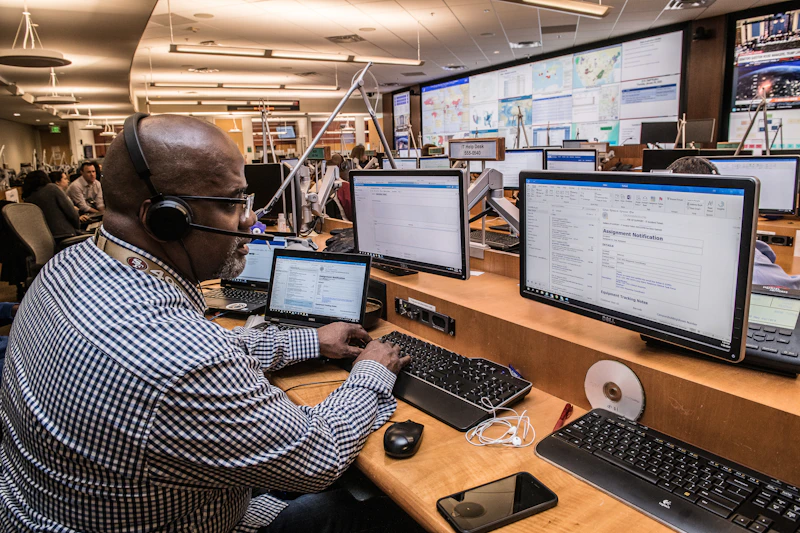
The Land-Permit Paradox of Korea's Chip Belt, When the Cluster's Boom Prices Out Its Own Engineers
Dongtan, Giheung, and Guri have been folded into Korea's land-transaction permit regime just as the AI chip capex boom reshapes the property market around the country's largest fabs. The very prosperity the cluster generates is raising the cost for the engineers it depends on to settle nearby. The real test of agglomeration may lie not in siting megafabs but in housing and labor mobility.
The Collapse of the Closed AI Moat and the Supply-Chain Paradox of Unverifiable Weights
DeepSeek-R1's open reasoning weights and Llamafile's single-file distribution are eroding the performance and distribution moats that closed labs once charged a premium for. Yet the same openness collides head-on with the gap exposed by the "250 samples to break an LLM" research: weight distribution that no recipient can verify. Democratized competition and accumulated security debt now sit on the same scale.
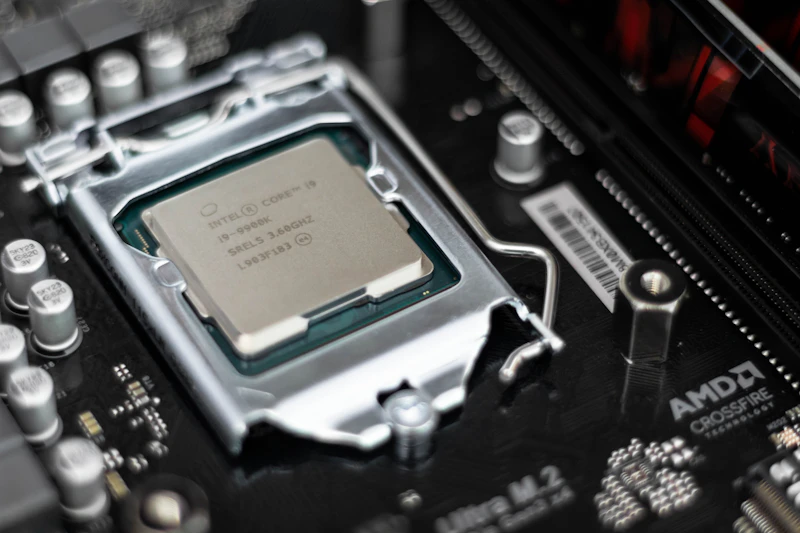
Forty-Year Yen Lows as the Hidden Subsidy Behind Japan's Chip Revival
As the yen slides into its weakest territory in four decades, Takaichinomics has entered uncharted monetary terrain. A cheap yen functions as a silent subsidy for Rapidus, Kioxia, and TSMC's Kumamoto fabs—yet the same currency inflates the cost of imported tools and materials and intensifies the talent war with Korea. The question is whether monetary policy can stand in for industrial policy, and what that means for Korea's memory champions.