AIINSIGHT NOTE
AI · Web3 · Tech trends and insights at a glance
AI · Web3 · Tech trends and insights at a glance
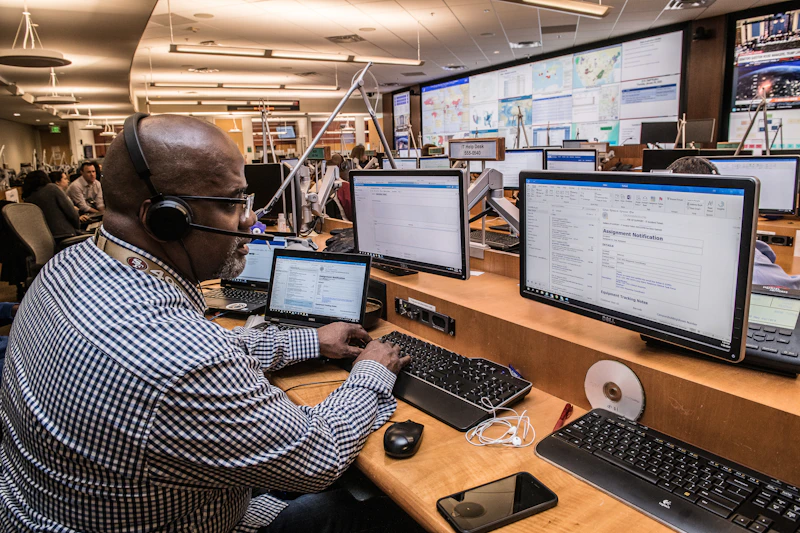
South Korea's KOSPI index has crossed 9,000 while the KOSDAQ barely holds 1,000 — a divergence that reveals a structural fault line in the country's capital markets. Foreign capital is concentrating almost entirely in Samsung Electronics and SK Hynix, mirroring the winner-take-all economics of the global AI hardware cycle. This column examines why the bifurcation is structural, not cyclical, and what it would take to close the gap.
When South Korea's benchmark KOSPI index crossed the 9,000 mark, financial headlines celebrated a historic milestone. The optics were compelling: foreign capital surging in, record-breaking valuations, a market seemingly vindicated by the global AI boom. But look one index lower and the picture fractures entirely. The KOSDAQ — Korea's growth exchange, home to mid-caps, startups, and smaller technology firms — has been barely clinging to 1,000 points. The gap between these two numbers is not a sectoral anomaly or a temporary rotation story. It is a structural diagnosis of where Korea sits in the global AI value chain.
The mechanics are not hard to trace. Samsung Electronics and SK Hynix together account for more than 30 percent of KOSPI's total market capitalization in the current cycle. Foreign institutional flows into Korean equities — consistently net positive since late 2024 — are concentrated in these two names with a lopsidedness that few markets can match. In some weeks, the pair absorbs more than half of all net foreign buying across the entire Korean market. Nearly 2,000 other listed companies move in their shadow, catching occasional spillover but never the primary current.
The tempting framing is that this reflects normal market behavior: dominant winners attract capital, and indices follow their largest components. But that framing obscures something more fundamental. Foreign investors are not buying Korea; they are buying AI infrastructure exposure that happens to be listed in Seoul. Samsung and SK Hynix are nodes in a global supply chain anchored to Nvidia's GPU roadmap and hyperscaler capital expenditure plans. The money entering through the KOSPI is thematic, not geographic — and that distinction matters enormously for understanding the bifurcation.
The economics of the current AI hardware cycle favor an extraordinarily small number of firms. High Bandwidth Memory — the stacked DRAM architecture that sits alongside Nvidia's H100 and GB200 series accelerators — can only be manufactured at scale by three companies globally: SK Hynix, Samsung, and Micron. Of these, SK Hynix has held a clear lead in HBM3E yield rates and Nvidia qualification throughout 2025 and into 2026. Samsung has been closing the gap, but the market structure at the premium tier is essentially duopolistic, and both dominant players are Korean.
This concentration at the product level maps directly onto capital market concentration. The AI hardware upcycle delivers extraordinary returns to whoever holds HBM supply capacity, and by design the beneficiaries are few. KOSDAQ companies — many of which have legitimate AI-adjacent businesses in materials, semiconductor equipment, software, and advanced packaging — cannot claim the same structural certainty. Their revenue upside from the AI cycle is real but indirect: contingent on timing, competitive dynamics, and customer concentration in ways that HBM suppliers' revenues are simply not. Markets price certainty at a premium. KOSDAQ's AI story is priced at a discount precisely because the certainty is thinner.
The bifurcation has a second layer that is easy to miss. Much of KOSDAQ's historical valuation premium rested on biotech and domestic platform companies that flourished during the 2020-2021 global liquidity cycle. That premium collapsed and has not been restored. The companies that might have led a KOSDAQ revival in a different macro environment — domestic platform technology, healthcare innovation, content — are not the companies positioned to win in an AI semiconductor-driven upcycle. The index sits stranded between regimes: too far from the liquidity era to benefit from its ghosts, and too far from the AI supply chain core to capture the new cycle's spoils.
The structural question is whether this bifurcation is a phase or a regime. As long as hyperscaler capital expenditure remains on its current trajectory — the major cloud providers collectively committing well over $300 billion annually to infrastructure build-out, with memory bandwidth representing an expanding share of that cost — the AI hardware cycle has meaningful runway. SK Hynix and Samsung are capacity-constrained suppliers into a demand-rich environment. That is a durable pricing dynamic, not a one-quarter phenomenon, and the foreign capital thesis built around it is not about to reverse spontaneously.
The inflection risks are real but not imminent. A deceleration in large language model scaling investment, the emergence of inference-optimized architectures that reduce memory bandwidth intensity per compute dollar, or a successful challenge to Nvidia's platform dominance could all compress the HBM premium. But even if those inflections arrive, they would not automatically lift the rest of the Korean equity market. The KOSDAQ's recovery requires its own catalysts entirely: the emergence of domestic AI software or robotics champions, the successful repositioning of Korean fabless and packaging firms into the agentic AI supply chain, or a broader capital market reform that attracts growth-stage capital to smaller companies. None of these are impossible, but none are operating at the speed the HBM cycle is.
Korea's capital market bifurcation is ultimately a reflection of where the country sits in the global AI value chain. The memory position is powerful, strategically significant, and defensible over the medium term. But a benchmark index built on two stocks cannot be described as broadly participating in an economic transformation, no matter how high the headline number climbs. The distance between KOSPI 9,000 and KOSDAQ 1,000 is a structural gap — and closing it will require more than the next chip cycle. It will require a different kind of Korean AI story, one in which the country is not only supplying the infrastructure but building on top of it.
The Land-Permit Paradox of Korea's Chip Belt, When the Cluster's Boom Prices Out Its Own Engineers
Dongtan, Giheung, and Guri have been folded into Korea's land-transaction permit regime just as the AI chip capex boom reshapes the property market around the country's largest fabs. The very prosperity the cluster generates is raising the cost for the engineers it depends on to settle nearby. The real test of agglomeration may lie not in siting megafabs but in housing and labor mobility.
The Collapse of the Closed AI Moat and the Supply-Chain Paradox of Unverifiable Weights
DeepSeek-R1's open reasoning weights and Llamafile's single-file distribution are eroding the performance and distribution moats that closed labs once charged a premium for. Yet the same openness collides head-on with the gap exposed by the "250 samples to break an LLM" research: weight distribution that no recipient can verify. Democratized competition and accumulated security debt now sit on the same scale.
Forty-Year Yen Lows as the Hidden Subsidy Behind Japan's Chip Revival
As the yen slides into its weakest territory in four decades, Takaichinomics has entered uncharted monetary terrain. A cheap yen functions as a silent subsidy for Rapidus, Kioxia, and TSMC's Kumamoto fabs—yet the same currency inflates the cost of imported tools and materials and intensifies the talent war with Korea. The question is whether monetary policy can stand in for industrial policy, and what that means for Korea's memory champions.