AIINSIGHT NOTE
AI · Web3 · Tech trends and insights at a glance
AI · Web3 · Tech trends and insights at a glance

When an explosion killed thirteen workers at a Hanwha Aerospace factory in Changwon, the company's response—that it did not even know the cause—exposed a gap that export statistics had obscured. Behind Korea's remarkable defense industry rise lies a production system where schedule pressure and safety culture are in direct competition, and safety has been losing.
In late 2025, an explosion at a Hanwha Aerospace munitions facility in Changwon, South Korea, killed thirteen workers. The deaths were devastating. But it was the company's initial public response—an admission that it could not explain what had caused the blast—that revealed something more troubling about the state of Korea's defense industry. Here was a company selling K2 tanks and K9 self-propelled howitzers to militaries across Europe, unable to reconstruct a causal chain inside its own factory. The phrase that circulated in Korean media afterward—a third-world explosion inside a first-world industry—captured the contradiction with uncomfortable precision.
Korea's defense export surge over the past several years has been genuinely impressive. The Russia-Ukraine war reshuffled European procurement priorities at a scale not seen since the Cold War, and Korean manufacturers moved into the vacuum with speed, competitive pricing, and available inventory. Poland signed landmark contracts for hundreds of K2s and K9s. Romania, Norway, Egypt, and Saudi Arabia followed with their own negotiations. Export figures multiplied within a few years to levels that would have seemed implausible a decade earlier.
But contract volume and production capacity do not scale at the same rate. Factories cannot be built overnight. Skilled workers in energetic materials—propellants, explosives, pyrotechnics—require years of training before they can be trusted with high-stakes production lines. What scales rapidly is pressure: the pressure on existing facilities and existing workers to process more volume, faster, without delays that would constitute a breach of inter-governmental contract. The Changwon explosion needs to be read against this backdrop.
Munitions manufacturing is an area where the relationship between speed and risk is not linear but exponential. Skipping one step of a standard inspection protocol, extending equipment maintenance cycles, or compressing the onboarding of new workers handling dangerous materials—each of these decisions looks manageable in isolation. Accumulated across months of sustained schedule pressure, they define the conditions for catastrophic failure. What happened in Changwon did not emerge from nowhere. It emerged from a gap that had been widening for some time.
Safety culture is a phrase that appears in every corporate responsibility document and means almost nothing when invoked at that level of abstraction. What it actually requires is structural: workers who report near-misses must be protected rather than penalized; production targets must demonstrably yield to safety thresholds when the two conflict; and the gap between written procedure and actual practice must be continuously monitored, audited, and corrected. These conditions take decades to build inside an organization. They can be eroded surprisingly quickly when external pressure shifts incentive structures toward throughput.
In the defense manufacturing context, the stakes attached to schedule adherence are unusually high. A delayed shipment is not merely a commercial problem—it is a diplomatic one. Government clients reconfiguring their military posture under time pressure have little patience for explanations about production constraints. This creates a peculiar dynamic in which managers on the factory floor absorb the gap between what contracts demand and what operations can safely deliver. That absorbed pressure does not disappear. It accumulates in the form of deferred maintenance, procedural shortcuts, and an organizational culture in which raising safety concerns is understood to be professionally inconvenient.
The admission that the cause of the Changwon explosion was unknown was not simply a public relations failure. It was diagnostic. Organizations with mature safety management systems do not lose track of causal chains in their own facilities. They maintain records of process deviations, equipment histories, and near-miss reports that allow investigators to reconstruct what went wrong. The absence of that explanatory capacity suggests an absence of the underlying infrastructure—which is another way of saying that the explosion was not an aberration but a product.
Korea's defense industry has positioned itself as a premium-tier supplier: high-technology systems, proven performance, and a manufacturing base outside the geopolitical complications that attach to American or European vendors. This positioning is commercially effective and strategically coherent. It is also, as the Changwon explosion illustrates, fragile in ways that export statistics do not capture.
Defense procurement is not a commodity market. Governments buying weapons systems are not purchasing hardware in the way they purchase industrial components. They are delegating a portion of their national security to the reliability of a foreign industrial base. The question of whether systems produced under conditions of extreme schedule pressure—and in facilities where accident causation cannot be readily explained—meet the reliability standard that military use demands is one that purchasing governments will eventually have to answer. Korea's near-term export pipeline may be secure. Its longer-term reputation as a defense partner is now a variable in ways it was not before.
The sustainable version of Korean defense industrial growth requires treating safety capability as a core export credential rather than a domestic compliance burden. That means investing in workforce training at a pace that tracks contract growth rather than lagging it by several years. It means building institutional mechanisms that insulate production floor decisions from the contract-level schedule pressure that originates at the ministerial level. And it means developing the kind of incident-reporting culture in which 'we don't know what happened' is an impossible answer—because the documentation, the audits, and the organizational trust required to surface that information have already been built. Thirteen deaths should not be absorbed into the ambient narrative of industrial risk as the cost of doing business in a high-growth sector. If they are, the model will produce more of the same.

The Land-Permit Paradox of Korea's Chip Belt, When the Cluster's Boom Prices Out Its Own Engineers
Dongtan, Giheung, and Guri have been folded into Korea's land-transaction permit regime just as the AI chip capex boom reshapes the property market around the country's largest fabs. The very prosperity the cluster generates is raising the cost for the engineers it depends on to settle nearby. The real test of agglomeration may lie not in siting megafabs but in housing and labor mobility.

The Collapse of the Closed AI Moat and the Supply-Chain Paradox of Unverifiable Weights
DeepSeek-R1's open reasoning weights and Llamafile's single-file distribution are eroding the performance and distribution moats that closed labs once charged a premium for. Yet the same openness collides head-on with the gap exposed by the "250 samples to break an LLM" research: weight distribution that no recipient can verify. Democratized competition and accumulated security debt now sit on the same scale.
Forty-Year Yen Lows as the Hidden Subsidy Behind Japan's Chip Revival
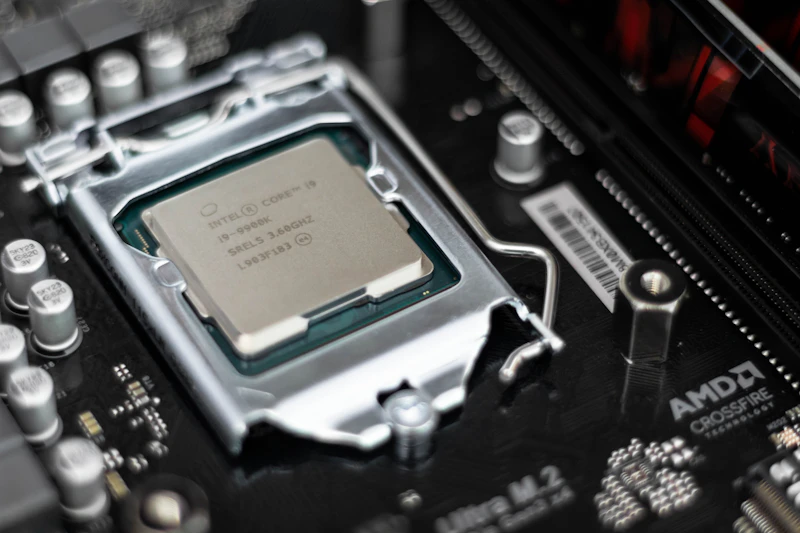
As the yen slides into its weakest territory in four decades, Takaichinomics has entered uncharted monetary terrain. A cheap yen functions as a silent subsidy for Rapidus, Kioxia, and TSMC's Kumamoto fabs—yet the same currency inflates the cost of imported tools and materials and intensifies the talent war with Korea. The question is whether monetary policy can stand in for industrial policy, and what that means for Korea's memory champions.