AIINSIGHT NOTE
AI · Web3 · Tech trends and insights at a glance
AI · Web3 · Tech trends and insights at a glance
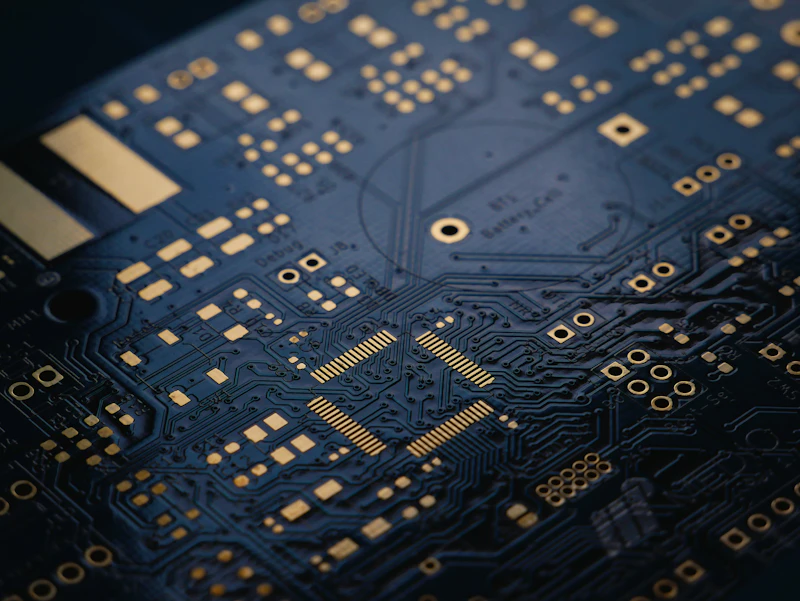
Google's TPU v5, AWS Trainium, and Microsoft Maia represent a maturing commitment to custom silicon that is beginning to displace NVIDIA in inference workloads at meaningful scale. While frontier model training remains firmly in NVIDIA's domain, the rise of software abstraction layers and growing in-house compute capacity are gradually rewriting the economics of AI infrastructure.
For the better part of a decade, NVIDIA's grip on AI accelerators felt less like a market position and more like a law of physics. Researchers trained on CUDA, engineers optimized for A100s and H100s, and CFOs treated GPU procurement as a fixed cost of doing AI at scale. The arrangement suited NVIDIA perfectly, and for a while it suited everyone else well enough. The supply crunch of 2023 changed the calculus decisively. When H100 waitlists stretched into quarters and a single chip commanded prices rivaling a luxury car, the hyperscalers—Google, Amazon, and Microsoft—shifted from long-running custom silicon experiments into something resembling a strategic commitment.
The three companies are at different stages of that commitment, and their chip strategies reflect distinct AI postures. Google's TPU program, now a decade old, is the most mature. TPU v5p and v5e represent a deliberate bifurcation: the former optimized for large-scale training throughput, the latter engineered for cost-efficient inference at the edge of Google's cloud. AWS has taken a two-product approach with Trainium for training workloads and Inferentia for inference, both built on Annapurna Labs silicon and supported by the Neuron SDK. Microsoft's Maia 100, deployed quietly across Azure data centers, targets internal workloads and signals a departure from a company that had previously been content to lease NVIDIA capacity from the open market.
The honest answer to whether these chips threaten NVIDIA depends entirely on the workload. Inference is where the custom silicon story is most credible today. When a trained model is deployed to serve millions of requests—powering a search ranking system, generating email completions, or responding to API calls—the computational profile becomes narrow and predictable. You know the model architecture, you know the batch sizes, and you can design silicon that executes those specific operations with extraordinary efficiency relative to a general-purpose GPU. Google has been doing exactly this for years: TPUs handle a substantial fraction of the inference workload behind Search, YouTube recommendations, and the Gemini API. AWS reports that its largest enterprise customers are increasingly routing production inference traffic through Inferentia rather than GPU clusters, drawn by the combination of lower cost per token and more predictable capacity.
Large-scale frontier training tells a different story. Distributing the training of a model with hundreds of billions of parameters across thousands of chips requires synchronizing gradients across a high-bandwidth interconnect fabric with minimal stall. NVIDIA's NVLink and NVSwitch, refined across multiple hardware generations, provide inter-chip bandwidth that custom silicon has not yet matched at comparable scale. More importantly, the software ecosystem built on CUDA—PyTorch backends, compiler optimizations, debugging tooling, the accumulated institutional knowledge of a generation of ML engineers—represents an integration advantage that no hardware announcement can displace quickly. The frontier labs building the next generation of foundation models are largely still running NVIDIA clusters, and there is no near-term signal that this will change in any dramatic way.
What the hyperscaler silicon push is genuinely changing is the economics of AI infrastructure investment, and the implications play out over a timeline longer than headline chip announcements suggest. Industry analysts project that by 2027, custom chips could handle 30 to 40 percent of hyperscalers' total AI compute demand, driven primarily by inference displacement. That figure does not translate into a proportional revenue loss for NVIDIA—the total addressable market is expanding far faster than any displacement effect—but it does mean that the incremental value of AI infrastructure growth will increasingly accrue to the hyperscalers themselves rather than flowing outward to chip suppliers.
The more consequential variable is the maturation of software abstraction. Google's XLA compiler, the Neuron SDK, and broadening ONNX runtime support are collectively building a portability layer between hardware targets that CUDA's dominance has historically suppressed. If a developer can train on H100s and deploy inference on Inferentia without rewriting the stack, the lock-in effect that underpins NVIDIA's competitive moat begins to erode—not overnight, but measurably over successive toolchain generations. The pace of that erosion will be determined by how quickly these abstraction layers reach production-grade maturity, and by how aggressively the hyperscalers choose to open their custom platforms to external developers rather than keeping them as proprietary internal infrastructure.
The AI chip market is not heading toward a dramatic inversion of power. NVIDIA will not lose its primacy in frontier training, and its ecosystem advantages compound rather than depreciate as the global developer base expands. What is changing is the structure of the market beneath that primacy: a slow dispersion of inference compute onto purpose-built silicon, a gradual narrowing of CUDA's lock-in advantage through abstraction, and a deepening concentration of hardware value creation inside the hyperscalers themselves. That is not the end of NVIDIA's dominance—it is the beginning of its dilution.

Fabs on the Fault Line, How a Single Earthquake Could Halt the AI Chip Supply Chain
Two major earthquakes striking the same week — one in Venezuela, a magnitude 7.2 off Japan's Sanriku coast — underscored an uncomfortable truth: almost all advanced AI compute is manufactured along the narrowest, most seismically active corridor on Earth. With EUV monopoly, advanced packaging, and HBM concentrated across Taiwan and Kyushu, a single strong quake represents a genuine single point of failure for global AI infrastructure. Geographic dispersion and machine-learning earthquake early warning are emerging as the new variables of supply-chain resilience.
Where Should the Megafab Go, Korea's Chip Siting Dilemma Between Clustering and Regional Balance
When word leaked that off-capital semiconductor investment was being finalized in a private meeting between Samsung's chairman and the president, markets misread it as a corporate siting decision. It is something larger: the moment when the agglomeration logic that has concentrated Korean chipmaking into a single point south of Seoul began to be politically renegotiated. Fab location has become a national equation tangling power infrastructure, asset inequality, and industrial sovereignty.
Keller and Zeloof's Garage Fab Bet Against the Capital-Intensity Myth of Chipmaking
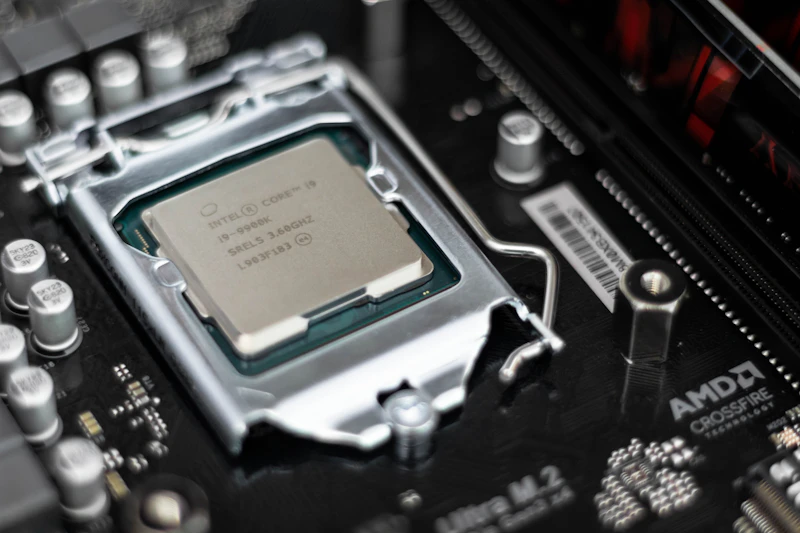
Atomic Semi, founded by Jim Keller and Sam Zeloof, challenges the orthodoxy that chips demand tens of billions in capital and an ASML EUV monopoly. The real question is whether small, cheap fabs can carve out a genuine niche in specialty and prototype silicon, or whether they remain a charismatic gesture against an unmovable industry.