AIINSIGHT NOTE
AI · Web3 · Tech trends and insights at a glance
AI · Web3 · Tech trends and insights at a glance

US-Iran ceasefire negotiations and simultaneous military skirmishes over the Strait of Hormuz reveal the layered logic of Middle Eastern geopolitics. Should a durable ceasefire emerge, the removal of the Hormuz risk premium from global energy prices would cascade directly into AI data center economics across the Gulf and Asia — much as the Russia-Ukraine war reshaped European infrastructure costs.
There is a particular kind of geopolitical vertigo that comes from watching two contradictory things happen on the same day: American naval units intercepting Iranian suicide drones over the Strait of Hormuz while US and Iranian diplomats are reportedly exchanging draft ceasefire memoranda. This is not exactly hypocrisy — it is closer to the grammar of Middle Eastern statecraft, where back-channel talks and gunboat signals have always coexisted as instruments of the same negotiation. For global energy markets, and for the rapidly expanding AI infrastructure sector that now depends on them, the ambiguity carries real economic weight that most analysts are only beginning to price in.
The Strait of Hormuz is one of those chokepoints that makes the fragility of global energy logistics suddenly legible. Roughly a fifth of global oil trade and more than a fifth of liquefied natural gas shipments pass through this narrow corridor between Iran and Oman. Tehran has long understood that even the credible threat of closure functions as leverage — futures markets respond to Iranian rhetoric about the strait with an immediacy that no formal policy declaration can match. That threat premium is embedded in current energy prices as a structural feature, not a temporary aberration. Its removal, should a ceasefire actually hold, would reverberate through supply chains that most observers never associate with geopolitics.
The conventional framing of a US-Iran ceasefire focuses on nuclear nonproliferation, regional security architecture, and the fate of sanctions relief. What gets far less attention is the downstream consequence for a sector that has quietly become one of the world's largest and fastest-growing electricity consumers: AI data centers.
Training and running frontier AI models requires sustained, massive electrical loads. A large GPU cluster operating continuously consumes power at a scale that makes traditional enterprise computing look modest, and the economics of that consumption have become a central variable in where AI infrastructure gets built. Gulf states — Saudi Arabia, the UAE, Qatar — have recognized this and positioned themselves aggressively as AI infrastructure destinations, partly because their energy costs remain comparatively low and predictable within their own borders. Microsoft, Google, and Oracle have each announced or completed significant Gulf data center expansions in recent years, betting on a combination of sovereign wealth partnership and favorable energy economics.
That bet is, in structural terms, a partial bet on Hormuz stability. If Iranian pressure on the strait disrupts LNG and oil flows, the ripple effect on regional energy pricing undermines the cost assumptions built into those expansion models. A Gulf data center that pencils out at current electricity rates may look very different if a crisis causes energy costs to spike by 30 to 40 percent — as happened to European operators during the acute phase of the Ukraine war. The lesson of that episode was clear: energy price volatility has become an AI infrastructure risk, not merely an operating cost line to be optimized after the fact.
The Russia-Ukraine conflict provided the first major demonstration of how geopolitics can cascade into AI infrastructure economics in ways that move faster than traditional hedging strategies. European data center operators faced extraordinary electricity costs after the war disrupted natural gas supply, prompting a reconsideration of siting strategies that had previously taken cheap energy for granted. Some operators accelerated moves toward hydropower-rich Nordic locations; others began signing long-term renewable energy contracts they might not have considered in a calmer market. When ceasefire signals emerged from the European theater, they did not simply reverse these dynamics — they opened a slower process of repricing and reallocation that is still unfolding.
The current US-Iran negotiations, fragile as they are, could initiate an analogous process for the Middle East and Asia. Stable passage through Hormuz would reduce the geopolitical risk premium embedded in Gulf energy costs, improving the long-term investment case for data center infrastructure across the region. It would also alter the calculus for operators in Japan, South Korea, and India, whose AI infrastructure ambitions are constrained in part by energy import costs tied to LNG throughput from the Gulf — costs that are, in turn, sensitive to Hormuz conditions.
None of this is to suggest that the current negotiations will succeed. The history of US-Iran diplomacy is littered with frameworks that collapsed under the weight of domestic politics, regional proxy conflicts, and mutual distrust accumulated over decades. The drone intercept that occurred in parallel with ceasefire drafting is a reminder of how thin the line between negotiation and escalation actually is. What the moment demands, from anyone thinking seriously about AI infrastructure strategy, is the recognition that geopolitics and data center economics are no longer separable domains. The second major geopolitical variable in AI infrastructure pricing is already in motion — the only open question is which direction it resolves.

The Land-Permit Paradox of Korea's Chip Belt, When the Cluster's Boom Prices Out Its Own Engineers
Dongtan, Giheung, and Guri have been folded into Korea's land-transaction permit regime just as the AI chip capex boom reshapes the property market around the country's largest fabs. The very prosperity the cluster generates is raising the cost for the engineers it depends on to settle nearby. The real test of agglomeration may lie not in siting megafabs but in housing and labor mobility.

The Collapse of the Closed AI Moat and the Supply-Chain Paradox of Unverifiable Weights
DeepSeek-R1's open reasoning weights and Llamafile's single-file distribution are eroding the performance and distribution moats that closed labs once charged a premium for. Yet the same openness collides head-on with the gap exposed by the "250 samples to break an LLM" research: weight distribution that no recipient can verify. Democratized competition and accumulated security debt now sit on the same scale.
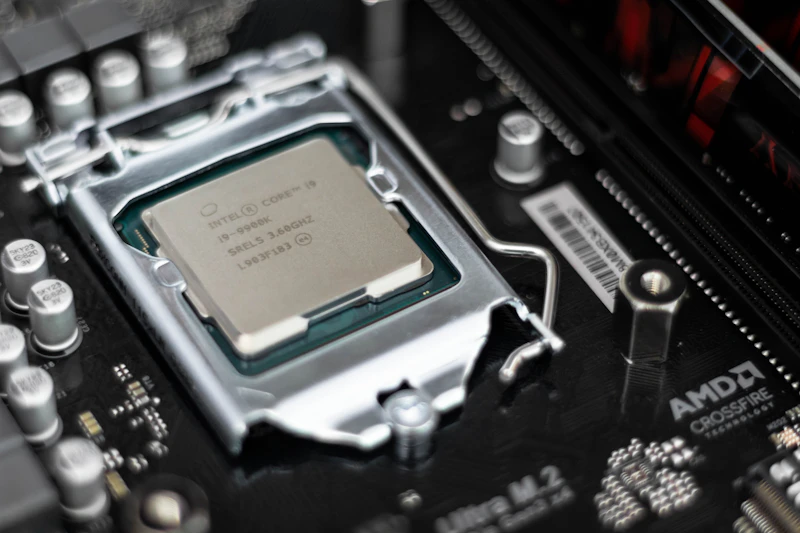
Forty-Year Yen Lows as the Hidden Subsidy Behind Japan's Chip Revival
As the yen slides into its weakest territory in four decades, Takaichinomics has entered uncharted monetary terrain. A cheap yen functions as a silent subsidy for Rapidus, Kioxia, and TSMC's Kumamoto fabs—yet the same currency inflates the cost of imported tools and materials and intensifies the talent war with Korea. The question is whether monetary policy can stand in for industrial policy, and what that means for Korea's memory champions.