AIINSIGHT NOTE
AI · Web3 · Tech trends and insights at a glance
AI · Web3 · Tech trends and insights at a glance

Hanwha Ocean's loss in a European submarine competition is more than a single failed bid. As Europe pivots from manned submarines toward extra-large unmanned underwater vehicles and autonomous undersea drones, the question is where the export competitiveness of Korea's conventional diesel-electric boats began to crack. The real fault line runs not through steel hulls but through autonomous systems integration.
When news broke that Hanwha Ocean had lost a European submarine procurement to a local shipbuilder, the easy reading was that this was just one bid going the wrong way. Submarine competitions are notoriously political, freighted with technology-transfer demands, local industrial participation requirements, and the gravitational pull of European defense sovereignty. An outside supplier losing such a contest is unremarkable. But set against the backdrop of the export miracle that Korean defense firms have engineered over the past several years, this particular defeat carries a signal that runs deeper than a single lost order. It hints that the very thing Korea has been celebrated for, the well-built conventional diesel-electric boat with a proven hull, a reasonable price, and a fast delivery schedule, may no longer be the decisive weapon precisely where the center of gravity of undersea warfare is shifting.
Korea's strengths in this domain are real and specific. The shipbuilding infrastructure of Geoje and Ulsan, the indigenized propulsion, sonar, and combat systems digested from German and French origins, and above all the competitiveness on cost and delivery schedule have made Korea an attractive partner for emerging navies from Indonesia to Poland. The trouble is that this entire bundle of advantages is optimized for a single question: how well can you build a manned submarine as a platform? Europe's advanced navies have already begun asking a different question.
In the operational environments of the North Sea, the Baltic, and the Mediterranean, naval planners are increasingly less concerned with how many more manned boats to buy and more concerned with how to secure undersea superiority within a constrained budget. The answer taking shape is the extra-large unmanned underwater vehicle and the swarm of autonomous drones tasked with mine-laying and mine-hunting, reconnaissance, and persistent surveillance. Programs like Britain's Cetus, America's Orca, and the competing large-UUV efforts across European states are no longer framed as mere supplements to crewed submarines. They are being redefined as forces that can absorb the highest-risk missions without putting sailors in harm's way. Freed from the structural constraints of a manned boat, the endurance limits of a human crew, the punishing operating costs, the autonomous platform shines exactly in the missions where commanders are most reluctant to send people: probing a minefield, loitering off a hostile coast, watching where a manned hull dare not linger.
The implication for Korean industry is uncomfortable. The ability to build an excellent hull remains valuable, but it is sliding toward becoming a necessary rather than a sufficient asset. The contest in unmanned undersea warfare is decided not by the quality of a welded pressure hull but by autonomous navigation, target recognition in an acoustically hostile medium, decision-making under communications denial, and the swarm-control software that binds many unmanned vehicles into a single operational picture. The undersea environment denies both GPS and high-bandwidth communication, and it is precisely that hostility which makes autonomous-systems integration the highest barrier to entry in the field. The decades of undersea autonomy, acoustic signal processing, and, most importantly, accumulated operational data that European firms have built alongside their home navies cannot be matched by a short burst of price competition.
Here the paradox confronting Korea sharpens into focus. You can win the platform contest, offer a cheaper, faster, better hull, and still find that advantage drained of meaning if what the buyer actually wants is not a manned submarine but an autonomous undersea ecosystem. The moment the rules shift from selling submarines to selling undersea operational capability as a whole, excellence in hull manufacturing shrinks to the value of an entry ticket. A shipbuilding powerhouse that fails to extend its identity into autonomous undersea robotics risks spending the next decade slashing prices in a shrinking market for conventional crewed boats. The inverse is also true: a firm that fuses unmanned autonomy with its existing platform strength, offering an integrated package of hull and autonomous system rather than a bare boat, would find that the paradigm shift Europe opened first is not a threat but the largest opportunity available. Whether this European setback is remembered as a routine sales failure or as the inflection point where Korean defense moved its center of gravity from steel to code will be decided by the choices made from here.

The Land-Permit Paradox of Korea's Chip Belt, When the Cluster's Boom Prices Out Its Own Engineers
Dongtan, Giheung, and Guri have been folded into Korea's land-transaction permit regime just as the AI chip capex boom reshapes the property market around the country's largest fabs. The very prosperity the cluster generates is raising the cost for the engineers it depends on to settle nearby. The real test of agglomeration may lie not in siting megafabs but in housing and labor mobility.

The Collapse of the Closed AI Moat and the Supply-Chain Paradox of Unverifiable Weights
DeepSeek-R1's open reasoning weights and Llamafile's single-file distribution are eroding the performance and distribution moats that closed labs once charged a premium for. Yet the same openness collides head-on with the gap exposed by the "250 samples to break an LLM" research: weight distribution that no recipient can verify. Democratized competition and accumulated security debt now sit on the same scale.
Forty-Year Yen Lows as the Hidden Subsidy Behind Japan's Chip Revival
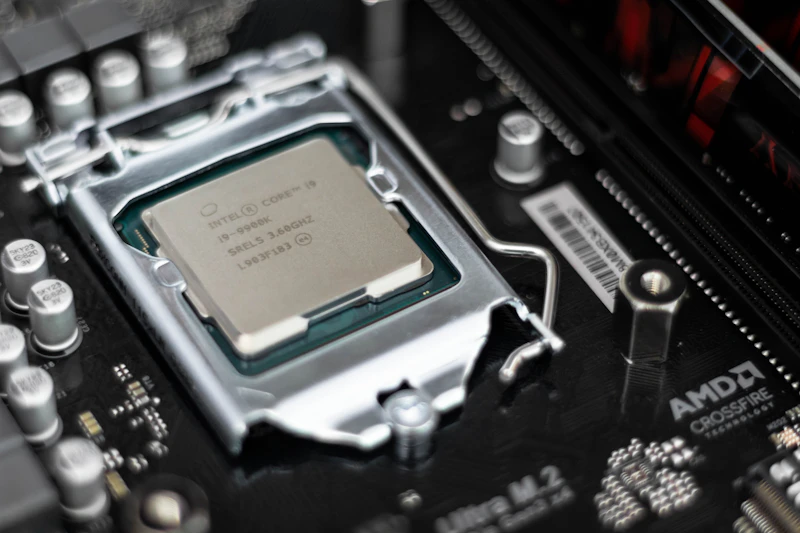
As the yen slides into its weakest territory in four decades, Takaichinomics has entered uncharted monetary terrain. A cheap yen functions as a silent subsidy for Rapidus, Kioxia, and TSMC's Kumamoto fabs—yet the same currency inflates the cost of imported tools and materials and intensifies the talent war with Korea. The question is whether monetary policy can stand in for industrial policy, and what that means for Korea's memory champions.