AIINSIGHT NOTE
AI · Web3 · Tech trends and insights at a glance
AI · Web3 · Tech trends and insights at a glance

GTA 6 opens preorders with a rumored record budget, yet it was built almost entirely by hand, with generative AI conspicuously absent. That paradox is precisely what pressures smaller studios to automate assets, NPCs, and dialogue. The bill arrives in three parts: provenance, creative labor, and a slow flattening of style.
Rockstar has finally opened preorders for GTA 6, and even without an official figure the industry chatter settles around a number north of a billion dollars and a development cycle stretching well past a decade. What rarely gets said alongside the awe is the quiet irony underneath it. This staggeringly expensive game was made almost entirely by hand. The signage on a back-alley wall, the throwaway joke on an in-game radio station, the way a pedestrian drifts across a crosswalk: these are sculpted by people, not sampled from a model. In a year when every studio is pitching generative AI as the answer to runaway costs, the most expensive game ever made reads almost like the price tag on the last great blockbuster built without it.
The trouble is that the handcrafted model is no longer reproducible at scale. Over the past console generation, AAA budgets have ballooned roughly in step with fidelity. Higher resolutions, denser physics, and ever larger open worlds all demand more assets, and more assets demand more artist-hours. The number of studios that can pour ten years and a billion dollars into a single title fits on one hand. For everyone else, GTA 6 is simultaneously an aspiration and an unreachable baseline. Build a world of that density the way Rockstar did and you go bankrupt; ship something thinner and the market shrugs. Generative pipelines arrive precisely as the proposed bridge across that gulf.
In practice this already looks mundane. Studios feed prompts to image and 3D models to rough out textures, props, and crowd characters, then have humans clean up the output. Branching text for side quests, barks for background NPCs, and ambient chatter get the same treatment. The justification writes itself: automate the high-volume grunt work and concentrate scarce human talent on the few things players actually remember. If GTA 6 proves that enough capital can still buy a fully handmade world, the inverted lesson for everyone watching is that, lacking such capital, you replace the hands with machines. A single triumph at the top of the industry becomes a structural force pushing AI adoption everywhere below it.
That transition, however, comes with at least three unsettled invoices. The first concerns provenance. Generative models are trained on corpora that inevitably contain other people's work, and the rights status of the assets they produce remains a gray zone no court has cleanly resolved. As the line blurs between what a designer intended and what a statistical average produced, the question of authorship, of whose vision a world actually expresses, grows harder to answer with a straight face.
The second invoice falls on labor. Automating background assets and crowd dialogue is, in plain terms, automating away the jobs where junior artists and assistant writers have always learned their craft. Seal off that entry point and you risk severing, over time, the very tradition of hand-built detail. The skilled hands that made GTA 6 possible are precisely the hands the GTA-triggered AI shift threatens to displace, a generational ladder pulled up behind the people now at the top.
The third is homogenization. When many studios lean on a handful of shared foundation models, the textures and idiosyncrasies that once distinguished one fictional world from another tend to converge on an average. The most statistically plausible sign, the most generic alley, the most predictable NPC: produce these at scale and games get cheaper and faster while quietly growing more alike. The irony is that what made the GTA series singular was never the statistically safe choice but the off-kilter joke and the deliberate flaw that only a person would insert. Generative AI becoming a survival tool for smaller studios looks all but inevitable. How far to let it in, and where to insist on a human hand, remains an aesthetic decision each studio must make for itself. The preorder counter ticking upward for GTA 6 is a mirror reflecting both the cost of that choice and its worth.

The Land-Permit Paradox of Korea's Chip Belt, When the Cluster's Boom Prices Out Its Own Engineers
Dongtan, Giheung, and Guri have been folded into Korea's land-transaction permit regime just as the AI chip capex boom reshapes the property market around the country's largest fabs. The very prosperity the cluster generates is raising the cost for the engineers it depends on to settle nearby. The real test of agglomeration may lie not in siting megafabs but in housing and labor mobility.

The Collapse of the Closed AI Moat and the Supply-Chain Paradox of Unverifiable Weights
DeepSeek-R1's open reasoning weights and Llamafile's single-file distribution are eroding the performance and distribution moats that closed labs once charged a premium for. Yet the same openness collides head-on with the gap exposed by the "250 samples to break an LLM" research: weight distribution that no recipient can verify. Democratized competition and accumulated security debt now sit on the same scale.
Forty-Year Yen Lows as the Hidden Subsidy Behind Japan's Chip Revival
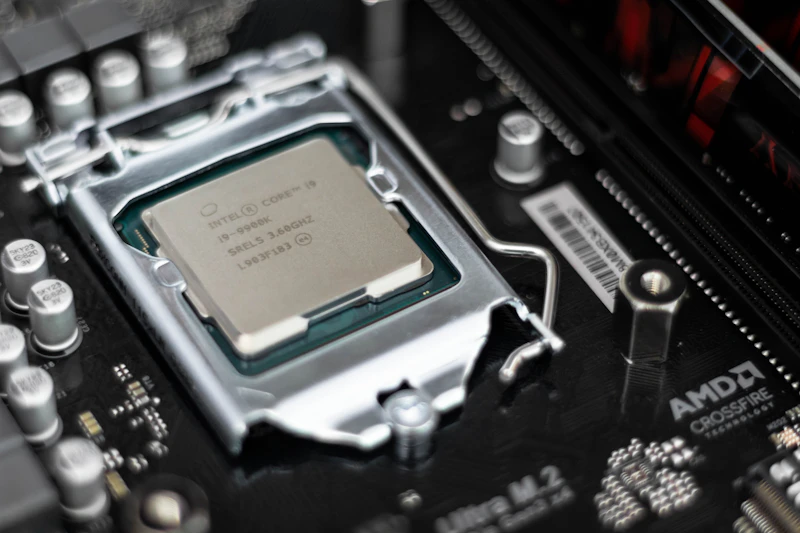
As the yen slides into its weakest territory in four decades, Takaichinomics has entered uncharted monetary terrain. A cheap yen functions as a silent subsidy for Rapidus, Kioxia, and TSMC's Kumamoto fabs—yet the same currency inflates the cost of imported tools and materials and intensifies the talent war with Korea. The question is whether monetary policy can stand in for industrial policy, and what that means for Korea's memory champions.