AIINSIGHT NOTE
AI · Web3 · Tech trends and insights at a glance
AI · Web3 · Tech trends and insights at a glance

As Europe's near-40-degree summers harden into a permanent fixture, data center cooling has moved from an operational afterthought to a defining variable of infrastructure design. The earlier debate over AI's appetite for power was a question of energy in; the new bottleneck is heat out. This column examines why liquid and immersion cooling have stopped being a choice and become a constant for the high-density accelerator era.
Another European summer, another stretch of thermometers hovering near forty degrees. What once arrived in the news as an exceptional weather anomaly now returns with the regularity of a season. The heatwave has become a fixture, a so-called new normal, and the industry it has collided with most sharply is not agriculture or tourism but the beating heart of the digital economy: the data center. Behind the recent flurry of reports about a cooling boom lies something more structural than a spike in summer air-conditioning demand. The artificial intelligence buildout has pushed thermal density past the point where moving air can carry the heat away, and the climate has chosen exactly this moment to make the outside air hotter.
For the past few years, the conversation about AI infrastructure has been almost entirely about electricity. A single hyperscale campus can draw as much power as a mid-sized city, and grid expansion has been diagnosed, correctly, as the real constraint on AI's spread. But that is only half the story. The power that goes in does not vanish. Nearly all of the electricity spent on computation reappears as heat that has to be ejected somewhere. If energy in was the problem at the front door, heat out is the problem at the back door, and the industry is discovering that the back door has begun to jam.
The root of the squeeze is a density revolution at the level of the silicon itself. A server rack from a generation ago dissipated a few kilowatts per square meter. A rack packed with the latest accelerators throws off many times that, with individual chips now drawing more than a thousand watts apiece. Past a certain threshold, blowing air across a heat sink simply stops working. Air has a low heat capacity; it is intrinsically poor at carrying thermal load, and no amount of fan speed can pull heat off a chip surface fast enough once that surface is dense enough. The current crop of accelerators has crossed precisely that line.
Rising ambient temperature compounds the failure. A large share of the world's data centers were designed around free cooling, drawing on outside air or cold water to keep operating costs down. When the outdoors regularly climbs past forty degrees, the efficiency of that free cooling collapses. The heat to be removed is growing while the medium meant to remove it is getting warmer, a double bind that turns cooling into its own arms race. Stronger chillers, more elaborate heat exchangers, more refrigerant and more pumps are thrown at the problem, and the energy spent on cooling has begun to consume a meaningful slice of total consumption. Operators find themselves spending more electricity to cool, only for that electricity to become more heat: the faint outline of a vicious cycle.
The exit from this cul-de-sac is liquid. Direct-to-chip cooling runs coolant straight across the processor; immersion cooling submerges entire servers in a dielectric fluid. Because liquids carry heat orders of magnitude more effectively than air, they can strip away far more thermal load from the same volume. The logic is clean, but the transition is throttled by bottlenecks scattered across the supply chain. Dielectric fluids are in limited supply. The manifolds, connectors, and cold plates needed to circulate liquid without a single catastrophic leak cannot be manufactured as fast as accelerators ship. And retrofitting the vast existing fleet of air-cooled facilities is, in practice, nearly as expensive as building anew.
The deeper shift is that the very logic of where data centers belong is being rewritten. Where siting once turned chiefly on power prices and network latency, cool ambient air and abundant water have become decisive variables in their own right. Northern climates and regions blessed with reliable water sources now command a premium, while places where heat and drought arrive together must pay more to cool identical hardware. Climate volatility is no longer a line item in a risk register; it is a constant embedded in infrastructure design from the first sketch. Competitiveness in the AI era is migrating away from how much computation can be crammed into a hall and toward how cheaply and reliably the heat that computation exhales can be thrown away. The climate's signal, written in a heatwave, has handed the most advanced of digital industries its most stubbornly physical homework.
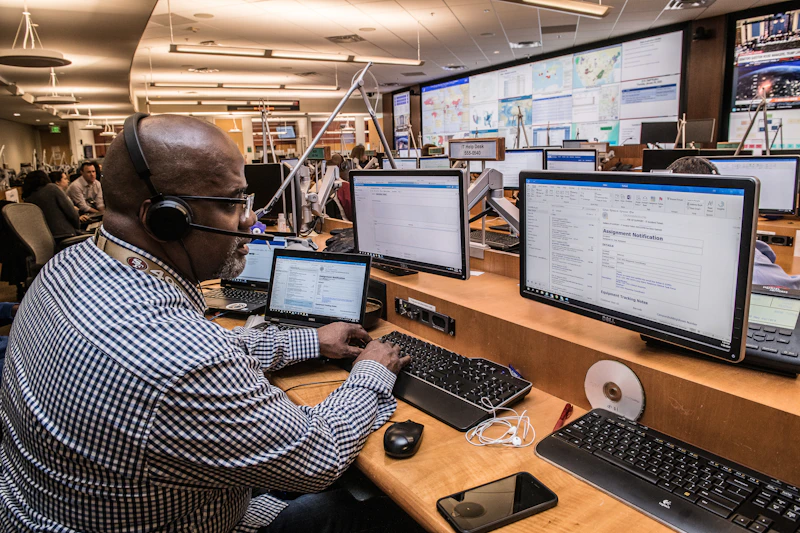
The Land-Permit Paradox of Korea's Chip Belt, When the Cluster's Boom Prices Out Its Own Engineers
Dongtan, Giheung, and Guri have been folded into Korea's land-transaction permit regime just as the AI chip capex boom reshapes the property market around the country's largest fabs. The very prosperity the cluster generates is raising the cost for the engineers it depends on to settle nearby. The real test of agglomeration may lie not in siting megafabs but in housing and labor mobility.

The Collapse of the Closed AI Moat and the Supply-Chain Paradox of Unverifiable Weights
DeepSeek-R1's open reasoning weights and Llamafile's single-file distribution are eroding the performance and distribution moats that closed labs once charged a premium for. Yet the same openness collides head-on with the gap exposed by the "250 samples to break an LLM" research: weight distribution that no recipient can verify. Democratized competition and accumulated security debt now sit on the same scale.
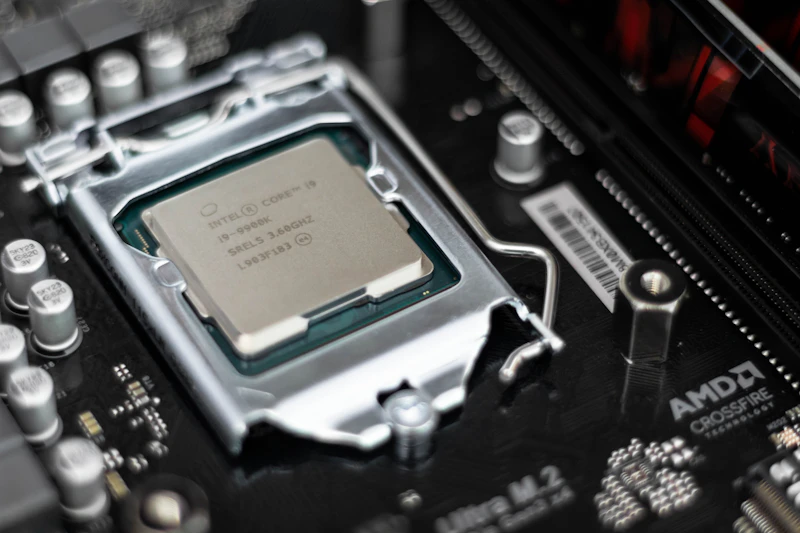
Forty-Year Yen Lows as the Hidden Subsidy Behind Japan's Chip Revival
As the yen slides into its weakest territory in four decades, Takaichinomics has entered uncharted monetary terrain. A cheap yen functions as a silent subsidy for Rapidus, Kioxia, and TSMC's Kumamoto fabs—yet the same currency inflates the cost of imported tools and materials and intensifies the talent war with Korea. The question is whether monetary policy can stand in for industrial policy, and what that means for Korea's memory champions.