AIINSIGHT NOTE
AI · Web3 · Tech trends and insights at a glance
AI · Web3 · Tech trends and insights at a glance

Europe is pursuing semiconductor autonomy on two parallel tracks — public coordination under the European Chips Act and private consortia led by TSMC, Bosch, Infineon, and NXP. The hybrid model is politically durable but structurally slower than the centralized bets made by the United States and Japan, raising real questions about whether European capacity will arrive before the technology generation shifts again.
The European Union has spent the past decade talking about technological sovereignty. In semiconductors, it has finally begun to act — but the way it is acting raises more questions than its official optimism suggests. The TSMC-led consortium in Dresden, backed by Bosch, Infineon, and NXP, represents the largest single bet Europe has placed on advanced chip manufacturing. Meanwhile, the European Chips Act continues to funnel public capital into research, pilot lines, and workforce development across member states. From a distance, the scaffolding of a genuine semiconductor industry looks like it is going up. Up close, the architecture is more complicated.
No assessment of European semiconductor strategy is complete without acknowledging ASML. The Dutch company's monopoly on extreme ultraviolet lithography machines is not merely a competitive advantage — it is the closest thing the global chip industry has to an irreplaceable chokepoint. Without ASML's tools, no foundry anywhere in the world can manufacture chips below 7 nanometers. When Washington pressured the Netherlands to restrict exports to China, ASML became a geopolitical instrument as much as a technology company, and the Dutch government has moved carefully to leverage that position within broader EU negotiations.
Yet the ASML paradox cuts both ways. Europe controls the most critical tool in semiconductor manufacturing but for decades lacked the fabs to use that tool at scale. The monopoly on equipment did not translate into capacity in manufacturing. Until the Dresden fab reaches full production, Europe has no meaningful presence in sub-28nm logic. This disconnect between equipment leadership and manufacturing absence is the defining tension in European chip policy. ASML proves that European technology can achieve global dominance in a narrow domain — but that dominance has not, by itself, created the broader ecosystem that genuine autonomy requires. Owning the printing press is not the same as running the publishing house.
The United States and Japan have each taken a more centralized approach to semiconductor revival. The CHIPS and Science Act directed tens of billions of dollars toward specific companies — TSMC in Arizona, Intel in Ohio, Samsung in Texas — with production targets and timelines clearly attached to subsidy disbursements. Japan's Rapidus project is an even more concentrated bet: a state-backed venture aiming to jump directly to 2nm manufacturing, with IBM providing process technology and an aggressive pilot line deadline. Both approaches carry their own vulnerabilities, but they share a commitment to speed and concentration of resources that produces measurable results on a compressed schedule.
Europe's model is structurally different and, for reasons rooted in EU institutional design, almost necessarily so. The European Chips Act does not pick national champions the way the CHIPS Act does. Instead, it creates a framework within which member states, research institutions, and private consortia can coordinate — loosely, and often with divergent interests. Germany's commitment to roughly five billion euros in Dresden subsidies is real, but domestic budget politics have disrupted the timeline multiple times. France has pursued its own semiconductor research agenda through the CEA-Leti institute, largely independent of the Brussels framework. The Netherlands has concentrated on strengthening the ASML supply chain ecosystem around Eindhoven. The result is geographic and institutional fragmentation that EU coordination mechanisms have so far struggled to overcome.
For TSMC, the European investment is also a calculation rather than a conviction. Building in Dresden serves geopolitical risk management — diversifying production away from Taiwan — and secures access to European subsidies and automotive customers. But the Dresden fab will run legacy nodes relative to TSMC's cutting-edge processes in Taiwan, and the company has limited incentive to transfer its most advanced technology to a consortium where European governments hold meaningful influence over operational decisions.
If Europe's ambition is to build a resilient, end-to-end semiconductor presence — covering design tooling, advanced logic, memory, and packaging — the timeline problem is severe. The Dresden fab is expected to reach significant production capacity no earlier than 2027. By that point, TSMC's Arizona plant will be entering its second generation of production, and Rapidus will have either validated or disproved Japan's 2nm ambitions. The semiconductor technology cycle does not pause while intergovernmental negotiations conclude.
The autonomy question also depends on what exactly Europe is trying to be autonomous from. For automotive and industrial semiconductors — the core markets of Infineon and NXP — European capacity is already reasonably competitive, and the Dresden facility will meaningfully strengthen that position. For advanced logic chips powering AI training, inference, and next-generation mobile, the situation is entirely different: Europe is not meaningfully present, and there is no credible roadmap for getting there without sustained external partnerships. The honest version of European semiconductor autonomy looks more like resilience in legacy and mid-range nodes than self-sufficiency across the full technology stack.
None of this means the dual-front strategy is failing. It means the gap between political ambition and industrial execution remains significant, and that closing it will require not just more capital but a fundamentally faster coordination architecture than the EU has demonstrated so far. The assets are real. The strategy is coherent in outline. What remains unproven is whether the mechanism can move at the speed the moment demands.

The Land-Permit Paradox of Korea's Chip Belt, When the Cluster's Boom Prices Out Its Own Engineers
Dongtan, Giheung, and Guri have been folded into Korea's land-transaction permit regime just as the AI chip capex boom reshapes the property market around the country's largest fabs. The very prosperity the cluster generates is raising the cost for the engineers it depends on to settle nearby. The real test of agglomeration may lie not in siting megafabs but in housing and labor mobility.

The Collapse of the Closed AI Moat and the Supply-Chain Paradox of Unverifiable Weights
DeepSeek-R1's open reasoning weights and Llamafile's single-file distribution are eroding the performance and distribution moats that closed labs once charged a premium for. Yet the same openness collides head-on with the gap exposed by the "250 samples to break an LLM" research: weight distribution that no recipient can verify. Democratized competition and accumulated security debt now sit on the same scale.
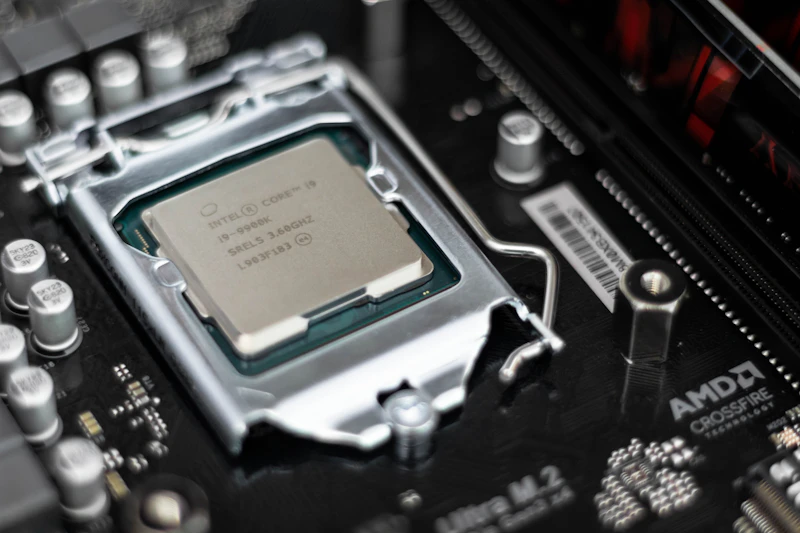
Forty-Year Yen Lows as the Hidden Subsidy Behind Japan's Chip Revival
As the yen slides into its weakest territory in four decades, Takaichinomics has entered uncharted monetary terrain. A cheap yen functions as a silent subsidy for Rapidus, Kioxia, and TSMC's Kumamoto fabs—yet the same currency inflates the cost of imported tools and materials and intensifies the talent war with Korea. The question is whether monetary policy can stand in for industrial policy, and what that means for Korea's memory champions.