AIINSIGHT NOTE
AI · Web3 · Tech trends and insights at a glance
AI · Web3 · Tech trends and insights at a glance
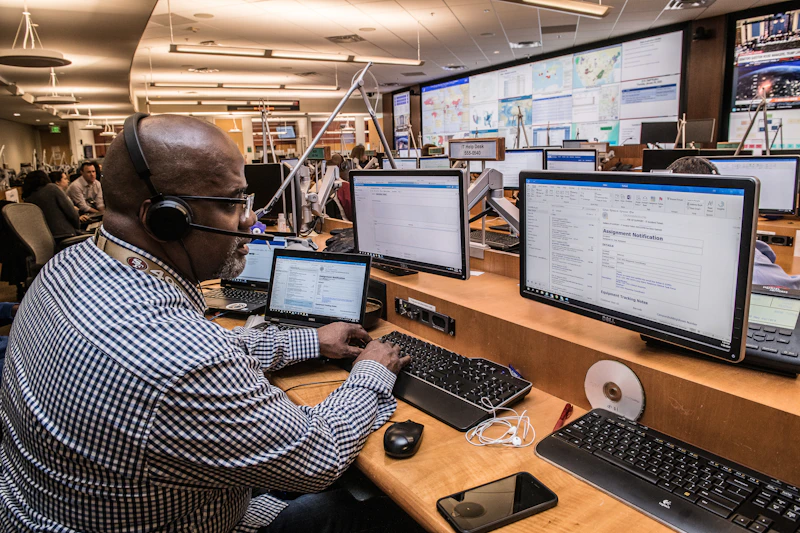
The North Korea-China summit's emerging agenda around Chinese access to the East Sea carries implications that extend far beyond military balance. The seafloor beneath those contested waters hosts fiber-optic cables connecting South Korean, Japanese, and American AI infrastructure — and the precedents set in the Baltic since 2022 make submarine cable risk a live concern, not a thought experiment.
The North Korea-China summit's reveal of a new agenda item — Beijing's bid for East Sea access through North Korean ports — has generated substantial analysis in military and diplomatic circles. What has received almost no attention is what lies on the seafloor beneath those waters: the fiber-optic cables carrying the data traffic that underpins AI services across the Pacific. The omission is not a minor gap. It reflects a structural blind spot in how AI infrastructure security is currently framed.
The East Sea hosts several of the most strategically significant submarine cable corridors in the world. Cables including PC-1, AJC, and JUS traverse the sea or its margins, connecting South Korean data centers to Japanese cloud hubs and onward to the U.S. West Coast. These are not legacy communications infrastructure. They are the physical layer on which real-time AI inference, cloud compute, and financial data flow at terabit-per-second scale. When policy discussions frame Chinese naval ambitions in the East Sea as a military balance problem, they consistently omit this layer.
The precedent for deliberate submarine infrastructure attack is no longer hypothetical. Multiple cable and pipeline incidents in the Baltic and North Sea since 2022 demonstrated that undersea infrastructure is a viable instrument of coercive statecraft. Attribution in each case remained contested — a feature, not a bug, for state actors operating in this domain. Uncrewed underwater vehicles, special-operations submarines, and civilian cover vessels provide the deniability that conventional military action cannot.
The lesson is not that kinetic conflict is imminent in East Asian waters. It is that the threshold for undersea infrastructure interference has been demonstrably lowered, and the strategic logic for exploiting it has been validated. A Chinese naval presence in the East Sea — even a routine, peacetime one — structurally alters the risk calculus for the cables passing through it. Persistent surveillance of cable routes, mapping of repeater nodes, and positioning of assets capable of rapid action represent strategic leverage that does not require activation to take effect.
Data sovereignty concerns compound the physical risk. Traffic flowing through submarine cables is theoretically encrypted, but the harvest-now-decrypt-later threat model makes persistent proximity to high-volume cable routes a long-horizon intelligence asset. The East Sea cables carry not just consumer AI traffic but enterprise data flows, government communications, and financial transactions between three of the world's largest technology economies. The transition period before post-quantum cryptography achieves broad deployment is precisely the window in which such collection has maximum future value.
AI infrastructure security discourse has been almost entirely captured by the semiconductor framing: TSMC's geographic exposure, HBM production concentration, ASML export controls. These are genuine and serious vulnerabilities. But they address only the production side of the AI infrastructure stack. The distribution layer — the physical medium through which AI outputs reach users and through which training data and model weights are transferred across borders — remains systematically undertheorized in policy circles.
The distinction in temporal dynamics matters enormously. Chip supply disruptions are slow-moving crises. They allow months or years of adaptation through stockpiling, alternative sourcing, and architectural substitution. Submarine cable severance is immediate. Repair operations require specialized cable ships, favorable sea conditions, and precise fault localization — a process that typically spans weeks under favorable conditions and months under adverse ones. Satellite bandwidth, routinely cited as a fallback, is orders of magnitude too narrow to absorb the traffic modern AI services require. The inference workloads of large language models and multimodal systems simply cannot be rerouted through low-earth-orbit constellations at scale.
South Korea sits at the intersection of this problem in a way that demands more active policy engagement. Korean AI companies depend on transpacific cable routes for cloud services, inference APIs, and cross-border data workflows. South Korea is also a potential front-line state in any scenario involving Chinese naval activity in the East Sea. The United States and Japan have begun diversifying cable landing points and exploring southern Pacific routing alternatives, but these efforts do not resolve the East Sea exposure and have proceeded largely without South Korean strategic input.
The chip makes the intelligence. The cable delivers it. The geopolitics of the sea the cable crosses determines whether that delivery remains reliable. Treating the North Korea-China summit's East Sea agenda as categorically separate from the AI infrastructure security conversation is a framing error the region cannot afford to maintain.
The Land-Permit Paradox of Korea's Chip Belt, When the Cluster's Boom Prices Out Its Own Engineers
Dongtan, Giheung, and Guri have been folded into Korea's land-transaction permit regime just as the AI chip capex boom reshapes the property market around the country's largest fabs. The very prosperity the cluster generates is raising the cost for the engineers it depends on to settle nearby. The real test of agglomeration may lie not in siting megafabs but in housing and labor mobility.
The Collapse of the Closed AI Moat and the Supply-Chain Paradox of Unverifiable Weights
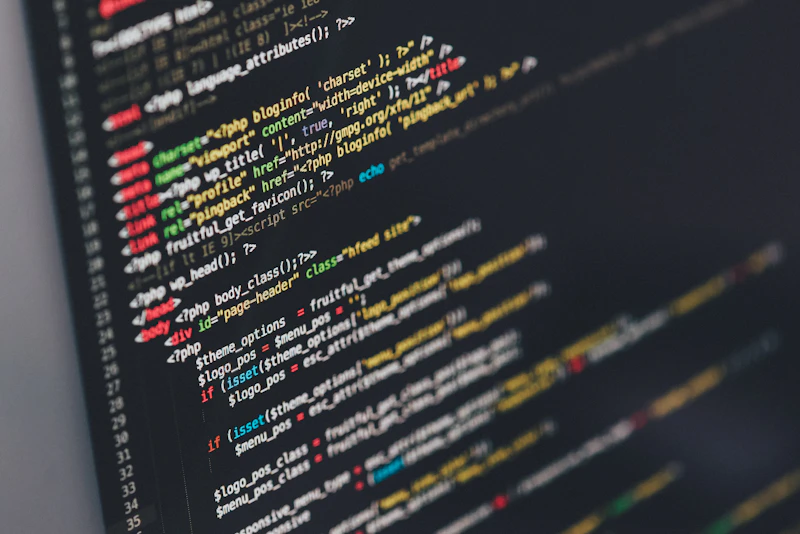
DeepSeek-R1's open reasoning weights and Llamafile's single-file distribution are eroding the performance and distribution moats that closed labs once charged a premium for. Yet the same openness collides head-on with the gap exposed by the "250 samples to break an LLM" research: weight distribution that no recipient can verify. Democratized competition and accumulated security debt now sit on the same scale.
Forty-Year Yen Lows as the Hidden Subsidy Behind Japan's Chip Revival
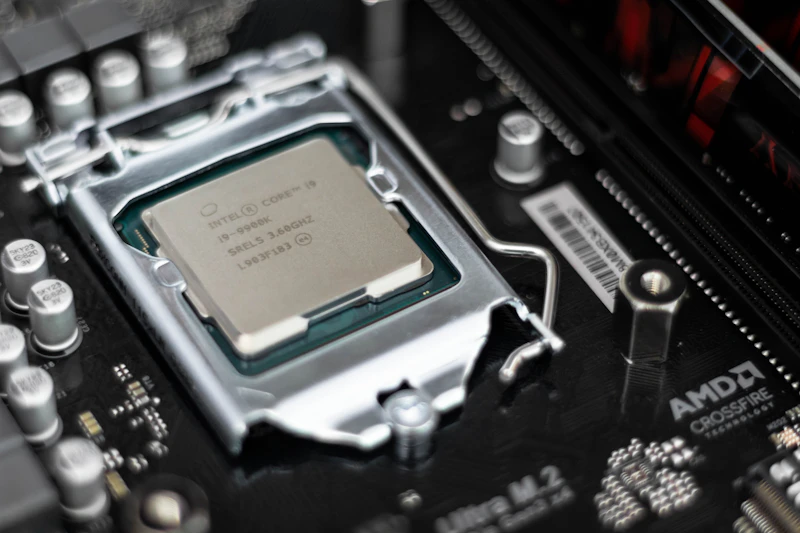
As the yen slides into its weakest territory in four decades, Takaichinomics has entered uncharted monetary terrain. A cheap yen functions as a silent subsidy for Rapidus, Kioxia, and TSMC's Kumamoto fabs—yet the same currency inflates the cost of imported tools and materials and intensifies the talent war with Korea. The question is whether monetary policy can stand in for industrial policy, and what that means for Korea's memory champions.