AIINSIGHT NOTE
AI · Web3 · Tech trends and insights at a glance
AI · Web3 · Tech trends and insights at a glance

South Korean retail investors are piling into short-dollar positions, convinced the greenback has peaked. But the same economy they're betting on is structurally dollar-dependent through AI infrastructure costs and semiconductor export revenues, creating a self-undermining logic that few in the trade are acknowledging.
There is a peculiar irony unfolding in South Korea's foreign exchange market. Retail investors have been accumulating dollar-short positions at a pace that by some measures approaches historical records, riding the narrative that the greenback's multi-year strength has finally exhausted itself. The macro story they're invoking is not implausible: the Federal Reserve's rate-cutting cycle that began in late 2025 eroded the dollar's yield advantage, and signals from the second Trump administration suggesting tolerance for a weaker dollar gave the trade a political tailwind. Yet professional currency desks remain broadly skeptical. Their skepticism isn't a reflexive contrarianism — it rests on structural observations about dollar demand that individual traders tend to discount.
What makes this episode more than a routine retail-versus-institution standoff is where it intersects with Korea's AI economy. The country's most consequential technological bets — on large language models, semiconductor dominance, and AI infrastructure buildout — are priced in dollars. The exchange rate between the won and the dollar is not an abstract macroeconomic indicator for these industries. It is an operational cost variable, a revenue translation factor, and increasingly a strategic constraint. Retail investors positioning for won appreciation may be right about the direction of the dollar, or they may not be. Either way, they are implicitly making a bet whose consequences ripple through the very industries driving Korean equity valuations.
The case for a weaker dollar is not without merit on cyclical grounds. Rate differentials have narrowed as the Fed has eased, and elevated U.S. fiscal deficits raise legitimate questions about long-run dollar supply dynamics. But currency professionals point to factors that retail positioning tends to ignore. The dollar index basket is weighted heavily toward the euro and yen — two currencies with their own deep structural problems. Europe's fragmented fiscal architecture and residual energy vulnerabilities have not resolved. Japan's central bank remains caught between tightening that threatens domestic financial stability and maintaining accommodation that keeps the yen structurally weak. When either of these pressure points flares, the dollar benefits not because it is strong in isolation but because it is less weak than the alternatives.
Geopolitics compounds the picture. The dollar's safe-haven demand function has not degraded; if anything, the fragmentation of the global order has reinforced it. Episodes of risk-off sentiment — whether triggered by Middle East escalation, Taiwan Strait tensions, or unexpected financial stress — consistently produce dollar inflows that overwhelm the cyclical bear case. The retail trade that has built up in Korean FX markets is momentum-driven and sentiment-sensitive. History suggests that when crowded positions of this kind unwind, they tend to do so abruptly, with the exchange rate moving sharply in the direction that punishes the most exposed participants.
South Korea's AI sector has grown quickly enough to become a meaningful component of its economic narrative, but the industry's cost structure runs on dollars. Training a competitive large language model requires GPU clusters — predominantly NVIDIA H100 or H200 hardware — accessed through cloud providers whose billing currencies are uniformly the dollar. Whether a startup is building a Korean-language foundation model, a computer vision pipeline for manufacturing inspection, or an AI-powered drug discovery platform, the marginal cost of additional compute is a dollar cost. Cloud-first teams at the early stage, burning through their seed rounds, feel this acutely: a stronger won extends the runway denominated in won while the dollar cost of compute stays fixed.
This creates a straightforward incentive for Korean AI startups to quietly cheer for won appreciation. The effect is real and quantifiable. But it is neither permanent nor symmetrical. Startups that build their financial projections around a favorable exchange rate are taking on currency risk without necessarily accounting for it. If the won-dollar rate reverses — the scenario professional currency managers consider more likely than the retail consensus — the same teams that benefited from cheap dollar compute will find their dollar-denominated infrastructure costs swelling against a shrinking won.
The more structurally complex case belongs to the semiconductor companies that form the backbone of Korea's AI infrastructure play. Samsung Electronics and SK Hynix are among the world's leading suppliers of high-bandwidth memory, the component that makes NVIDIA's data center GPUs viable at scale. HBM demand has grown roughly in lockstep with GPU shipment volumes, and that demand is invoiced in dollars. Every time the won strengthens by a meaningful increment, the dollar revenues these companies earn translate into fewer won on the income statement. The companies that have benefited most from the AI infrastructure build-out globally are also the companies most exposed to won appreciation eating into their reported earnings. A stronger won is, for them, a tax on the AI boom.
When these two threads are laid side by side, a structural paradox emerges. Retail investors betting on won appreciation are implicitly forecasting that the Korean won will strengthen relative to the dollar. But the Korean equity market's most important AI-related holdings — memory chipmakers, AI semiconductor packaging firms, and related hardware names — derive their earnings power from dollar revenues. If those companies report earnings that disappoint because of won-strength headwinds, Korean equity indices soften, and the portfolios of the very retail investors who went short the dollar take the loss from both sides: the FX trade may work, but the equity side suffers.
For AI startups, the calculus is similarly ambiguous. A company building products for the domestic Korean market benefits cleanly from won appreciation because its costs fall while its revenue currency stays fixed. But a startup with global ambitions — one targeting U.S. enterprise customers or competing in international AI benchmark markets where revenue will be dollar-denominated — faces a structural compression. Infrastructure costs fall in won terms, but so does the won-equivalent value of every dollar earned. The margin improvement from cheaper cloud compute is partially or fully offset by the revenue translation loss.
None of this is to say that the retail short-dollar trade is obviously wrong. Currency forecasting is notoriously unreliable, and the macro factors driving the consensus toward a weaker dollar are genuine. The point is narrower and more structural: in an economy where AI infrastructure spending flows out in dollars and AI infrastructure revenues flow back in dollars, the exchange rate is not a neutral variable that retail investors can position around without affecting the underlying asset values they also hold. Korea's AI economy is, in a material sense, a dollar economy wearing a won-denominated surface. The retail investors betting on that surface are also, whether they realize it or not, betting on the structure beneath it.
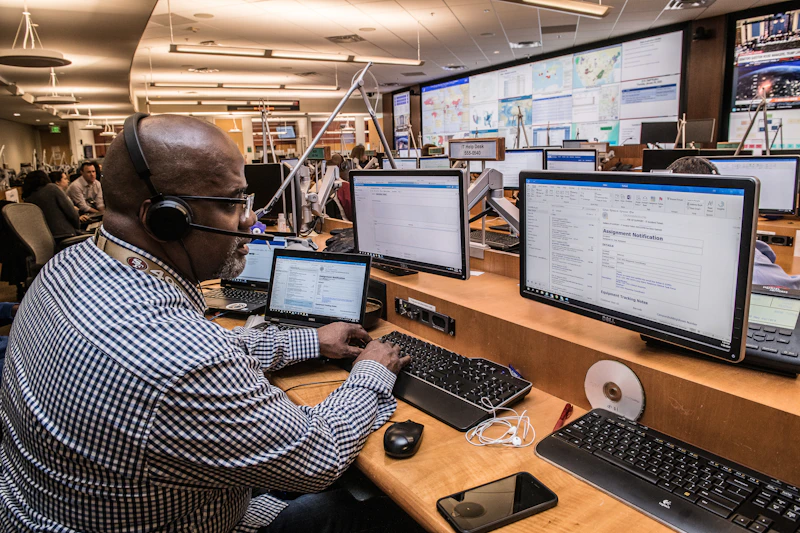
The Land-Permit Paradox of Korea's Chip Belt, When the Cluster's Boom Prices Out Its Own Engineers
Dongtan, Giheung, and Guri have been folded into Korea's land-transaction permit regime just as the AI chip capex boom reshapes the property market around the country's largest fabs. The very prosperity the cluster generates is raising the cost for the engineers it depends on to settle nearby. The real test of agglomeration may lie not in siting megafabs but in housing and labor mobility.
The Collapse of the Closed AI Moat and the Supply-Chain Paradox of Unverifiable Weights
DeepSeek-R1's open reasoning weights and Llamafile's single-file distribution are eroding the performance and distribution moats that closed labs once charged a premium for. Yet the same openness collides head-on with the gap exposed by the "250 samples to break an LLM" research: weight distribution that no recipient can verify. Democratized competition and accumulated security debt now sit on the same scale.
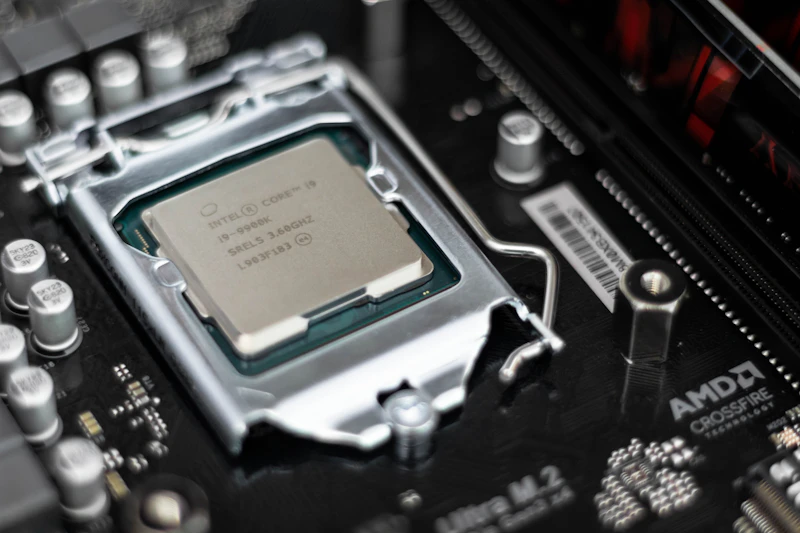
Forty-Year Yen Lows as the Hidden Subsidy Behind Japan's Chip Revival
As the yen slides into its weakest territory in four decades, Takaichinomics has entered uncharted monetary terrain. A cheap yen functions as a silent subsidy for Rapidus, Kioxia, and TSMC's Kumamoto fabs—yet the same currency inflates the cost of imported tools and materials and intensifies the talent war with Korea. The question is whether monetary policy can stand in for industrial policy, and what that means for Korea's memory champions.