AIINSIGHT NOTE
AI · Web3 · Tech trends and insights at a glance
AI · Web3 · Tech trends and insights at a glance
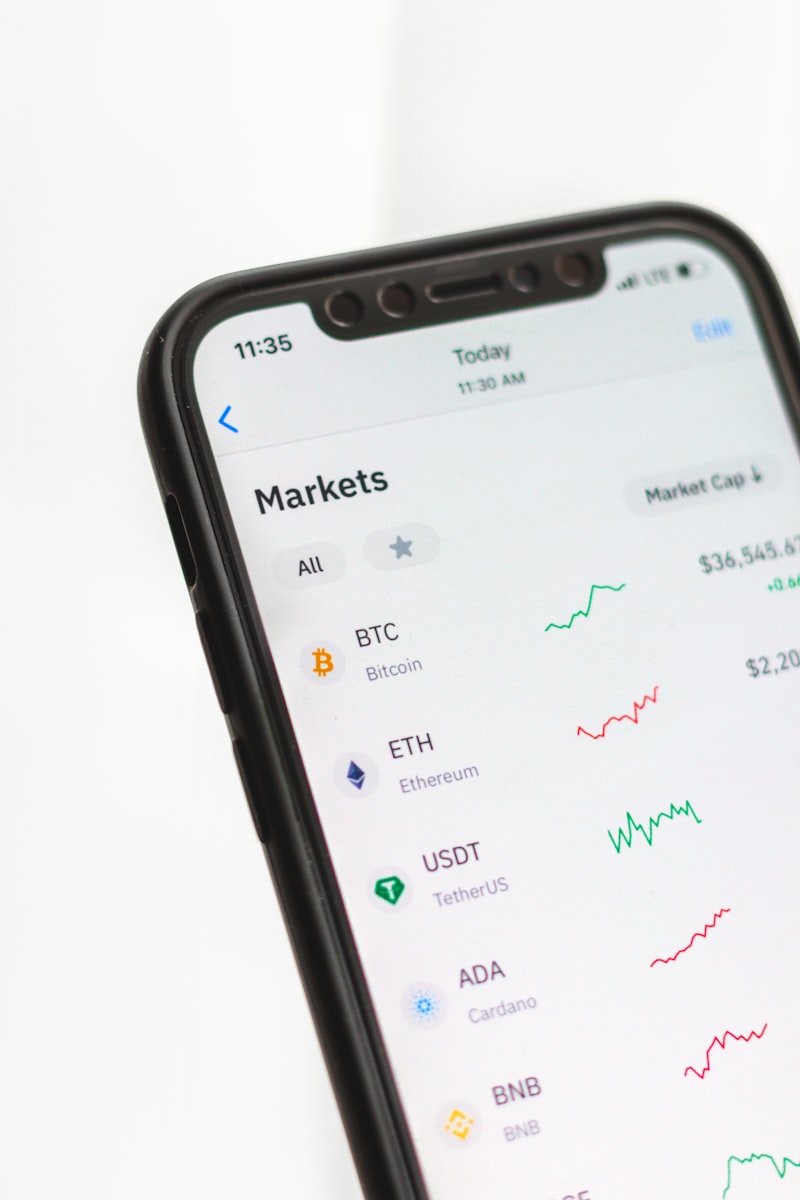
The top four crypto assets by market capitalization each embody a distinct theory about what blockchain is for. Understanding those theories — and their tradeoffs — is more useful than tracking prices for anyone trying to understand where the space is going.
Every major crypto asset is, implicitly, a bet on a particular theory of value. Bitcoin's theory is monetary: it is digital gold, a scarce store of value outside the control of any government or institution. Ethereum's theory is computational: it is programmable settlement infrastructure for an internet-native financial system. Solana's theory is performance: fast, cheap transaction throughput that enables applications that aren't viable on slower chains. XRP's theory is institutional: a settlement layer for cross-border payments, designed to work with banks rather than against them.
These aren't just narrative differences — they drive actual product decisions, community composition, and regulatory exposure in meaningfully different ways.
Bitcoin has achieved something unusual: it is the only crypto asset that has wide institutional acceptance as a legitimate asset class. The spot ETF approval in the United States was a watershed moment not because it created new demand (Bitcoin already had institutional holders) but because it normalized it. Sovereign wealth funds and pension funds can now hold Bitcoin exposure without the custody and compliance headaches of holding actual Bitcoin. The asset's simplicity — no roadmap, no foundation making product decisions, no hard forks of consequence — turns out to be a feature rather than a bug for institutional adoption. What you see is what you get.
Ethereum's story in 2026 is more complicated. The transition to proof of stake reduced issuance and created a deflationary pressure in high-fee periods. L2 scaling has worked, technically, but the fragmented liquidity and UX complexity of a multi-chain ecosystem create friction that Bitcoin doesn't face. The institutional narrative for ETH is harder to articulate than "digital gold": "programmable settlement infrastructure" doesn't fit on a fund fact sheet. The spot ETH ETF has been less successful at attracting institutional flows than its Bitcoin counterpart, which is probably a symptom of this narrative problem.
Solana has quietly become the most interesting DeFi chain by several metrics. Trading volume on Solana DEXes has, in specific periods, exceeded Ethereum mainnet volumes. The meme coin frenzy of 2024-2025 was concentrated on Solana, which is both a proof of its scalability and a concern about the quality of its ecosystem activity. The fundamental risk for Solana is technical — the chain has experienced multiple outages historically, and the validator concentration is a legitimate decentralization question.
XRP exists in its own category: it has the oldest and most litigated regulatory history of any major token, and its primary use case — cross-border settlement via RippleNet — is actually being used by financial institutions. The Ripple vs SEC lawsuit resolution reduced existential legal uncertainty. Whether institutional cross-border payment volume actually accrues value to XRP holders (versus Ripple the company) is a question the tokenomics make genuinely complicated.
None of these assets is going away. The question is which theories of value the next decade validates.

The Land-Permit Paradox of Korea's Chip Belt, When the Cluster's Boom Prices Out Its Own Engineers
Dongtan, Giheung, and Guri have been folded into Korea's land-transaction permit regime just as the AI chip capex boom reshapes the property market around the country's largest fabs. The very prosperity the cluster generates is raising the cost for the engineers it depends on to settle nearby. The real test of agglomeration may lie not in siting megafabs but in housing and labor mobility.

The Collapse of the Closed AI Moat and the Supply-Chain Paradox of Unverifiable Weights
DeepSeek-R1's open reasoning weights and Llamafile's single-file distribution are eroding the performance and distribution moats that closed labs once charged a premium for. Yet the same openness collides head-on with the gap exposed by the "250 samples to break an LLM" research: weight distribution that no recipient can verify. Democratized competition and accumulated security debt now sit on the same scale.
Forty-Year Yen Lows as the Hidden Subsidy Behind Japan's Chip Revival
As the yen slides into its weakest territory in four decades, Takaichinomics has entered uncharted monetary terrain. A cheap yen functions as a silent subsidy for Rapidus, Kioxia, and TSMC's Kumamoto fabs—yet the same currency inflates the cost of imported tools and materials and intensifies the talent war with Korea. The question is whether monetary policy can stand in for industrial policy, and what that means for Korea's memory champions.