AIINSIGHT NOTE
AI · Web3 · Tech trends and insights at a glance
AI · Web3 · Tech trends and insights at a glance

Microsoft, Google, and Amazon are signing direct contracts with nuclear operators, bypassing conventional energy markets to secure the stable baseload that AI data centers demand. The move exposes a structural failure in the all-renewable energy roadmap and puts corporate climate pledges under uncomfortable scrutiny.
Something quietly extraordinary happened when Microsoft signed a 20-year power purchase agreement to restart Three Mile Island. The reactor that became synonymous with American nuclear anxiety in 1979 was being reopened not because of a national energy policy shift, but because a software company needed more electricity to run chatbots and copilots. That reframing — from Cold War-era industrial accident to corporate data center feedstock — captures something essential about where the AI boom has taken us.
The energy math of AI infrastructure is brutal in its simplicity. A single large language model training run can consume as much electricity as thousands of homes use in a year. Inference at scale — serving hundreds of millions of queries daily — compounds this into a steady, enormous, non-negotiable base load. And that is precisely where renewable energy runs into physics.
Solar and wind are intermittent by nature. The sun sets; the wind calms. Batteries have improved dramatically, but storing enough energy to power a multi-gigawatt data center campus through a 48-hour weather event remains economically unviable at any scale that matters. The problem is not the peak — it is the valley, the guaranteed minimum that data centers require at 3 a.m. on a still, overcast night.
Land is another constraint. Utility-scale solar requires enormous acreage, rarely available near the dense urban corridors where latency-sensitive AI services need to live. Long-distance transmission loses power and takes years to permit. Grid interconnection queues in the United States average over five years — an eternity for companies racing to deploy the next generation of AI infrastructure. Nuclear plants, by contrast, sit on compact footprints and deliver dense, continuous power with no storage intermediary required. For a hyperscaler building out hundreds of megawatts of GPU capacity on an 18-month roadmap, that distinction is decisive.
The deals now accumulating between hyperscalers and nuclear operators follow a recognizable logic. Microsoft's Constellation agreement, Google's contract with Kairos Power for a fleet of small modular reactors (SMRs), Amazon's acquisition of land adjacent to Talen Energy's nuclear facility in Pennsylvania — each bypasses the traditional utility grid and creates a direct, long-term energy relationship. The goal is not just power, but predictable, carbon-attributable power at a fixed price, decoupled from the volatile spot market.
SMRs occupy a special place in this playbook. Conventional nuclear plants take a decade or more to build and routinely run billions of dollars over budget. SMRs promise factory-built, modular units that can be assembled on-site, reducing both construction time and cost through standardization. None are commercially operating yet, but Google's commitment to deploy roughly 500 megawatts of Kairos capacity through the 2030s signals that hyperscaler demand may itself become the market that justifies the technology. When a single company can anchor a gigawatt-scale procurement agreement, it changes the financing calculus for reactor developers overnight.
The dynamic echoes what happened with offshore wind in Europe a decade ago, when large industrial buyers stepped in to de-risk early capacity before governments could move. The difference is that wind was already a proven technology at commercial scale. SMRs are still in the demonstration phase, which makes the corporate commitments more speculative — and, arguably, more consequential for the direction of the entire sector.
The uncomfortable question hanging over all of this is whether the nuclear pivot actually advances decarbonization, or merely launders the carbon cost of AI growth. Microsoft, Google, and Amazon have each made sweeping climate pledges: carbon negative by 2030, 24/7 carbon-free energy matching, net zero by 2040. Nuclear power produces no direct carbon emissions during operation, which allows it to slot neatly into these frameworks on paper.
But the accounting has fissures. Data center energy demand has grown so fast that several hyperscalers have quietly restructured their interim climate targets or revised their reporting methodologies. More structurally, even a perfectly clean data center does not exist in isolation from the grid. When a company purchases renewable energy certificates to offset its consumption, it does not necessarily add new clean generation to the system — it may simply reallocate existing clean power while the grid's marginal generation remains fossil. Nuclear avoids this particular shell game by providing genuinely additional zero-carbon baseload, but it introduces others: construction-phase emissions, uranium enrichment energy intensity, and the unresolved question of long-term waste storage that no country has yet solved at scale.
What the nuclear turn by big tech actually reveals is a tacit admission that the original decarbonization roadmap was not designed with AI-scale energy demand in mind. The industry is now improvising. Whether SMRs arrive on schedule, whether waste disposal finds a durable solution, whether communities near proposed reactor sites accept the arrangement — none of these are settled. But the contracts are real, the capital is moving, and the energy landscape is being reshaped by the appetite of models that did not exist five years ago. The green future that AI companies promised and the energy reality they are now building are not the same thing, and the distance between them deserves honest accounting.

The Land-Permit Paradox of Korea's Chip Belt, When the Cluster's Boom Prices Out Its Own Engineers
Dongtan, Giheung, and Guri have been folded into Korea's land-transaction permit regime just as the AI chip capex boom reshapes the property market around the country's largest fabs. The very prosperity the cluster generates is raising the cost for the engineers it depends on to settle nearby. The real test of agglomeration may lie not in siting megafabs but in housing and labor mobility.

The Collapse of the Closed AI Moat and the Supply-Chain Paradox of Unverifiable Weights
DeepSeek-R1's open reasoning weights and Llamafile's single-file distribution are eroding the performance and distribution moats that closed labs once charged a premium for. Yet the same openness collides head-on with the gap exposed by the "250 samples to break an LLM" research: weight distribution that no recipient can verify. Democratized competition and accumulated security debt now sit on the same scale.
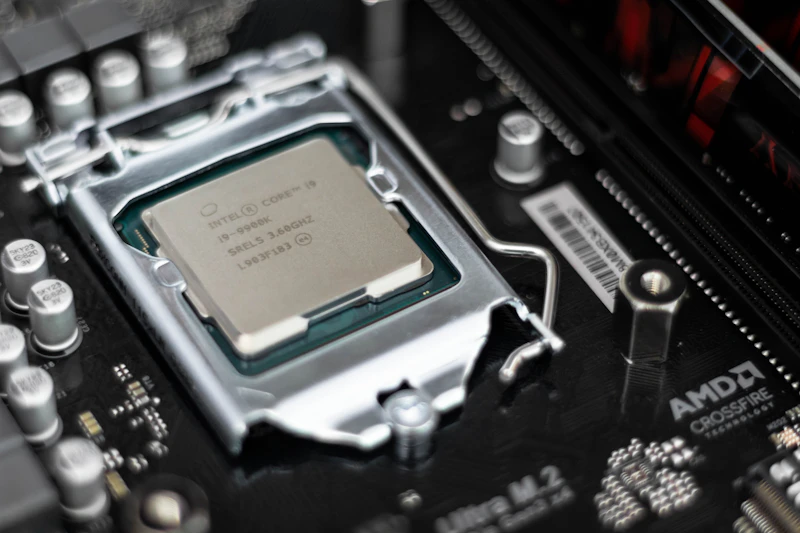
Forty-Year Yen Lows as the Hidden Subsidy Behind Japan's Chip Revival
As the yen slides into its weakest territory in four decades, Takaichinomics has entered uncharted monetary terrain. A cheap yen functions as a silent subsidy for Rapidus, Kioxia, and TSMC's Kumamoto fabs—yet the same currency inflates the cost of imported tools and materials and intensifies the talent war with Korea. The question is whether monetary policy can stand in for industrial policy, and what that means for Korea's memory champions.