AIINSIGHT NOTE
AI · Web3 · Tech trends and insights at a glance
AI · Web3 · Tech trends and insights at a glance
Every new semiconductor fab announced — from the TSMC-Bosch-Infineon-NXP European joint venture to Jim Keller's latest startup — ultimately depends on machines made by a single Dutch company. ASML's monopoly on extreme ultraviolet lithography isn't just a market quirk; it is the semiconductor industry's most consequential single point of failure, and increasingly, a lever of geopolitical power.
The announcements keep coming. TSMC, Bosch, Infineon, and NXP are building a joint European fab. Jim Keller — the chip architect who has reinvented microprocessor design at AMD, Apple, Tesla, and Intel — is betting on silicon fabrication again. Governments on three continents are pouring hundreds of billions into semiconductor sovereignty. The diversification narrative has never sounded more credible.
And yet. Every single one of these fabs, once built, will need extreme ultraviolet lithography machines. There is exactly one company in the world that makes them.
ASML's dominance over EUV lithography is not the result of aggressive acquisition or regulatory capture. It is the outcome of the most technically demanding manufacturing challenge in human history, pursued stubbornly over roughly two decades when almost every industry observer thought it couldn't be done.
EUV lithography uses 13.5-nanometer wavelength light — deep in the extreme ultraviolet spectrum — to etch circuit patterns onto silicon wafers. At this wavelength, almost every material absorbs the light, meaning the entire optical path must operate in a near-perfect vacuum, using mirrors rather than lenses. The light source itself, developed by ASML subsidiary Cymer, generates plasma by firing two laser pulses at a tin droplet 50,000 times per second. The optics, supplied by Carl Zeiss, must be the most precisely ground surfaces ever manufactured — deviations of even a fraction of a nanometer are unacceptable.
A single high-NA EUV machine costs over $400 million and contains more than 100,000 components sourced from over 5,000 suppliers across Germany, Japan, the United States, and the Netherlands. Annual production capacity hovers around 50 to 60 units. Global demand substantially exceeds this. The implication is straightforward: the number of EUV machines ASML can build each year effectively caps the rate at which the world's semiconductor capacity can advance. No other company — including well-funded Chinese challengers like SMEE — has produced a commercially viable EUV alternative after more than a decade of effort.
This concentration of capability in a single facility in Veldhoven, Netherlands, is precisely the kind of structural fragility that supply chain theorists warn against. Yet the semiconductor industry has no practical alternative.
The trouble with a technology monopoly this absolute is that it inevitably attracts political attention. The Netherlands-U.S.-China triangle that has formed around ASML represents perhaps the most consequential instance of semiconductor geopolitics in the current era.
In 2019, the Dutch government quietly declined to renew ASML's export license for EUV shipments to China — not through a formal sanctions announcement, but simply through administrative non-renewal. No press release, no diplomatic statement. The license expired and wasn't renewed. This low-visibility approach reflected the political sensitivity: the Netherlands was being asked, in effect, to implement American industrial policy. The mechanism that made it legally coherent was the U.S. Export Administration Regulations, which cover goods and technology containing American-origin content. Because ASML's machines incorporate substantial U.S.-origin components and software, export to certain destinations requires U.S. authorization — giving Washington substantial leverage over what is nominally a Dutch company's commercial decisions.
By 2023, restrictions had expanded to cover ASML's most advanced deep ultraviolet machines as well. China, which had been purchasing large volumes of older DUV equipment to compensate for the EUV embargo, found its upgrade path increasingly narrowed.
For China's semiconductor industry, this is not a trade dispute but a structural ceiling. Huawei's much-publicized 7nm chip — achieved through multiple-exposure DUV techniques at SMIC — demonstrates that the ceiling can be pushed further than initially expected. But 3nm and below remains effectively inaccessible without EUV. China's $50-plus billion state investment in domestic semiconductor equipment development has not yet closed this gap, and the technical distance involved means it is unlikely to do so quickly.
Here is the structural irony that the current fab-building boom cannot escape. Every fab that Europe, the United States, Japan, or India constructs to reduce geopolitical concentration in chip manufacturing will need EUV machines. The new TSMC-Bosch-Infineon-NXP European fab will need them. Jim Keller's venture, if it reaches leading-edge fabrication, will need them. The diversification of fab geography deepens, not reduces, the concentration of dependency on a single equipment supplier.
ASML itself is not comfortable in the role of geopolitical instrument. Former CEO Peter Wennink repeatedly warned that export restrictions, while understandable in the short term, risked undermining ASML's long-run competitive position. The logic is simple: China had been one of ASML's largest revenue sources. Revenue lost to export controls is R&D investment not made. R&D not made is next-generation technology delayed. A weapon wears down its wielder.
The other limiting factor is historical humility. ASML's monopoly rests on a technical achievement that once seemed impossible — one that ASML itself took twenty-odd years to deliver. Predicting with confidence that no Chinese institution, no matter how well-funded or determined, will close this gap over the next decade is an extrapolation that history should make us cautious about.
What the current moment reveals is that semiconductor supply chain resilience — the stated goal of hundreds of billions in government subsidies globally — cannot be achieved through fab diversification alone. The bottleneck is not fab geography; it is equipment. A supply chain that runs through many fabs but one equipment supplier remains, structurally, a single point of failure. Until that changes, the language of supply chain sovereignty will remain more aspirational than operational.

The Land-Permit Paradox of Korea's Chip Belt, When the Cluster's Boom Prices Out Its Own Engineers
Dongtan, Giheung, and Guri have been folded into Korea's land-transaction permit regime just as the AI chip capex boom reshapes the property market around the country's largest fabs. The very prosperity the cluster generates is raising the cost for the engineers it depends on to settle nearby. The real test of agglomeration may lie not in siting megafabs but in housing and labor mobility.

The Collapse of the Closed AI Moat and the Supply-Chain Paradox of Unverifiable Weights
DeepSeek-R1's open reasoning weights and Llamafile's single-file distribution are eroding the performance and distribution moats that closed labs once charged a premium for. Yet the same openness collides head-on with the gap exposed by the "250 samples to break an LLM" research: weight distribution that no recipient can verify. Democratized competition and accumulated security debt now sit on the same scale.
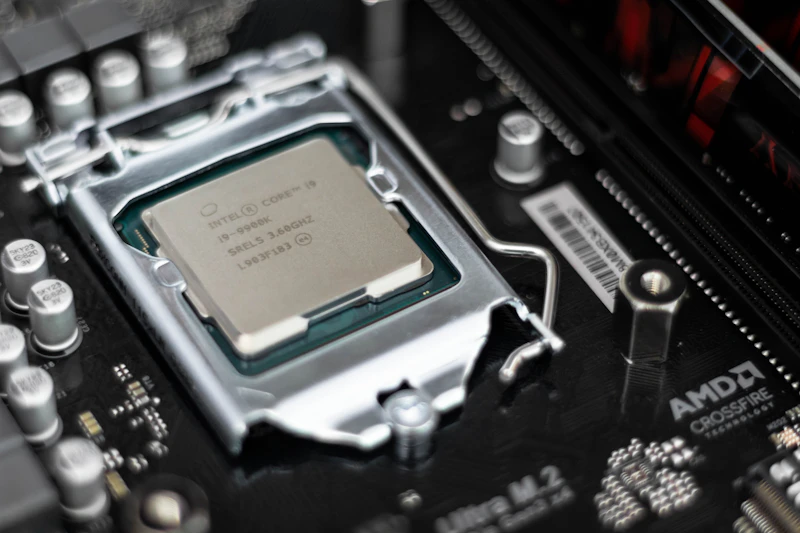
Forty-Year Yen Lows as the Hidden Subsidy Behind Japan's Chip Revival
As the yen slides into its weakest territory in four decades, Takaichinomics has entered uncharted monetary terrain. A cheap yen functions as a silent subsidy for Rapidus, Kioxia, and TSMC's Kumamoto fabs—yet the same currency inflates the cost of imported tools and materials and intensifies the talent war with Korea. The question is whether monetary policy can stand in for industrial policy, and what that means for Korea's memory champions.