AIINSIGHT NOTE
AI · Web3 · Tech trends and insights at a glance
AI · Web3 · Tech trends and insights at a glance
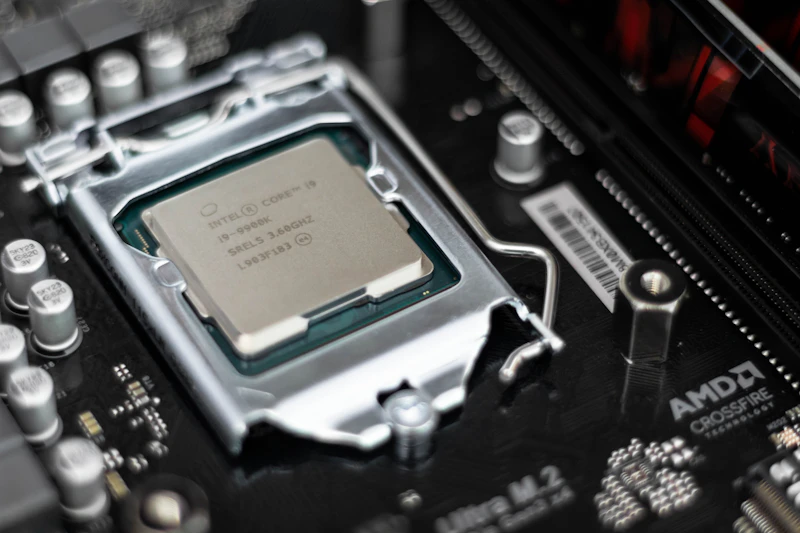
Every advanced AI chip in the world depends on lithography equipment made by a single Dutch company: ASML. As U.S. export controls have turned this industrial monopoly into a geopolitical instrument, the constraints ASML imposes on AI infrastructure expansion have moved from background assumption to foreground risk. The speed limit on AI's physical growth is optical, mechanical, and deeply Dutch.
There is a machine that no advanced semiconductor can be made without. It weighs roughly 180 metric tons, costs upward of $200 million per unit, and is assembled by a single Dutch company in the city of Veldhoven. ASML's extreme ultraviolet lithography tools have no competitors, no adequate substitutes, and no realistic path to replacement within any foreseeable timeline. The fact that this situation exists — that the entire trajectory of AI hardware depends on the sustained output of one firm — is the kind of structural reality that only achieves visibility when someone points it out at scale.
That is precisely what happened when a post titled "ASML, a $300B Dutch firm, makes the machines that make semiconductors" resurfaced across technical communities and drew thousands of comments. The reaction was less surprise than a kind of collective recognition: yes, the entire stack of modern AI infrastructure — from Nvidia's GPU roadmap to TSMC's capacity projections — ultimately terminates at the production floor in Veldhoven. What makes this worth examining now is not just the monopoly itself but how it has become a geopolitical instrument in ways its engineers almost certainly never intended, and what that means for the pace at which AI infrastructure can physically expand.
EUV lithography works by generating light at a 13.5-nanometer wavelength and using it to etch circuit patterns onto silicon wafers with sub-nanometer precision. To produce this light, ASML fires high-powered lasers at tin droplets, vaporizing them into plasma that emits EUV radiation. This radiation is then guided through a vacuum chamber by multilayer mirrors polished to atomic-scale tolerances. A single machine contains over 100,000 components and takes months to assemble and calibrate.
Nikon and Canon, ASML's erstwhile rivals in photolithography, each assessed EUV development as financially untenable and stepped back. The decision was rational from a near-term earnings perspective and catastrophic in retrospect. Both companies ceded the entire market for advanced node manufacturing equipment at the moment that market was about to become the most strategically consequential in the history of technology. Today, no fab in the world can produce chips at 7nm or below without ASML tools. This is not a matter of market share in the conventional sense — it is a physical constraint. The geometry leaves no room for a second supplier to simply arrive.
What makes ASML's dominance qualitatively different from typical industrial monopolies is that it cannot be disrupted by a well-capitalized competitor on any standard venture timeline. Building a rival EUV supply chain would require not just capital but decades of accumulated supplier relationships, precision manufacturing know-how, and iterative engineering expertise that cannot be purchased or replicated quickly. The moat is not financial. It is physical, optical, and deeply time-dependent.
The transformation of ASML's position from industrial fact to geopolitical instrument accelerated with U.S. export controls targeting China's semiconductor ambitions. In 2019, ASML stopped shipping its most advanced EUV machines to Chinese customers under Dutch government pressure coordinated with Washington. By 2023, restrictions had expanded to cover older deep ultraviolet systems as well — tools China had been relying on to sustain older-node production. The logic was explicit: if China cannot access leading-edge lithography, its domestic AI chip industry faces a hard technical ceiling regardless of capital deployment.
China's response has been to pour billions into domestic alternatives, primarily through state-backed entities like Shanghai Micro Electronics Equipment Group. The technological gap remains estimated at a decade or more. Nanoimprint lithography and other alternative patterning approaches are under active investigation, but none has demonstrated readiness for high-volume manufacturing at competitive yields. The constraint is not money — it is time and physics.
This dynamic has forced a triangular tension into the open. The United States wants ASML's tools withheld from China. The Netherlands wants strategic autonomy and the economic benefit of ASML's global sales. Europe, through the European Chips Act, is trying to expand its domestic semiconductor manufacturing capacity — partly to reduce exposure to a Taiwan contingency, but also to maintain meaningful agency over an asset that is, in the end, European. ASML sits at the center of this tension: a private company whose export ledger has effectively become a foreign policy document, negotiated between governments that have competing interests in its decisions.
The deeper issue, less discussed than the geopolitics, is that ASML's production capacity is itself a hard constraint on AI infrastructure growth. The company produces EUV tools at a rate of several dozen per year. Its next-generation High-NA EUV systems — required for gate-all-around transistor architectures at 2nm and below — cost over $300 million each and cannot be manufactured rapidly. Ramping a new fab takes three to five years; ramping EUV tool production involves comparable lead times for optics, laser systems, and precision components sourced from a highly concentrated global supplier network.
Every major AI accelerator on the market — Nvidia's Blackwell family, AMD's MI300 series, Google's TPUs, custom silicon from Amazon and Microsoft — runs on TSMC's leading-edge nodes, which depend entirely on ASML equipment. The result is a dependency chain that runs from the data center buildout driving AI investment all the way back to a factory floor in a mid-sized Dutch city. When analysts discuss supply chain resilience in the context of Taiwan contingency scenarios, the conversation typically focuses on fab diversification: Arizona, Japan, Dresden. But a fab in Arizona can only be equipped with EUV tools as fast as ASML can produce them.
The lithography equipment layer — a single, non-redundant upstream chokepoint — receives comparatively little attention in resilience planning. This gap matters. The speed limit on AI's physical expansion is not primarily computational, architectural, or even financial. It is optical, mechanical, and concentrated in Veldhoven in a way that no amount of geopolitical maneuvering has yet managed to change.
The Land-Permit Paradox of Korea's Chip Belt, When the Cluster's Boom Prices Out Its Own Engineers
Dongtan, Giheung, and Guri have been folded into Korea's land-transaction permit regime just as the AI chip capex boom reshapes the property market around the country's largest fabs. The very prosperity the cluster generates is raising the cost for the engineers it depends on to settle nearby. The real test of agglomeration may lie not in siting megafabs but in housing and labor mobility.
The Collapse of the Closed AI Moat and the Supply-Chain Paradox of Unverifiable Weights
DeepSeek-R1's open reasoning weights and Llamafile's single-file distribution are eroding the performance and distribution moats that closed labs once charged a premium for. Yet the same openness collides head-on with the gap exposed by the "250 samples to break an LLM" research: weight distribution that no recipient can verify. Democratized competition and accumulated security debt now sit on the same scale.
Forty-Year Yen Lows as the Hidden Subsidy Behind Japan's Chip Revival
As the yen slides into its weakest territory in four decades, Takaichinomics has entered uncharted monetary terrain. A cheap yen functions as a silent subsidy for Rapidus, Kioxia, and TSMC's Kumamoto fabs—yet the same currency inflates the cost of imported tools and materials and intensifies the talent war with Korea. The question is whether monetary policy can stand in for industrial policy, and what that means for Korea's memory champions.