AIINSIGHT NOTE
AI · Web3 · Tech trends and insights at a glance
AI · Web3 · Tech trends and insights at a glance

As OpenAI and Google race to dominate cloud AI infrastructure, Apple has reportedly chosen a hardware specialist to succeed Tim Cook. The move is less a retreat from the AI race than a coherent theory of where that race will ultimately be decided — at the silicon level, inside the device.
When reports emerged that Apple had identified a hardware engineer as the likely successor to Tim Cook, the reaction in Silicon Valley was predictably skeptical. The dominant logic of the current AI moment holds that whoever controls the largest cloud infrastructure, the most capable frontier model, and the most seamless API distribution wins. By that metric, picking a chip and device specialist to lead Apple into the AI era looks like a misread of the room.
But Apple has never competed in the room everyone else is in. And if the company's trajectory over the past five years is any guide, a hardware-first CEO is not a retreat from the AI race — it is a very specific theory of how that race will eventually be won.
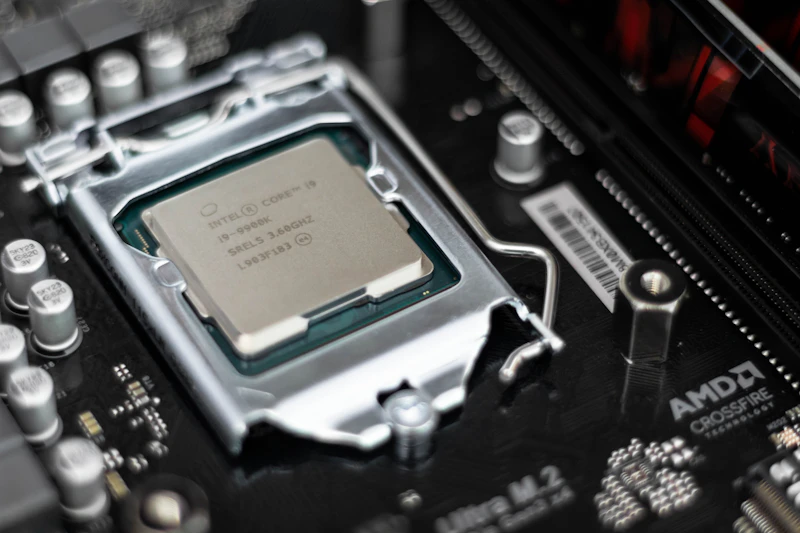
The transition from Intel chips to Apple's own M-series processors was described at the time as a cost and performance play, and on the surface it was. But embedded within that transition was a longer-term architectural bet: the Neural Engine, a dedicated AI inference unit integrated directly into the system-on-chip. That design choice meant that Apple was no longer dependent on external GPU clusters or cloud APIs to run AI workloads. The compute lives in the device, and Apple controls every layer of the stack.
Apple Intelligence drew criticism for being less capable than ChatGPT or Google Gemini. The benchmarks were unfavorable, the feature set narrower, the responses less fluent. But measuring Apple Intelligence against cloud-hosted frontier models is the wrong comparison. Apple is not competing on raw AI capability — it is competing on trust architecture. The proposition that user photos, messages, health records, and financial data never leave the device is a fundamentally different value exchange than what cloud AI offers. As regulatory environments tighten globally, as the EU AI Act matures, and as enterprise customers grow more cautious about data residency, that proposition becomes structurally more valuable.
A hardware CEO understands this at the level of silicon roadmaps and power envelopes, not just product positioning. The next generation of Neural Engines, the efficiency gains in Apple Silicon's AI inference pipeline, the decision about how much on-device memory to allocate for model weights — these are choices that compound over years and determine whether on-device AI remains a niche feature or becomes genuinely competitive. A leader who has spent a career thinking about how atoms and electrons translate into user experience is well-positioned to accelerate that compounding.
The argument for on-device AI as a durable competitive moat rests on three converging trends. Privacy regulation is tightening in every major market, creating structural demand for AI that does not require data to leave the jurisdiction or the device. Network latency and reliability constraints make cloud-dependent AI unsuitable for a growing class of applications — real-time translation in low-connectivity environments, medical diagnostics at the point of care, always-on assistants that cannot afford a round-trip to a data center. And the capability of small language models running on consumer hardware is improving faster than most analysts expected; the gap between on-device and cloud inference is narrowing at a pace that makes the current disparity look temporary rather than permanent.
Apple's hardware-centric leadership is well-suited to exploit all three of these trends. Where a cloud-focused CEO might be tempted to chase GPT-equivalent capabilities through partnerships or API integrations, a hardware CEO is more likely to invest in deepening the silicon advantage that makes on-device AI possible in the first place. That is a meaningful strategic difference, even if it plays out over a multi-year arc rather than a single product cycle.
The real risk is not that on-device AI fails to improve — it almost certainly will — but that Apple's developer ecosystem fails to keep pace. Core ML and the MLX framework need to become genuinely attractive to researchers and engineers who currently build their workflows around PyTorch and CUDA. If Apple's silicon is powerful but its developer tools remain proprietary and insular, the broader model ecosystem will continue to optimize for GPU clusters rather than Neural Engines. A hardware CEO who prioritizes the chip roadmap over platform openness could inadvertently widen that gap.
Still, the underlying thesis is coherent: in a world where frontier AI requires tens of billions in infrastructure investment and the margin economics remain uncertain, controlling the edge — the device, the silicon, the user relationship — may prove more defensible than competing for server capacity. Apple's apparent choice to double down on that position, through both its hardware strategy and its leadership succession, is a bet that the edge AI era will reward depth over scale. Whether it pays off depends as much on the next three generations of Apple Silicon as on any model or software roadmap.

The Land-Permit Paradox of Korea's Chip Belt, When the Cluster's Boom Prices Out Its Own Engineers
Dongtan, Giheung, and Guri have been folded into Korea's land-transaction permit regime just as the AI chip capex boom reshapes the property market around the country's largest fabs. The very prosperity the cluster generates is raising the cost for the engineers it depends on to settle nearby. The real test of agglomeration may lie not in siting megafabs but in housing and labor mobility.

The Collapse of the Closed AI Moat and the Supply-Chain Paradox of Unverifiable Weights
DeepSeek-R1's open reasoning weights and Llamafile's single-file distribution are eroding the performance and distribution moats that closed labs once charged a premium for. Yet the same openness collides head-on with the gap exposed by the "250 samples to break an LLM" research: weight distribution that no recipient can verify. Democratized competition and accumulated security debt now sit on the same scale.
Forty-Year Yen Lows as the Hidden Subsidy Behind Japan's Chip Revival
As the yen slides into its weakest territory in four decades, Takaichinomics has entered uncharted monetary terrain. A cheap yen functions as a silent subsidy for Rapidus, Kioxia, and TSMC's Kumamoto fabs—yet the same currency inflates the cost of imported tools and materials and intensifies the talent war with Korea. The question is whether monetary policy can stand in for industrial policy, and what that means for Korea's memory champions.