AIINSIGHT NOTE
AI · Web3 · Tech trends and insights at a glance
AI · Web3 · Tech trends and insights at a glance

As a memory supercycle pushes MacBook and iPad prices up by as much as $300, Apple — long a symbolic beneficiary of Washington's chip controls — is now lobbying the U.S. government to let it buy memory from China's CXMT. When scarcity becomes acute, the 'block Chinese chips' regime begins to lose coherence against the cost logic of America's own champions. This is what happens when security and price collide on the same component.
For several years Washington's semiconductor controls toward China rested on a single, almost arithmetic premise: advanced Chinese chips are a strategic risk, so the cost of purging them from American supply chains is smaller than the harm of letting them in. That premise holds only as long as the cost stays abstract and diffuse — spread thinly enough that it never lands as a discrete number on anyone's ledger. The memory supercycle has stripped away that abstraction. As AI datacenters devour HBM and high-capacity DRAM, even commodity memory has gone scarce, and the component bill of materials for a MacBook or iPad has jumped by hundreds of dollars per unit. The moment a diffuse loss congeals into one line of a quarterly earnings statement, the security argument meets its price tag face to face for the first time.
The fact that Apple is effectively petitioning the U.S. government for permission to use chips from CXMT, China's leading DRAM maker, is the compressed essence of this collision. CXMT has shadowed America's restriction lists like a recurring name, and Apple has long been cast as the most emblematic beneficiary and tacit endorser of the control regime. For that same Apple to ask for an exception in the face of cost reveals something larger: the party best positioned to understand the rationale for control is no longer willing to keep paying its price.
Export controls are, at bottom, an instrument that demands asymmetric patience. The benefit — security — is deferred, diffuse, and hard to prove, while the cost is immediate and concentrated on a specific firm's income statement. In calm times the asymmetry is invisible. When memory prices are stable, the premium of excluding Chinese chips is buried inside the BOM, where no one feels it. A supercycle drags that buried cost to the surface. As Samsung, SK Hynix, and Micron redirect capacity toward more profitable HBM, commodity DRAM supply tightens structurally, and CXMT's relevance as an alternative source grows — precisely the opposite of what the controls intended.
Here the regime's internal contradiction begins to bite. The controls were meant to isolate China's memory industry and erode its competitiveness, yet they simultaneously concentrated global memory supply in a handful of firms and drove prices upward — and that price surge made American companies crave the very source they had been told to shun. Scarcity manufactured in the name of security ends up corroding the security logic itself: a self-referential trap. Apple's plea is less a demand than the cry of the first party to notice the trap closing.
The power of an instrument like export controls derives from consistency. Allies and firms only bear their share of the cost if they believe no one gets an exemption. The instant the burden becomes intolerable for the largest American company, the government is wedged between two unattractive options. Grant the exception and undermine the universality on which the whole regime depends, or refuse it and sacrifice the cost competitiveness of a flagship firm and the prices its customers pay. Neither path is free, and neither cost is abstract any longer.
Worse is the contagion of exceptions. If Apple is allowed CXMT memory, Dell, HP, and every American hardware maker will line up behind the same reasoning. If it is refused, Apple gains every incentive to route de facto purchases through assembly lines in India or Southeast Asia, or through accounting detours, so that controls persist in name while leaking in substance. What chipflation has exposed, in the end, is not the failure of one policy but a structural fact: when security and cost collide on the same component, neither side can win outright. The real test of the control regime was never China's technological catch-up. It begins at this precise moment — when America's own champions stop quietly paying the regime's invoice.

The Land-Permit Paradox of Korea's Chip Belt, When the Cluster's Boom Prices Out Its Own Engineers
Dongtan, Giheung, and Guri have been folded into Korea's land-transaction permit regime just as the AI chip capex boom reshapes the property market around the country's largest fabs. The very prosperity the cluster generates is raising the cost for the engineers it depends on to settle nearby. The real test of agglomeration may lie not in siting megafabs but in housing and labor mobility.

The Collapse of the Closed AI Moat and the Supply-Chain Paradox of Unverifiable Weights
DeepSeek-R1's open reasoning weights and Llamafile's single-file distribution are eroding the performance and distribution moats that closed labs once charged a premium for. Yet the same openness collides head-on with the gap exposed by the "250 samples to break an LLM" research: weight distribution that no recipient can verify. Democratized competition and accumulated security debt now sit on the same scale.
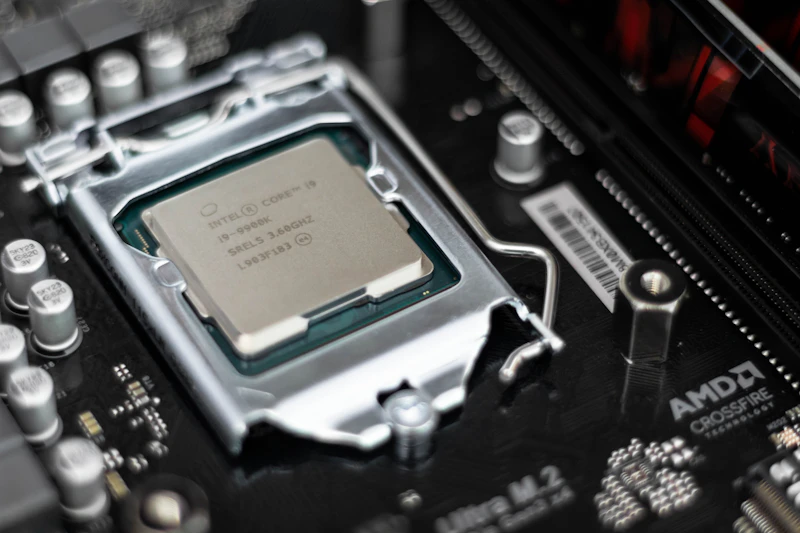
Forty-Year Yen Lows as the Hidden Subsidy Behind Japan's Chip Revival
As the yen slides into its weakest territory in four decades, Takaichinomics has entered uncharted monetary terrain. A cheap yen functions as a silent subsidy for Rapidus, Kioxia, and TSMC's Kumamoto fabs—yet the same currency inflates the cost of imported tools and materials and intensifies the talent war with Korea. The question is whether monetary policy can stand in for industrial policy, and what that means for Korea's memory champions.