AIINSIGHT NOTE
AI · Web3 · Tech trends and insights at a glance
AI · Web3 · Tech trends and insights at a glance
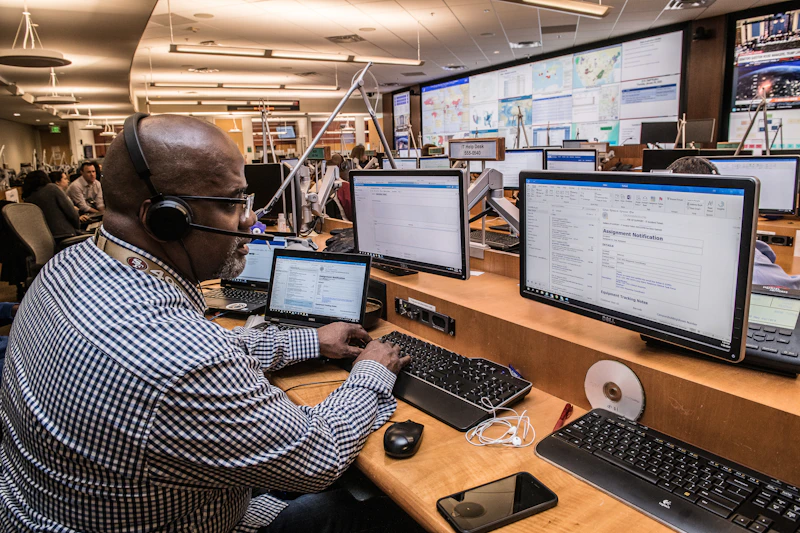
A lawmaker's investment letter to Jensen Huang and a presidential rebuttal over Honam's water supply have surfaced a variable long hidden behind power and cooling. As AI data centers and foundries pile into the same regions, water is emerging as the decisive bottleneck reshaping where Korea's advanced industry can actually be built.
When a Korean lawmaker's letter urging Jensen Huang to invest in the Saemangeum reclamation zone became news, it was easy to read it as routine investment-attraction theater. But the sequence that followed—President Lee Jae-myung personally stepping in to rebut concerns that the Honam region lacks the water to support a semiconductor base—reveals something more structural. Korea's contest for AI infrastructure has quietly shifted from a fight over electricity and land to a fight over water. For years, power dominated every siting debate: transmission corridors, substations, the allocation of nuclear and renewable capacity. Cooling was treated as a footnote. Yet the variable that increasingly stalls or accelerates a project on the ground is no longer the grid. It is the water table.
An AI data center draws water along two paths. One is the coolant that keeps dense GPU racks from overheating; the other is the water consumed upstream by the power plants generating the electricity those racks demand. A modern accelerator cluster runs at a power density several times that of a legacy facility, and the evaporative cooling that handles such heat releases enormous volumes of water into the atmosphere. Layer a foundry onto the same region and the strain compounds. Advanced chip fabrication consumes ultrapure water at a staggering rate—a single large fab can rival a mid-sized city in daily withdrawal. What makes the AI era distinct is that data centers and fabs now cluster together, in the same industrial corridors, drawing from the same rivers and reservoirs at once. Electricity can be imported across long transmission lines; water cannot. It is bound by the absolute carrying capacity of local watersheds and regional pipelines. That makes water a far more geographically captive, far less negotiable constraint than power has ever been.
This is precisely why the Honam dispute escalated into a political flashpoint. Saemangeum and the broader southwest offer abundant land, renewable potential, and port access—but the water infrastructure required to underwrite a dense cluster of advanced industry has not yet been convincingly demonstrated. The fact that a head of state felt compelled to declare publicly that the water shortage 'is not true' is itself evidence of how much weight water now carries in the calculus of attracting capital. Global firms evaluate a site against twenty- or thirty-year horizons of supply reliability. The mere prospect of a drought year or a single quarter of rationing can divert a multibillion-dollar commitment to another region entirely.
Local governments competing for these investments are quietly reorganizing their pitches around this variable. Competitiveness is no longer measured only in land prices and tax incentives but in pipeline connection capacity, plans to secure new sources, and the ability to reclaim and recycle wastewater. The friction Korea already saw within the capital region—where a semiconductor cluster near Yongin strained the allocation of water from the Paldang basin—is a preview of conflicts that could spread nationwide. Add AI data centers to the mix and the contest among regions and industries grows more tangled still. As agricultural, municipal, and industrial demand collide over a finite resource, the question of which region deserves to host advanced industry effectively becomes a question of who controls the distribution of water.
Seen this way, the letter to Huang is revealing. A love note to Nvidia is, at bottom, a promise that a given region can reliably sustain his infrastructure—and the credibility of that promise rests not on a one-line diagram of the grid but on a water-balance ledger. Now that AI infrastructure has moved to the front line of national industrial policy, what Korea truly needs to audit is not the size of its subsidies but its water-supply scenarios for the decades ahead. Without a governance framework that decides, watershed by watershed, how much water goes to which industry, the scramble to attract investment risks becoming a sandcastle that a single drought could wash away. The real question the Saemangeum letter poses is not whom to bring in, but what will keep them once they arrive.
Anatomy of the Korea Discount, Why Identical Memory Earnings Fetch a Lower Price
Samsung and SK Hynix post memory and HBM earnings on par with Micron, yet the market consistently assigns them lower multiples. This column dissects the Korea Discount into its structural drivers — governance, China exposure, single-cycle dependence, and shareholder-return policy — and explains why even an HBM supercycle has been slow to close the gap. SK Hynix's 45 trillion won capital raise and rise to the top market cap reveal the paradox at work.
Spotting Defects Without Cutting, the Hidden Battleground of AI Inspection in HBM Yield
When KIST unveiled a nondestructive environment for verifying internal defects without slicing a sample apart, it pointed at the spot where memory yield now actually leaks: the back end, where HBM stacks rise a dozen dies high. As voids and bonding flaws hide deep inside packages, the old reliance on human readers and destructive sampling has hit a wall. AI-driven defect imaging is quietly becoming the decisive variable in the supercycle yield war—along with a new kind of trust debt.
Won Past 1,500, How Dollar-Priced AI Infrastructure Breeds Hidden Currency Risk
For the first time since the Asian financial crisis, the won's quarterly average has crossed 1,500 to the dollar. With GPUs, EUV lithography tools, and HBM materials all invoiced in dollars, chipflation and a weak won compound to inflate the real cost of Korea's data-center and fab buildout twice over. The deeper danger is that macro currency risk and leveraged retail bets on the AI rally now point the same way.